Reducing downtime in industrial boiler systems requires combining ASME- and NBIC-compliant pressure vessel inspections, automated water chemistry control, precise feed pump sizing, and continuous oxygen-trim combustion tuning to eliminate root causes of unscheduled outages. Implementing a proactive spare parts buffer and structured operator warning protocols further prevents minor mechanical deviations from escalating into plant-wide shutdowns.
When an industrial steam or hot water boiler fails unexpectedly, loss of thermal energy halts production lines, compromises product quality, and imposes expensive emergency repair bills. Facilities that achieve high operational availability do not rely on reactive fixes; they manage their boilers through rigorous condition monitoring, proactive component replacement, and precise fluid dynamics.
Evaluation Criteria for Boiler Downtime Reduction
To eliminate unscheduled outages, boiler maintenance strategies must address the primary mechanisms of mechanical, chemical, and operational degradation. A robust reliability framework prioritizes interventions based on three main criteria:
- Structural Safety & Code Compliance: Interventions that prevent catastrophic pressure shell or tube failure, adhering to jurisdictional standards.
- Thermodynamic Efficiency & Fuel Stability: Measures that stop heat exchanger degradation, soot accumulation, and burner instability.
- Operational Continuity & Fluid Delivery: Protections that maintain uninterrupted feedwater flow, correct steam header pressure, and proper chemical balance.
Quick Take: Core Downtime Reduction Strategies
Preventing industrial boiler downtime relies on eliminating scale accumulation, mechanical wear, and fluid imbalances before they force a safety trip. Maintaining strict water chemistry controls and executing periodic combustion tuning prevents up to 80% of premature tube failures and burner outages. Pairing these daily operational habits with strategic spare parts management and calibrated pressure vessel inspections ensures continuous thermal delivery even under heavy production loads.
7 Proven Ways to Reduce Industrial Boiler Downtime
1. Schedule Regular Inspections of Pressure Vessels
Because pressure vessels degrade over time from cyclic thermal stress, chemical corrosion, and mechanical fatigue, undetected micro-cracks or localized wall thinning can trigger emergency shutdowns or catastrophic pressure boundary breaches. Operating under constant pressure expansion and contraction weakens shell welds, steam drum nozzles, and firetube sheet turnarounds.
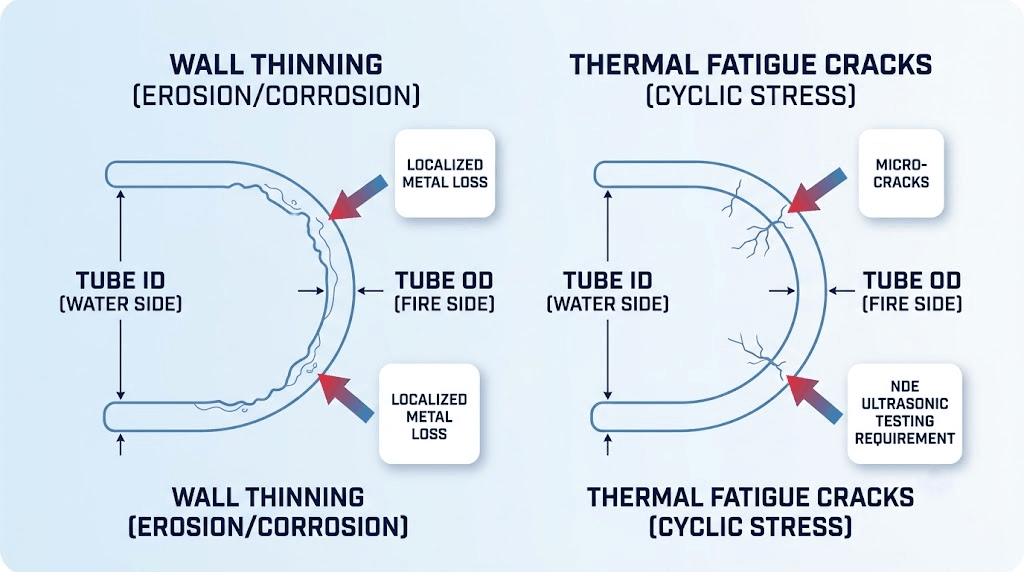
Relying solely on annual jurisdictional pass/fail inspections is insufficient for high-demand facilities. Plant engineers should establish a supplementary internal non-destructive examination (NDE) schedule—utilizing ultrasonic wall thickness testing, magnetic particle testing on high-stress welds, and dye penetrant inspection on tube sheets. Documenting these measurements in an ongoing log allows maintenance teams to plot metal loss rates over time rather than treating each inspection as an isolated event. When repairs or alterations become necessary, perform all welding in accordance with National Board Inspection Code (NBIC) Part RC standards using an R-stamp certified contractor to maintain structural integrity and regulatory compliance.
2. Calculate Boiler Feed Pump Duty and NPSH Margins
A boiler feedwater pump running outside its designed operating curve creates continuous mechanical stress that leads to seal failure, bearing destruction, and low-water boiler trips. Undersized feed pumps fail to deliver sufficient water volume against peak steam drum pressure, triggering low-water safety cutoffs. Conversely, oversized pumps force feed valves to operate near fully closed positions, causing excessive throttling wear and pump recirculation overheating.
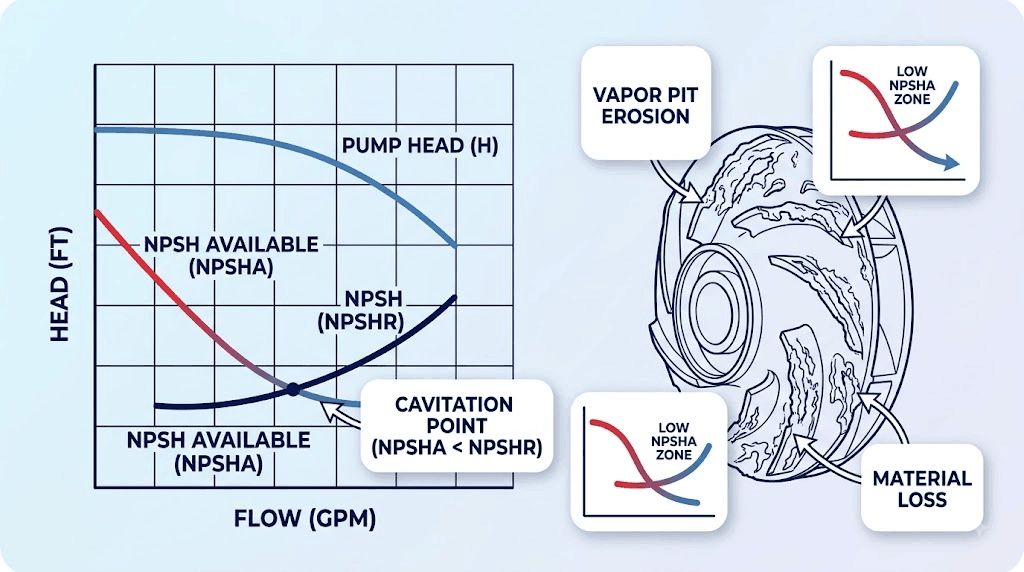
Executing an accurate boiler feed pump calculation ensures the pump is matched to actual system hydraulics. The sizing calculation must account for maximum steam generation capacity, required operating pressure, piping friction head loss, static elevation, and an additional 5% to 10% flow allowance for blowdown losses. Furthermore, engineers must verify that the Net Positive Suction Head Available (NPSHA) from the deaerator or condensate tank exceeds the Net Positive Suction Head (NPSH) required by the pump under peak temperature conditions. Insufficient NPSH causes hot condensate to flash into steam at the impeller inlet, creating destructive cavitation that can destroy a feed pump impeller in weeks.
3. Control Water Chemistry and Enforce Consistent Blowdown Protocols
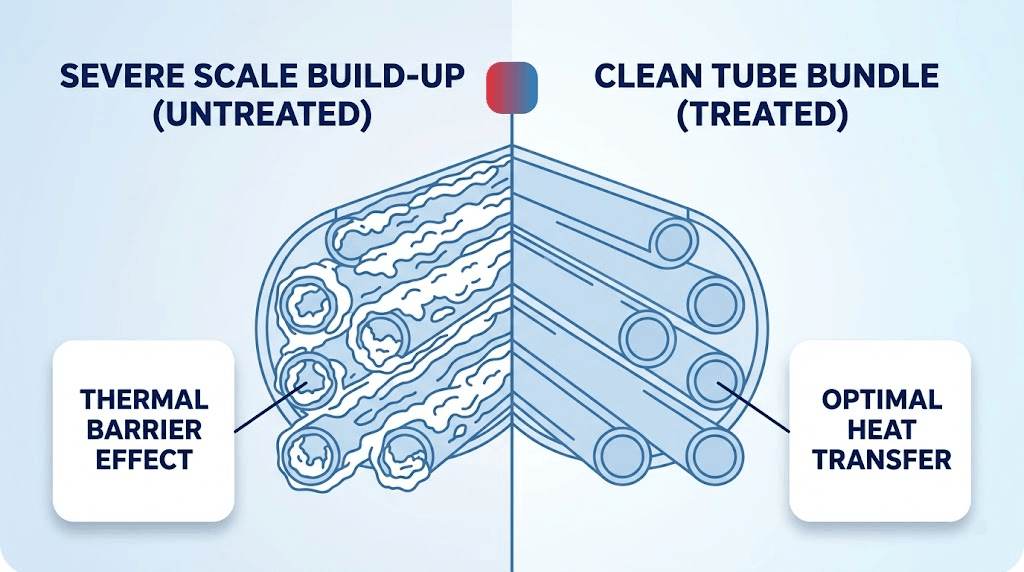
Improper boiler feedwater treatment is the single largest cause of unscheduled tube failures, scale accumulation, and dissolved gas corrosion. Dissolved calcium, magnesium, and silica precipitate out of solution under high heat, forming an insulating scale layer on heat transfer surfaces. A scale deposit as thin as 1/16th of an inch insulates boiler tubes, reducing thermal efficiency and forcing metal temperatures to rise until the tube wall softens, bulges, and ruptures.
Maintaining water quality requires a dual approach: operating external pretreatment equipment such as water softeners and deaerators, alongside dosing internal chemical treatments (phosphate treatment, oxygen scavengers, and alkalinity builders). To prevent dissolved solids from reaching critical concentration thresholds, operators must follow blowdown procedures systematically. Implementing automated continuous surface blowdown controls total dissolved solids (TDS) and conductivity levels at the water surface, while periodic manual bottom blowdown removes accumulated sludge from the lower drum or shell legs. Combining these controls with a external water treatment equipment testing routine prevents carryover, foaming, and scale-induced overheating.
4. Implement Predictive Replacement for Critical Control and Safety Valves
Control valves, blowdown valves, feed check valves, and safety relief valves operate under extreme pressure drops, high temperatures, and erosive fluid conditions. A sticking feedwater control valve can trigger a low-water shutdown within seconds, while a leaking blowdown valve steadily drains boiler water and thermal energy. Waiting for a critical valve to fail completely mid-production turns a simple maintenance task into an emergency outage.
Establish a predictive replacement program based on valve duty cycles, seat material wear rates, and operational history. Inspect control valve stems for packing leaks, actuator diaphragm cracking, and seat scoring during scheduled outages. Test safety relief valves in compliance with safety valve testing standards, performing manual lift tests or bench testing to confirm set pressures and re-seating capability. Replacing internal packing, trim, or entire valve assemblies during planned maintenance prevents minor internal leakage from escalating into total valve seizure during heavy plant operation.
5. Optimize Combustion Efficiency via Continuous O2-Trim Tuning
Inconsistent combustion forced by improper air-to-fuel ratios wastes fuel and accelerates mechanical wear on burner components, combustion chambers, and heat transfer surfaces. Running with too little air results in incomplete combustion, generating toxic carbon monoxide and heavy soot deposits that coat firetubes and act as an insulating blanket. Running with excess air pulls heat out of the combustion zone and sends unburned energy up the stack, overworking the forced draft fan and burner linkage.
While performing a routine flue gas combustion analysis with a portable analyzer calibrates seasonal burner response, ambient air temperature and barometric pressure fluctuate constantly. Installing an automated oxygen trim system continuously measures flue gas oxygen content and adjusts the air damper or variable speed fan in real time. Maintaining optimal excess air levels (typically 15% excess air or roughly 3% O2 in flue gas for natural gas) stabilizes combustion temperatures, reduces thermal fatigue on burner cones, and prevents unburned fuel accumulation.
6. Train Operators on Early Mechanical Deviation and Acoustic Warning Signs
Boiler operators on the plant floor are the primary line of defense against compounding mechanical failures. Minor mechanical deviations—such as a subtle change in feed pump vibration, a high-pitched hiss from a packing gland, or small pressure swings on the steam header—precede complete system failures. Without structured training, operators may overlook early indicators until automated safety limit controls trip the boiler offline.
Formalize daily shift routines around a standardized checklist rather than relying on informal walk-throughs. Operators should record daily logbook entries capturing flue gas temperatures, steam drum pressure, feedwater temperature, chemical dosing rates, and stack draft pressure. Establish clear escalation thresholds: if stack gas temperature rises 20°F above baseline at a given firing rate, operators should immediately flag potential tube soot accumulation or fireside baffle bypass to the maintenance team for investigation before efficiency drops further.
7. Maintain a Strategic On-Site Critical Spare Parts Buffer
Extended boiler downtime often stems not from the complexity of a repair, but from waiting for long-lead replacement components to arrive. High-spec items—such as flame safeguard control modules, flame scanners, high-pressure feed pump seals, level control probes, and boiler-specific valve rebuild kits—frequently carry multi-week lead times from original equipment manufacturers (OEMs).
Conduct a spare parts criticality audit by analyzing past maintenance logs and component lead times. Maintain an organized, climate-controlled on-site inventory containing high-wear components, including replacement gaskets, sight glass sets, igniters, safety valve spares, and burner nozzles. Pair this physical inventory with a formal agreement for a emergency temporary steam header piping connections setup to ensure rapid deployment if an unexpected pressure vessel failure occurs.
Decision Framework: Customizing Your Maintenance Priority Matrix
Not all industrial boilers face identical failure modes. Operating profile, feedwater source, fuel type, and system design dictate which downtime prevention measures yield the highest return on effort. Use the matrix below to prioritize maintenance resources based on your facility’s operational reality:
| Operational Condition | Primary Downtime Risk | Highest-Priority Preventive Focus | Secondary Mitigation Measure |
|---|---|---|---|
| High Makeup Water Ratio (>50%) | Scale build-up, dissolved gas pitting, tube burnout | Automated water chemistry control & continuous blowdown | Deaerator tray inspections & oxygen scavenger monitoring |
| Rapid Cyclic Loading / Frequent On-Off | Thermal fatigue, pressure vessel cracking, seam leaks | ASME/NBIC ultrasonic wall thickness & NDE weld testing | Modulating burner upgrades & turndown optimization |
| Heavy Fuel / Alternate Gas Sources | Sooting, burner nozzle fouling, stack fire risk | Continuous O2 trim combustion control & stack monitoring | Automated soot blowers & daily combustion logging |
| Continuous 24/7 Operations | Feed pump failure, valve seizure, unexpected trips | Precision feed pump NPSH sizing & valve rebuild cycles | On-site spare parts buffer & temporary rental contingency plan |
Key Takeaways
- Combine Code Inspections with NDE: Supplementary ultrasonic wall testing and NBIC Part RC compliant repairs catch pressure vessel thinning long before mandatory inspections force an emergency shutdown.
- Solve Feed Pump Hydraulic Deficits: Accurate boiler feed pump sizing must account for drum pressure, head losses, blowdown margins, and strict NPSH requirements to prevent pump cavitation.
- Automate Chemistry and Blowdown Controls: Scale accumulation insulates tubes and causes rapid thermal failure; daily testing and automated blowdown maintain optimal heat transfer.
- Implement Continuous Combustion Tuning: Installing automated O2 trim systems prevents thermal fatigue, reduces soot buildup, and stabilizes burner output across fluctuating ambient conditions.
- Bridge Hardware Gaps with Inventory and Planning: Stocking long-lead control modules and maintaining a temporary rental boiler plan eliminates logistics delays when repairs are required.
Frequently Asked Questions
How often should industrial boiler water chemistry be tested to prevent downtime?
Industrial boiler water chemistry should be tested at least once per shift for manual parameter checks (such as hardness, pH, sulfite, and phosphate levels), while conductivity and Total Dissolved Solids (TDS) should be monitored continuously via inline sensors. Continuous monitoring combined with daily laboratory verification prevents sudden scale precipitation and acidic corrosion. Following a comprehensive preventative maintenance schedule ensures chemical dosing pumps and blowdown controllers remain calibrated.
What is the most common cause of premature boiler tube failure?
The most common cause of premature boiler tube failure is thermal overheating caused by internal scale buildup or oxygen pitting corrosion on the waterside. When mineral scale accumulates on heat transfer surfaces, it acts as an thermal insulator, preventing water from cooling the metal. The tube metal temperature escalates rapidly until the wall weakens, swells, and ruptures under operating pressure.
How does improper feed pump sizing cause boiler shutdown?
An undersized boiler feed pump cannot maintain sufficient flow against peak steam drum pressure, causing the water level to drop until the low-water fuel cutoff trips the burner offline to prevent dry firing. An oversized pump causes severe control valve throttling, leading to high flow turbulence, pump overheating, premature seal failure, and frequent pressure swings across the steam system.
What emergency contingency measures should be in place for unexpected boiler outages?
Facilities should maintain an active rental boiler contingency plan that documents physical connection points for steam lines, feedwater supply, fuel lines, electrical connections, and stack clearances. Pre-wiring electrical hookups and pre-flanging steam header tie-ins allows a temporary rental unit to be piped and commissioned within hours of a severe primary boiler outage, maintaining plant operations while repairs take place.

💬 Comments