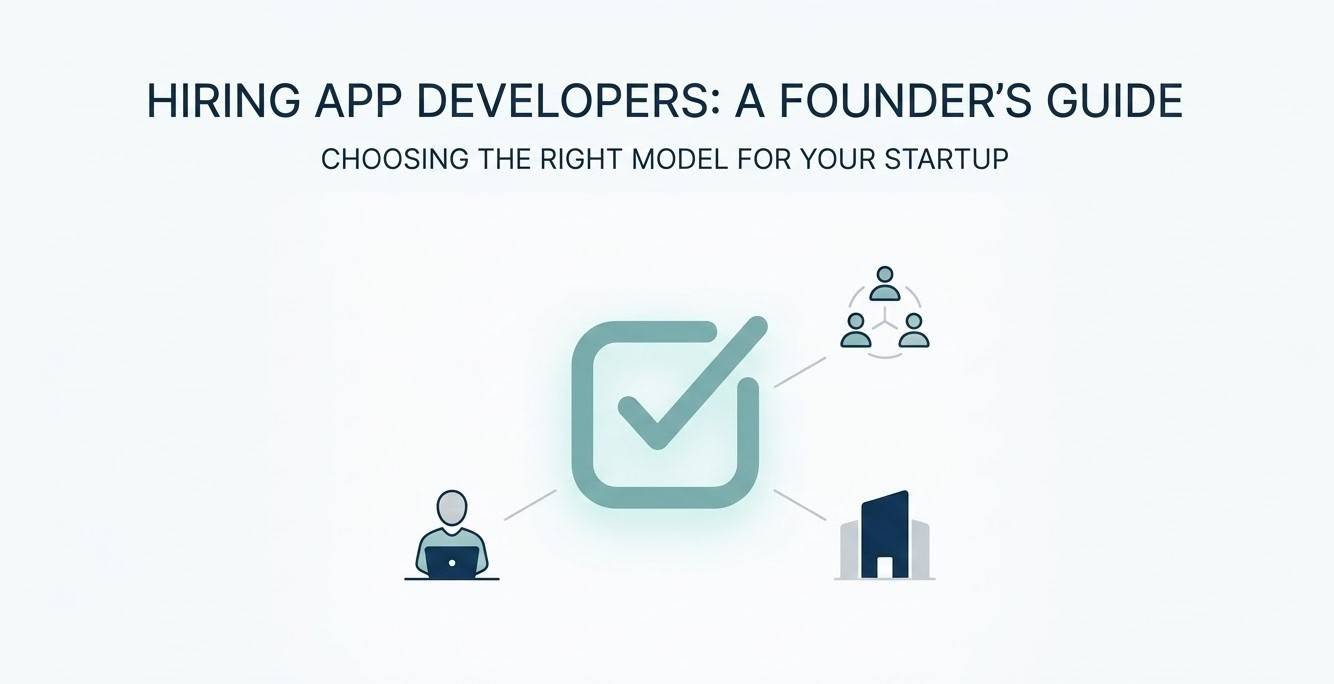
The best hiring model depends on what you are building, how fast you need to move, and how much day-to-day product ownership your startup can handle. A founder usually gets a better result by choosing the right model first, then setting clear technical, legal, and security controls before any code is written.
Many early-stage startups make the same mistake: they start searching for developers before they define the scope, delivery process, and ownership rules. That usually leads to delays, vague quotes, and code that is harder to maintain than it should be.
Start With the Hiring Model, Not the Job Post
Before you look at candidates, decide which of these three paths actually fits your company:
- In-house hire: Best when product development is a core long-term capability and you need daily collaboration, continuity, and accountability.
- Freelance contractor: Best for narrow, well-scoped work such as prototypes, bug fixing, design-to-code handoff, or short-term specialist help.
- Development agency or outsourced team: Best when you need a working team quickly and do not yet have every role in-house, but still want structured delivery.
If you have not defined the product well enough to estimate scope, pause the hiring process and build a simple startup MVP plan first.
How to Choose the Right Option
Choose in-house developers when the app is central to the company, the roadmap will keep changing, and the team needs daily product context. Choose freelancers only when the work is tightly scoped and the handoff can be clearly documented.
Choose an agency or outside development partner when speed matters, you need multiple skills at once, or your founding team cannot yet manage separate specialists. That works best when the project is run with milestones, code review access, and a documented product roadmap template rather than vague promises.
Step 1: Define What You Actually Need Built
Do not begin with “I need an app developer.” Begin with a short written brief that explains the product, the target users, the core workflows, the first-release scope, and what success looks like in the first version.
Your brief should answer:
- Is this a mobile app, web app, or both?
- What is the MVP and what can wait?
- Who owns design, product decisions, backend logic, testing, and deployment?
- What must be delivered by the first milestone?
This step alone filters out a lot of bad-fit candidates because strong developers usually ask better questions when the scope is clear. It also makes pricing and timelines easier to compare when you use a structured technical specification template.
Step 2: Decide Whether You Are Hiring an Employee or a Contractor
This is not just a pricing choice. The IRS says it is critical for business owners to determine whether workers are employees or independent contractors because the tax treatment is different.
Some companies working with international contractors also rely on EOR service providers to handle employment compliance, payroll, and local labor regulations when hiring across borders.
Labor classification matters too. The U.S. Department of Labor’s classification guidance exists because worker status affects legal protections under the Fair Labor Standards Act.
For founders, the practical takeaway is simple: do not treat a contractor exactly like a full-time employee just because it feels convenient. If the role is ongoing, tightly controlled, and central to the business, get legal and HR advice before you label it a freelance arrangement.
Step 3: Lock Down IP Ownership and Contract Terms Early
Founders often assume that paying for code automatically means they own everything. That assumption is risky.
According to the U.S. Copyright Office’s guidance on works made for hire, copyright ownership in commissioned work depends on specific legal conditions and written agreements, which is why startups should address IP assignment and code ownership explicitly in the contract.
At a minimum, your agreement should cover ownership of source code, design files, documentation, deliverables, third-party components, post-launch fixes, and what happens if the relationship ends mid-project. This is also where a clean developer contract checklist can save you from expensive cleanup later.
Step 4: Keep Security and Access Under Company Control
If outside developers will touch production systems, user data, APIs, cloud services, or app stores, security cannot be an afterthought. In the NIST Secure Software Development Framework, organizations are advised to communicate security requirements to third parties and include them in acquisition documents, software contracts, and other agreements.
In founder terms, that means you should decide up front who controls repositories, deployment credentials, analytics accounts, cloud billing, and package registries. Even when you outsource, the company should control the core accounts and keep a documented code handover checklist from day one.
Step 5: Use a Real Assessment Process
Do not hire on charisma, hourly rate, or portfolio screenshots alone. Build a small, repeatable evaluation process that tests communication, code quality, judgment, and reliability.
GitHub’s description of its take-home technical interviews is useful here because it emphasizes clear instructions, a time limit, automated tests, and a rubric instead of vague “impress us” exercises.
For early-stage hiring, Y Combinator’s advice on hiring a first engineer is equally practical: define the technical and non-technical criteria in advance, then score every candidate against the same standard.
A simple founder-friendly hiring flow looks like this:
- Portfolio or past-work review.
- Short screening call focused on scope, communication, and constraints.
- Small paid technical exercise or code review task.
- Final call about delivery habits, ownership, and handoff expectations.
- Paid trial milestone before a larger commitment.
Step 6: Source Candidates From Places That Reduce Guesswork
Founders usually get better results from warm referrals, trusted founder networks, and vetted partners than from random mass outreach. That does not mean freelance platforms or directories are useless, but they work better when you already know how you will evaluate candidates.
If you are exploring different hiring channels, it can also help to review external guides on where startups typically find developer resources to create an app before narrowing your shortlist.
Look for signals you can verify: shipped products, code samples, references, thoughtful questions, realistic timelines, and a willingness to work inside your process. If you need help comparing candidates fairly, use a structured app developer scorecard instead of relying on gut feeling.
Red Flags to Watch For
- They promise a full product timeline before they understand the requirements.
- They avoid talking about repositories, testing, documentation, or deployment ownership.
- They push you to give them control of core accounts instead of working inside company-owned access.
- They cannot explain trade-offs between speed, scope, and maintainability.
- They resist milestone-based delivery or written acceptance criteria.
Decision Tree: Which Path Fits Your Startup?
- If the product is core to the company and needs ongoing iteration, lean toward in-house hiring.
- If the work is narrow and clearly scoped, a freelancer may be enough.
- If you need multiple roles quickly, an agency or outsourced team can make sense.
- If you cannot define the scope yet, do not hire developers first; define the MVP first.
- If you cannot verify ownership, security, and handoff terms, do not sign yet.
Implementation Checklist
- Define the product scope and first-release goals.
- Choose the hiring model before sourcing candidates.
- Confirm worker classification with legal and tax guidance where needed.
- Put IP ownership and deliverables in writing.
- Keep repositories, cloud access, and billing under company control.
- Use the same scorecard and assessment flow for every serious candidate.
- Start with a milestone or paid trial before scaling the engagement.
When Not to Outsource
- When you still do not know what the product should do.
- When the founding team has no one who can review technical work or manage delivery.
- When the app handles highly sensitive data and your security requirements are still unclear.
- When you want daily product iteration but are not ready to stay involved in prioritization.
Troubleshooting
The quotes are all over the place.
Your scope is probably too vague. Tighten the MVP and ask every candidate to estimate against the same written brief.
The candidate looks strong, but communication feels weak.
That usually gets worse under deadline pressure, not better. Prioritize communication and delivery habits as much as coding skill.
The agency sounds polished, but you cannot tell who is doing the work.
Ask who will actually build the app, who reviews the code, who owns QA, and who stays on the account after kickoff.
You are worried about being locked out later.
Move every critical system under company ownership now: repositories, hosting, analytics, domains, app store accounts, and documentation.
Key Takeaways
- There is no one best way to hire app developers for every startup.
- The right model depends on scope, control needs, budget, and how central the product is to the company.
- Classification, IP ownership, and security controls matter as much as technical skill.
- A simple scorecard and paid trial usually beat a rushed hire.
FAQ
Should a startup hire freelancers or full-time developers first?
It depends on the scope and continuity you need. Freelancers fit tightly scoped work, while full-time hires fit ongoing product ownership.
Is outsourcing app development always cheaper?
Not necessarily. It can reduce fixed overhead, but poor scope control, rework, and weak handoff can make an outside team more expensive over time.
What should a founder put in a developer contract?
Cover ownership, deliverables, milestones, acceptance criteria, confidentiality, payment terms, documentation, support expectations, and exit terms.
Who should own the code repository?
The startup should control the main repository and critical accounts even if outside developers are contributing.
How do you test an app developer before hiring?
Use a structured process: portfolio review, screening call, small paid exercise, and a milestone-based trial.
What is the biggest hiring mistake founders make?
Hiring before the scope is clear and before ownership rules are written down.
Should founders rely on one impressive portfolio?
No. Past work matters, but delivery process, communication, and maintainability matter just as much.
When is in-house hiring the better choice?
Usually when the product is central to the startup and the roadmap requires continuous iteration and close collaboration.

💬 Comments