Technology keeps landlords profitable by systematically protecting Net Operating Income through automated rent collection, algorithmic vacancy compression, Internet of Things (IoT) loss prevention, and standardized regulatory compliance. By replacing fragmented manual administration with integrated property management systems, real estate investors eliminate costly delinquency cycles, reduce maintenance emergencies by up to 545%, and insulate their portfolios from five-figure statutory legal penalties.
Quick Take: Core Profit Levers
- Cash-Flow Predictability: Automated ACH recurring payments drive on-time collection rates to 99%, compared to 87% for manual check or cash processing.
- Turnover Compression: API listing syndication and self-guided smart-lock showings reduce unit turnover downtime from 28 days down to under 10 days.
- Preventive Asset Preservation: Telemetric IoT water sensors and computerized maintenance management workflows prevent catastrophic structural claims and unlock 5% to 10% insurance premium credits.
- Statutory Risk Insulation: Automated adverse action logging and objective tenant-screening scoring eliminate disparate impact liability under the Fair Housing Act and Fair Credit Reporting Act (FCRA).
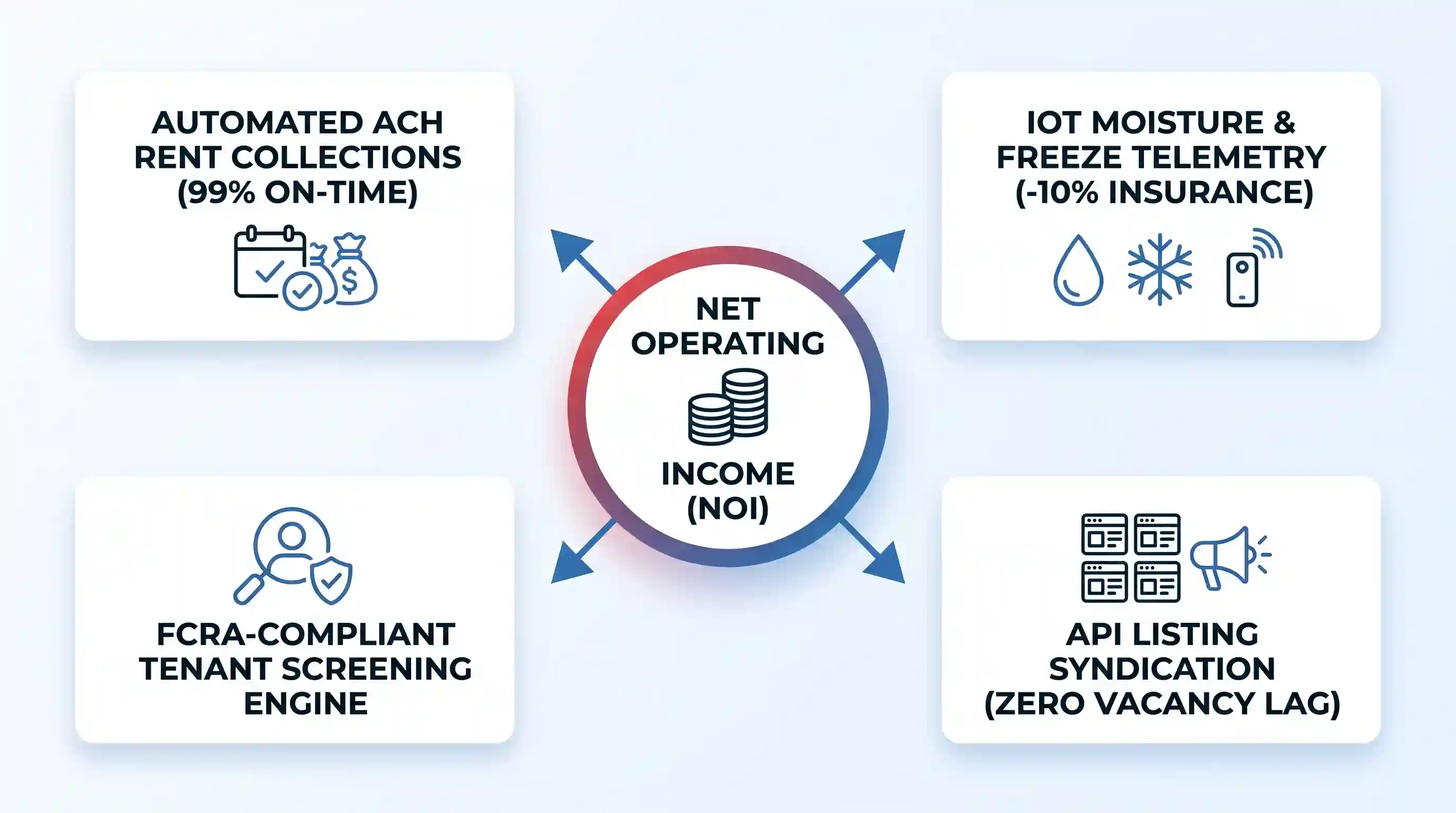
The Financial Mechanics: How PropTech Defends Net Operating Income
Every dollar of gross rental revenue must withstand multiple layers of friction before reaching the investor’s balance sheet. Rental property profitability is governed by the Net Operating Income equation:
InfoNetOperatingIncome(NOI)=EffectiveGrossIncome(EGI)−OperatingExpenses(OpEx)
Independent landlords frequently misdiagnose cash-flow shortfalls as simple revenue deficits, attempting to solve profitability challenges purely by raising base rents. However, unbudgeted capital expenditures, turnover lag, and uncollected arrears represent the primary drivers of portfolio insolvency. When a unit sits vacant for an extra four weeks, an investor loses approximately 8.3% of that property’s gross annual income—a loss that rent increases cannot easily recoup.
Protecting Margins from Operational Friction
Operational friction occurs in the administrative gap between landlord, tenant, and physical property. When an owner tracks rent through physical logbooks or disconnected spreadsheets, delayed follow-ups on late payments accumulate into multi-month arrears. Tech-enabled portfolios utilize centralized platforms to monitor operational metrics in real time, triggering automated reminders before payments lapse and instantly applying structured late-fee mechanics that incentivize timely performance.
Automated Cash-Flow Accounting vs. Commingled Chaos
Manual bookkeeping often leads to the commingling of tenant security deposits with general operating accounts—a severe statutory violation in most jurisdictions. Modern property management platforms automatically isolate refundable liabilities from operating cash, sync directly with general ledger banking interfaces, and tag maintenance expenses according to IRS Schedule E categories. Deploying purpose-built workflow software applications eliminates hundreds of hours of manual reconciliation while creating auditable financial reports for tax preparation, mortgage refinancing, and equity partner disclosures.
Automated Rent Collection and Delinquency Suppression
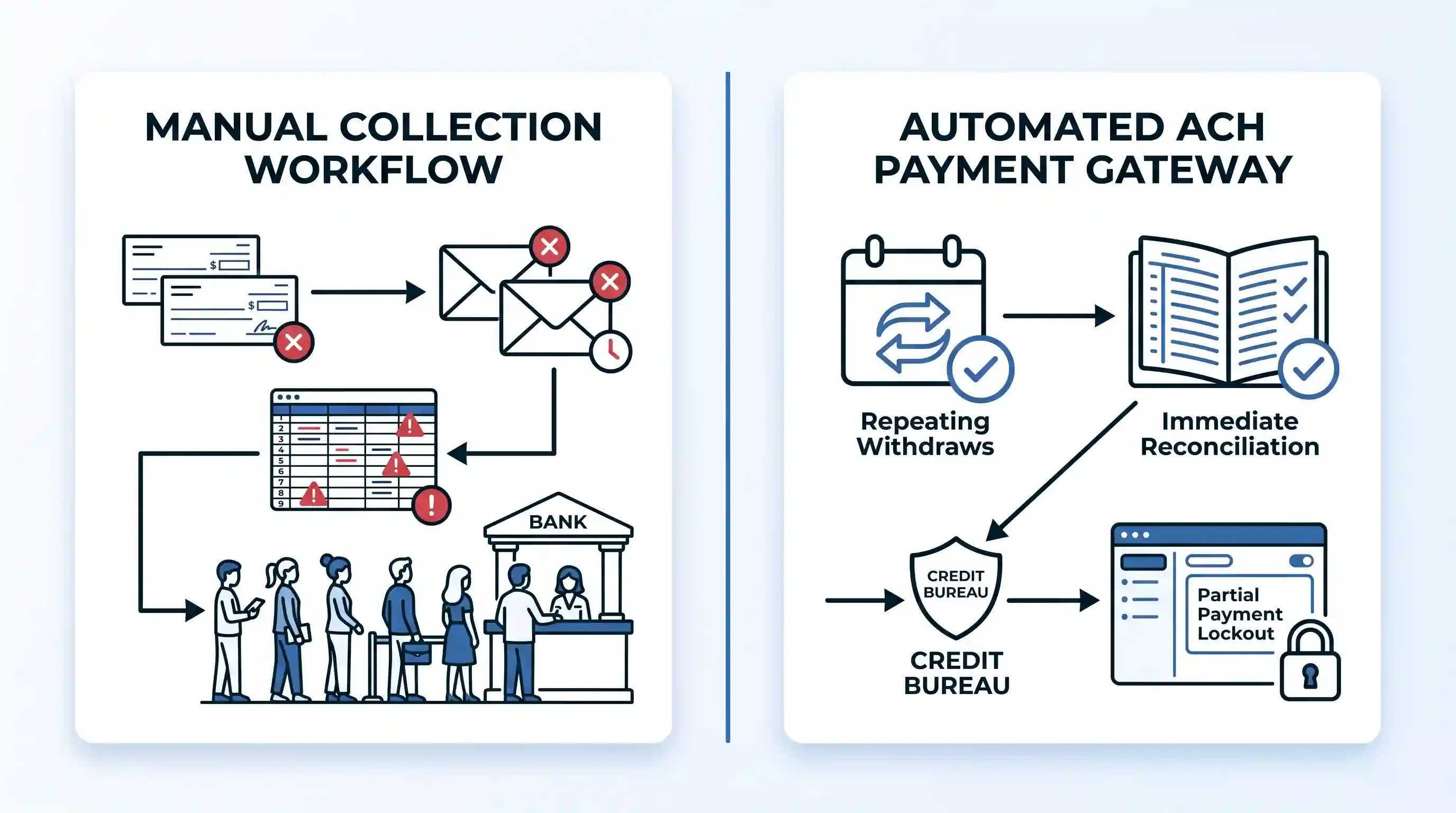
The traditional method of collecting paper checks via postal mail introduces latency, manual processing overhead, and vulnerability to postal disruptions. Furthermore, informal peer-to-peer (P2P) payment apps create severe operational hazards for independent real estate operators.
According to RentRedi independent landlord benchmarking, portfolios utilizing automated recurring ACH portals maintain a 99% on-time payment rate, compared to just 87% for portfolios reliant on manual check processing. Furthermore, 44% of tenants report that automated SMS and email reminders represent the primary catalyst for paying before the grace period expires.
Autopay Integration and Credit-Reporting Incentives
Modern tenant portals leverage bilateral incentives to guarantee collection velocity. In addition to scheduled bank debits, platforms integrate with major consumer reporting agencies (Equifax, Experian, TransUnion) to report on-time rental payments. This structure transforms a routine monthly expense into an active credit-building vehicle for the tenant, driving voluntary on-time compliance without aggressive landlord collection calls.
The Legal Hazards of Peer-to-Peer Cash Apps
Independent landlords routinely turn to consumer cash-transfer apps like Venmo, Zelle, or Cash App due to their low barriers to entry. However, these consumer applications present critical failure points in residential property management:
- Inability to Block Partial Payments: During a formal eviction proceeding, a landlord cannot accept partial rent without legally resetting the statutory cure-or-quit clock in many jurisdictions. Consumer cash apps allow tenants to send nominal payments (e.g., $5.00) that automatically deposit, invalidating the eviction notice and forcing the landlord to restart a multi-month legal process.
- Lack of Audit-Grade Ledgers: Consumer apps do not produce formal, time-stamped accounting statements showing base rent, late fees, utilities, and security deposits separated into discrete accounts.
- Absence of Dispute Protections: P2P payment processors categorize transactions as peer-to-peer transfers, providing virtually zero dispute arbitration if a tenant files an unauthorized payment claim with their bank.
Regulatory Shield: Mitigating Fair Housing and Compliance Pitfalls
A single regulatory compliance mistake can wipe out several years of net rental profits. Landlords operating without structured digital compliance protocols risk substantial fines, civil claims, and legal defense fees. Strategic property operations require clear, repeatable frameworks, as outlined in Los Angeles Property Management Group’s breakdown of critical management mistakes, where avoiding tenant-law ignorance and inconsistent leasing practices is critical to protecting real estate assets.
Navigating Fair Housing and Disparate Impact
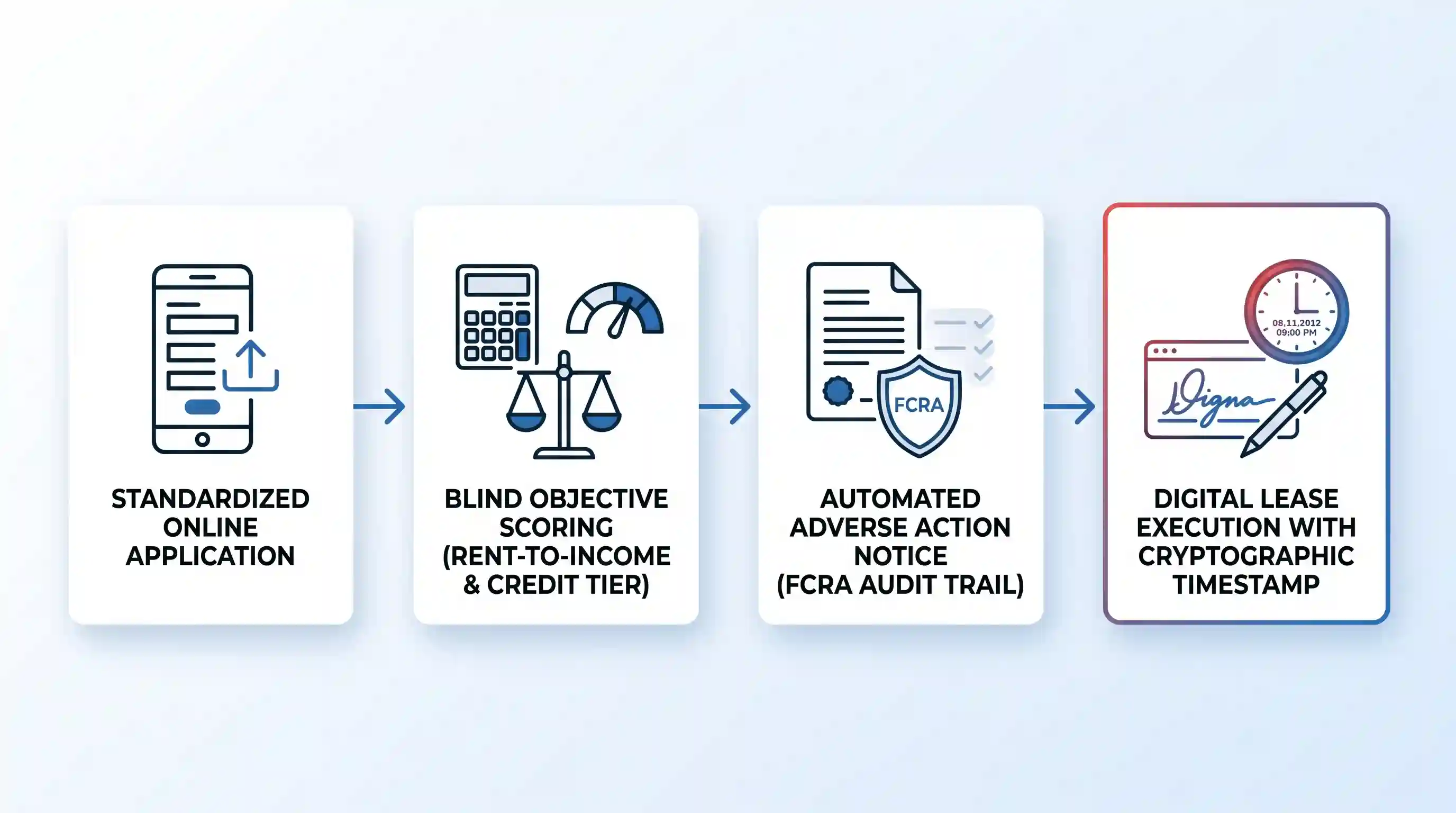
The federal Fair Housing Act (FHA) prohibits discrimination based on race, color, national origin, religion, sex, familial status, and disability. Modern proptech software enforces standardized qualification standards across every applicant, establishing an immutable audit log that shields landlords from disparate treatment claims. When every prospect undergoes identical vetting criteria—such as a verifiable gross income equal to $3\times$ base rent and a minimum credit score—subjective bias is removed from the initial evaluation.
Crucially, landlords cannot treat assistance animals as conventional pets. Official HUD assistance animal guidelines clarify that assistance and emotional support animals are accommodations, not pets; therefore, pet fees, breed restrictions, and weight limits cannot legally be applied to them. Dedicated leasing software prompts property owners to document reasonable accommodation requests properly rather than issuing unlawful blanket denials.
FCRA Adverse Action Automation
When an applicant is declined or conditionally accepted based on a consumer background or credit report, federal law demands strict compliance. The Federal Trade Commission strictly enforces FTC guidance on consumer reports for tenant screening, mandating that landlords provide written adverse action notices containing the screening agency’s identity and the applicant’s dispute rights. Specialized tenant-vetting software generates and delivers these compliance notices automatically, recording certified digital receipts that protect the owner during regulatory audits.
Integrating these compliance protections alongside essential real estate technology tools ensures that document generation, electronic disclosures, and cryptographic signatures remain fully compliant with uniform electronic transaction acts across jurisdictions.
Predictive Maintenance and IoT-Driven Asset Preservation
Reactive maintenance is a primary cause of portfolio value erosion. Emergency plumbing calls, structural water damage, and deferred HVAC service quickly turn high-yield assets into negative cash-flow properties. Shifting operations to predictive workflows systematically protects physical capital.
According to empirical research published by the International Facility Management Association preventive maintenance data, structured preventive maintenance programs deliver up to a 545% return on investment compared to reactive emergency repairs. Proactive maintenance cycles also extend the operational lifespan of major mechanical assets—such as boilers, heat pumps, and roofing structures—by an average of 20%.
Smart Leak Detection and Catastrophic Loss Prevention
Uncontrolled water intrusion represents the most severe operational threat to residential real estate. Research from the Insurance Information Institute property loss research reveals that non-weather water damage accounts for nearly 20% of all residential property claim payouts. A slow pinhole leak under a vanity or behind a washing machine can rot structural subflooring and generate toxic mold infestations for months before a tenant notices the physical symptoms.
Modern property investors mitigate this vulnerability by deploying low-power IoT telemetry sensors beneath dishwashers, supply lines, and water heaters. Paired with automated motorized shut-off valves, these units cut main water supplies within milliseconds of moisture detection while transmitting emergency alerts to the property manager’s phone. Leading property insurers routinely award 5% to 10% premium credits to properties equipped with monitored, automatic shut-off plumbing infrastructure.
Computerized Maintenance Management Systems (CMMS)
A digitized work-order pipeline eliminates informal phone calls and lost text messages. When a tenant encounters an issue, they submit a digital ticket complete with high-resolution photos and diagnostic descriptions. Centralized CMMS platforms automatically categorize tickets, evaluate warranty status, dispatch pre-approved trade contractors, and track repair costs against unit-specific asset ledgers. This operational transparency prevents maintenance disputes, speeds repair resolution, and creates an indisputable maintenance history that enhances asset valuation during a property sale.
Compressing Vacancy with Dynamic Syndication and Digital Access
Vacancy downtime represents a direct deduction from potential annual gross revenue. Legacy listing processes—manually reposting classified ads and managing back-and-forth phone calls for showing appointments—routinely cause properties to sit empty for 30 to 45 days during turnover cycles. Modern marketing and hardware automation compress this schedule into single-digit days.
Instant Multi-Channel Listing Distribution
Rather than manually managing multiple rental platforms, landlords leverage unified syndication APIs. Entering property details, photos, video walkthroughs, and lease terms into a single property management hub instantly distributes the listing across dozens of major consumer portals (Zillow, Trulia, Realtor.com, Rent.com, and regional MLS feeds). Pairing dynamic distribution with smart advertising and listing technology enables algorithmic pricing adjustments based on real-time neighborhood inventory shifts, maximizing monthly rent without inflating days on market.
Smart Deadbolts and On-Demand Self-Guided Showings
Scheduling friction kills prospective tenant conversions. Prospective tenants who work standard business hours frequently encounter difficulty coordinating in-person showings with independent landlords. Implementing enterprise smart locks (such as Yale, Schlage, or August commercial hardware) enables automated, self-guided property tours:
- The prospective renter uploads a government-issued photo ID and facial biometric scan to an identity-verification gateway.
- Upon programmatic verification, the system issues a single-use, time-restricted PIN code valid exclusively for the scheduled showing window.
- IoT entry sensors monitor the duration of the showing, automatically re-locking the deadbolt upon departure and delivering an automated application link to the prospect’s mobile device.
This automated access workflow enables vacant properties to be shown seven days a week, up to twelve hours a day, without requiring the landlord’s physical presence on site.
Operational Trade-offs, Data Privacy, and Tech Limitations
While proptech provides substantial operational leverage, thoughtful implementation requires managing distinct technical, legal, and operational risks:
- Subscription Stack Fragmentation: Subscribing to distinct single-point applications for accounting, tenant vetting, electronic leases, and smart hardware rapidly inflates operating costs. Landlords must evaluate whether a unified platform provides better overall value than an uncoordinated stack of individual SaaS tools. When self-management tools exceed personal capacity, evaluating whether to transition to hiring a professional property management firm becomes a prudent financial consideration.
- Data Security and PII Liabilities: Storing tenant social security numbers, banking details, and credit documents creates cybersecurity liability. Landlords must ensure their software providers utilize AES-256 encryption, multi-factor authentication (MFA), and SOC 2 Type II compliance to defend against external data breaches.
- Over-Reliance on Algorithmic Decisions: Delegating tenant screening entirely to algorithmic software without human oversight violates local Fair Chance housing ordinances in various jurisdictions. Several municipal regulations mandate individualized reviews of criminal background records rather than automatic software rejections.
Manual Landlord Operations vs. Tech-Enabled Property Management
The operational divide between legacy property administration and modern tech-driven management directly affects financial returns, tenant stability, and regulatory security.
| Operational Dimension | Manual Landlord Practice | Tech-Enabled PropTech Workflow | Net Financial & Legal Impact |
|---|---|---|---|
| Rent Collection | Paper checks via mail or personal P2P cash apps (Venmo, Zelle). | Automated recurring ACH debit gateway with credit bureau reporting. | On-time collection rates increase to 99%; partial payments are locked during eviction actions. |
| Tenant Screening | Subjective review of paper paystubs and manual landlord calls. | Standardized, blind financial scoring with automated FCRA adverse action notices. | Defends against disparate impact claims; prevents five-figure Fair Housing penalties. |
| Maintenance Response | Reactive response to emergency calls after catastrophic leaks occur. | IoT telemetry moisture sensors with automatic shut-off valves and CMMS triage. | Achieves up to 545% ROI on preventive maintenance; captures 5%–10% insurance premium discounts. |
| Vacancy Management | Single yard sign and manual Craigslist posts; scheduled in-person tours. | API listing syndication to 30+ sites; smart-lock identity-verified self-guided showings. | Compresses turnover time from 28 days down to under 10 days, saving ~5% in annual gross revenue. |
| Financial Accounting | Commingled bank accounts and shoe-box receipts calculated at tax time. | Cloud accounting with automatic bank feeds and Schedule E categorization. | Ensures full statutory security deposit separation; eliminates missed deductions. |
Key Takeaways: Building a High-Margin Rental Tech Stack
- Automate Collections Early: Transition all residents to direct ACH recurring payments; disable informal P2P apps to prevent partial-payment legal traps during lease disputes.
- Enforce Objective Screening: Establish written, algorithmic applicant qualification standards that comply with HUD assistance animal guidance and FCRA adverse action disclosure mandates.
- Deploy Hardware Defense: Install connected IoT moisture alarms and automated main-line shutoff valves beneath high-risk plumbing junctions to reduce claims and lower insurance overhead.
- Eliminate Showing Friction: Pair cloud listing syndication with verified smart-lock self-guided access to compress vacant turnover intervals.
- Unify Your Accounting Core: Separate security deposit liabilities from operating accounts via automated ledger software to maintain tax compliance and audit readiness.
Frequently Asked Questions
Can landlords be sued under the Fair Housing Act if an automated screening algorithm rejects a tenant?
Yes. Landlords retain primary legal liability for their tenant selection criteria regardless of the software vendor employed. If an automated screening tool incorporates criteria that create a disparate impact against protected classes—such as blanket exclusions for arrest records without convictions—the property owner faces direct regulatory liability. Landlords must ensure their screening rules reflect documented, objective business necessities and conform to local Fair Chance housing laws.
Why should landlords avoid collecting rent through personal apps like Venmo or Cash App?
Personal peer-to-peer cash apps lack basic property management controls. Most critically, they do not allow property owners to reject partial payments. Under many state eviction statutes, accepting even a partial payment of $10 legally waives an active notice to quit, forcing the landlord to dismiss the court action and restart the multi-month notice process. Furthermore, personal P2P apps do not segregate security deposits or provide audit-ready financial statements for tax audits.
What is the measurable ROI of installing smart water shut-off sensors in rental properties?
According to the International Facility Management Association and insurance industry data, non-weather water damage represents nearly 20% of residential insurance claims, averaging over $11,000 per incident before factoring in tenant displacement costs. Installing a smart water monitoring system ($300 to $600 hardware and installation cost) provides virtually instant ROI by stopping catastrophic line bursts, while yielding annual policy premium reductions of 5% to 10% from commercial property insurers.
How does automated listing syndication differ from posting manually on Craigslist or social media?
Automated listing syndication connects directly to rental portal application programming interfaces (APIs) to broadcast a single property listing simultaneously to dozens of high-traffic real estate networks (such as Zillow, Trulia, HotPads, and Realtor.com). When the unit is leased, updating the status in the central management portal instantly withdraws the listing across all external channels, eliminating duplicate leads, outdated pricing errors, and administrative overhead.

💬 Comments