Choosing a top SEO agency requires evaluating technical expertise, ethical white-hat execution, transparent reporting tied to revenue, and scalable strategy rather than quick ranking promises. The best agency partner aligns custom campaigns with your business goals, maintains clear communication, and adheres strictly to search engine quality guidelines.
Quick Take: Essential Checklist for Evaluating SEO Agencies
Selecting an search engine optimization partner is one of the most critical marketing decisions your company will make. A competent agency serves as an extension of your growth team, while an unvetted provider can waste thousands of dollars or trigger search engine manual actions that destroy your domain authority.
Before signing a retainer, ensure any prospective SEO agencies satisfy these core operational standards:
- Technical Competency: Ability to conduct deep crawl audits, resolve rendering issues, and implement structured data.
- Ethical Alignment: Strict adherence to Google Search Essentials guidelines without relying on private blog networks or spam tactics.
- Business-First Reporting: Measurement focused on organic revenue, lead quality, and customer acquisition costs rather than vanity impression counts.
- Transparent Account Structure: Direct access to dedicated subject matter experts (technical leads, content strategists, outreach specialists) rather than a single junior account manager.
- Realistic Expectations: Upfront communication regarding competitive difficulty, long-term timelines, and market trade-offs.
1. Technical Depth and Adaptability to Modern Search
Search engine optimization has evolved far beyond basic keyword placement. Modern search engines rely on complex rendering pipelines, machine learning models, and intent satisfaction signals. The top SEO agencies bring rigorous technical capabilities to ensure your site is fully crawlable, indexable, and performant.
Crawlability, Site Architecture, and Performance
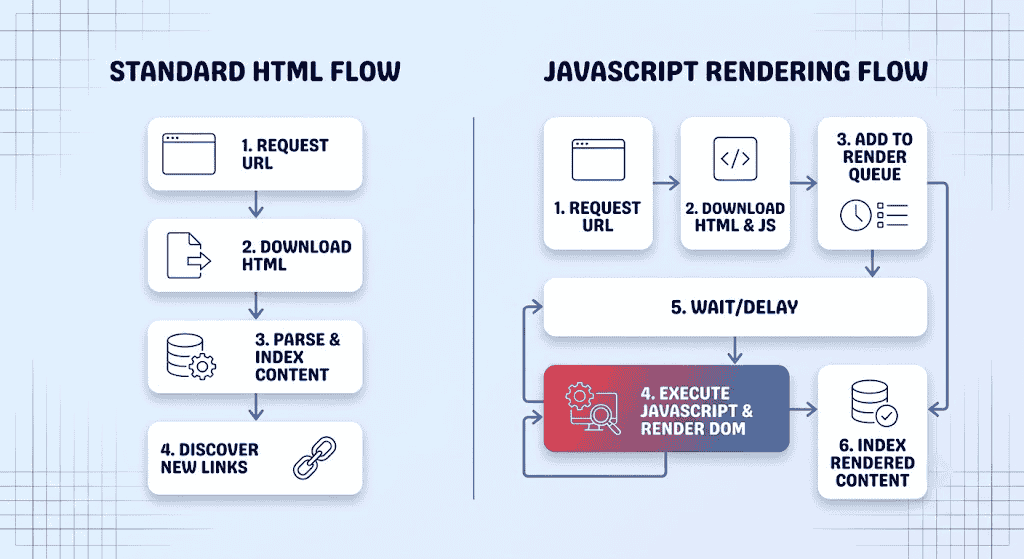
A high-performing agency begins with a comprehensive technical SEO audit to identify hidden architectural bottlenecks. This includes evaluating crawl budget efficiency, canonicalization, internal link equity distribution, XML sitemaps, and Core Web Vitals performance. If your agency cannot explain how JavaScript rendering impacts indexing or how server response times influence search engine crawling, they will struggle to scale your traffic.
Adapting to AI Search and Content Quality Standards
Search interfaces continuously integrate generative features and direct answer modules. Modern agencies must design strategies that align with Google’s people-first content quality standards, optimizing for Experience, Expertise, Authoritativeness, and Trustworthiness (E-E-A-T). Look for agencies that structure content to satisfy searcher intent directly while leveraging schema markup to secure rich result features.
2. Ethical Methodology and Penalty Prevention
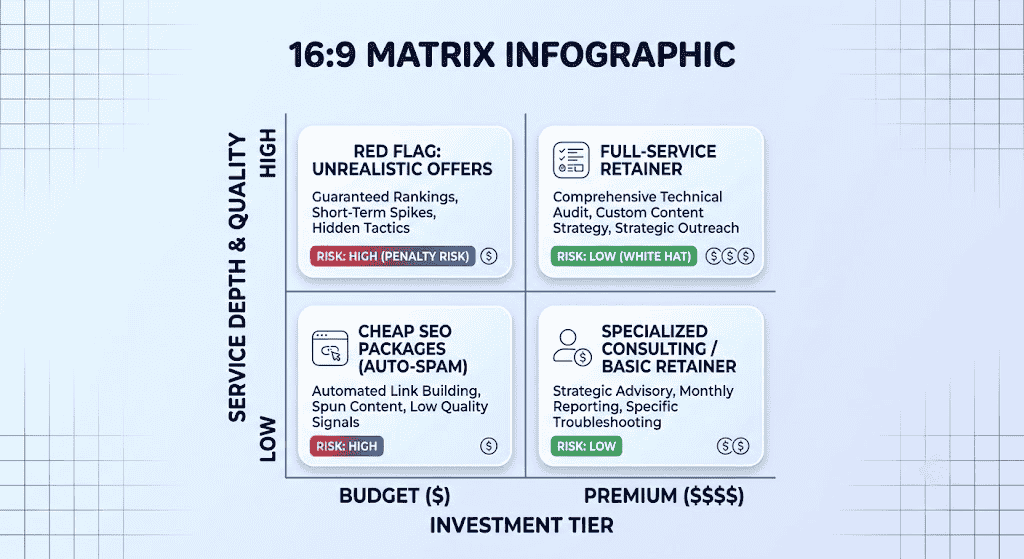
The SEO industry contains low-quality providers who leverage manipulative “black hat” tactics to produce rapid, temporary ranking spikes. These techniques ultimately lead to severe algorithmic demotions or manual penalties from search engines.
White-Hat vs. Black-Hat Tactics
Short-term tricks—such as hidden text, automated comment spam, paid link networks, and doorway pages—put your entire digital asset at risk. Reputable agencies rely exclusively on sustainable “white hat” strategies, such as developing original research, executing outreach for legitimate press mentions, and optimizing on-page context. When evaluating partners, ask how they build backlinks and ensure their tactics align with genuine white-hat link building tactics.
Protecting Brand Integrity
Unethical tactics harm more than just rankings; they erode customer trust. A single public association with spam networks or scraped content can damage your brand reputation. Ethical agencies prioritize brand safety by maintaining strict content guidelines and transparent link acquisition workflows.
3. Transparent Reporting and Revenue-Focused Metrics
Search engine optimization success is not measured by keyword impressions alone. The ultimate goal of an organic growth campaign is driving qualified leads, sales, and measurable enterprise value.
Moving Beyond Vanity Metrics
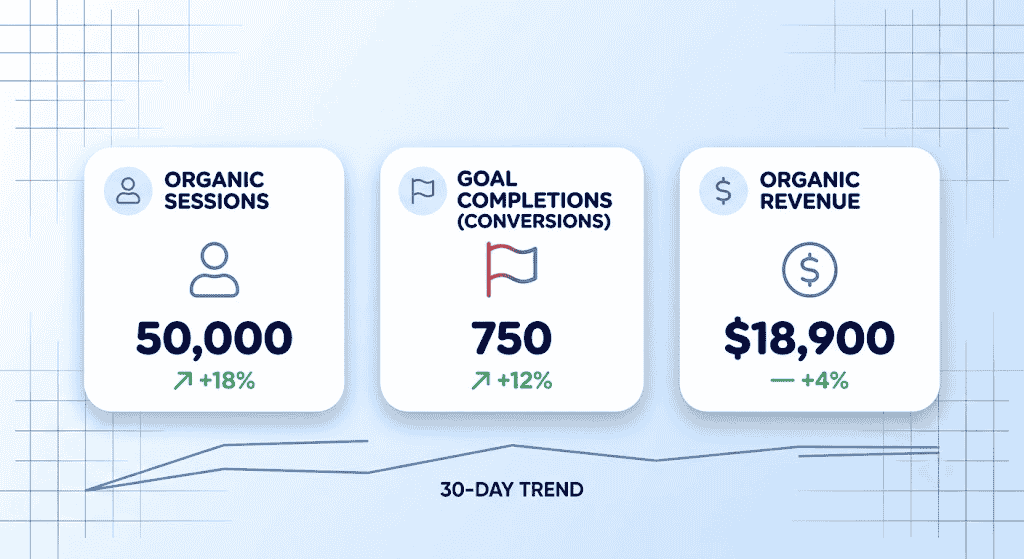
Unscrupulous agencies often present glowing monthly reports filled with “vanity metrics”—such as impressions for non-converting, low-intent terms. A top agency connects organic performance directly to your bottom line, setting up end-to-end tracking to measure organic conversions, pipeline value, and customer acquisition cost. Effective agency management requires establishing clear frameworks for measuring organic ROI.
Scheduled Communication and Reporting Workflows
Consistent, structured communication prevents misalignment. Top agencies establish routine reporting cadence—combining automated monthly dashboards with bi-weekly strategic calls. They accommodate your preferred channels, whether via email summaries, video calls, or dedicated Slack/Teams integration, ensuring you always understand campaign trajectory.
4. Verified Experience, Testimonials, and Track Record
Because search optimization requires ongoing adaptation, proven experience is non-negotiable. Agencies with years of hands-on campaign execution bring established workflows and historical data to your account.
Evaluating Case Studies and References
When reviewing prospective agencies, look for detailed case studies that outline the client’s baseline state, specific strategy executed, and verified business outcomes over 6 to 12 months. According to industry guidance on evaluating agency performance and references, reputable providers should readily offer client references upon request. If an agency refuses to share references or hides behind non-disclosure agreements without providing anonymized proof of performance, treat it as a significant warning sign.
Working with experienced specialists helps in boosting your online presence with SEO while avoiding costly foundational mistakes.
5. Realistic Expectations vs. Guaranteed Rankings
No agency controls search engine algorithms. Any firm that guarantees a “#1 spot on Google” within 30 days is misrepresenting how search systems operate.
Why Ranking Guarantees Are Red Flags
Search results depend on hundreds of dynamic factors, including searcher location, personalization, competitor actions, and core algorithm updates. Experienced agencies discuss competitive realities openly. They set targets based on non-brand traffic growth, conversion rates, and topic cluster authority rather than impossible ranking guarantees.
6. Flexible Team Structure and Specialized Expertise
In many boutique agencies, a single generalist manages every aspect of a client’s account—from technical fixes to copywriting and outreach. This bottleneck severely limits campaign quality and execution speed.
Dedicated Specialists vs. One-Person Operations
Leading agencies maintain structured teams where specialists focus on core competencies:
- Technical SEO Specialists: Focus on crawl errors, site architecture, and code performance.
- Content Strategists: Build topical maps, keyword research briefs, and editorial roadmaps.
- Outreach Managers: Build relationships with publishers and industry journalists.
- Data Analysts: Configure custom analytics event tracking and conversion attribution.
A multi-disciplinary approach ensures your brand receives comprehensive strategy, combining advanced technical auditing with a cohesive content strategy roadmap.
7. SEO Pricing Models and Investment Benchmarks
Understanding industry pricing structures helps you allocate budget effectively and avoid both overpaying and hiring underfunded, low-quality services.
Comparing Pricing Models: Retainers, Project Fees, and Hourly Rates
According to the comprehensive Ahrefs industry pricing survey, organic marketing agencies operate primarily on monthly retainers, project fees, or hourly consulting rates. Knowing these benchmarks prevents falling for unsustainable $200/month packages that inevitably rely on automated spam tools.
| Pricing Model | Industry Benchmark | Best Suited For | Key Considerations |
|---|---|---|---|
| Monthly Retainer | $1,500 – $5,000 / month | Ongoing content, technical management, and authority building. | Dominant model (used by ~78% of agencies). Requires a 6–12 month commitment for compounding growth. |
| Project-Based | $2,500 – $10,000+ per project | Technical audits, site migrations, or specific campaign setups. | Clear scope and timeline. Requires internal resources to execute recommendations after handoff. |
| Hourly Consulting | $100 – $200 / hour | Advisory sessions, troubleshooting, or specialist training. | Great for teams with in-house execution capability needing high-level strategic oversight. |
| Performance-Based | Variable (tied to rankings or leads) | High-margin businesses with mature tracking systems. | Higher risk of misaligned incentives; agencies may target easy, non-converting keywords. |
Furthermore, a broader GoodFirms benchmark study highlights that mid-market businesses typically invest between $1,500 and $5,000 monthly for comprehensive service packages covering technical implementation, content creation, and outreach.
Step-by-Step Vetting Process: How to Hire the Right SEO Agency
To systematically evaluate prospective partners, follow this structured four-step vetting workflow:
Step 1: Define Your Internal Objectives and Budget
Before contacting agencies, clarify your primary growth metrics. Are you looking to fix technical debt from a migration, scale organic e-commerce revenue, or dominate local service queries? Establishing clear goals and budget parameters narrows your candidate list to agencies specializing in your vertical.
Step 2: Request Proof of Work and Client References
Ask short-listed agencies for case studies matching your business model (B2B, SaaS, E-commerce, or Local). Request to speak directly with 1 or 2 current clients to ask about team responsiveness, reporting clarity, and how the agency handles algorithmic fluctuations.
Step 3: Evaluate Their Discovery Call and Proposal Depth
Pay close attention during the initial technical presentation. Does the agency ask insightful questions about your margins, customer lifetime value, and internal engineering bandwidth? A custom, thoughtful proposal addresses your unique roadblocks, whereas generic pitch decks indicate a copy-paste operational model.
Step 4: Audit Contract Terms and Scope Flexibility
Review agreement terms carefully. Look for clear clauses covering intellectual property ownership (you should retain ownership of all created assets, accounts, and content), termination notice periods (typically 30 days after an initial 3 to 6-month ramp-up), and specific scope deliverables. Reviewing proven ranking tips can also help internal teams better assess whether an agency’s proposal contains practical tactical work.
Where Standard Agency Search Models Fail
Hiring an agency is not a guaranteed silver bullet. Knowing when an agency model may fail helps you mitigate risk early:
- Internal Engineering Bottlenecks: An agency can identify every technical issue on your site, but if your internal development team lacks bandwidth to deploy changes, organic traffic will remain flat.
- Lack of Product-Market Fit: SEO accelerates demand capture; it cannot create demand for a product or service that market buyers do not want.
- Siloed Product Knowledge: External agency writers often lack deep institutional knowledge. Without subject matter review from your internal team, published content risks sounding generic.
When choosing among prospective partners, evaluating specialized digital marketing and seo companies allows you to identify teams equipped with the exact technical skills required for your industry.
Key Takeaways
- Focus on technical competency, custom strategy, and ethical execution over quick ranking promises.
- Insist on revenue and conversion metrics rather than relying strictly on keyword impression numbers.
- Verify candidate agencies using case studies, verifiable performance references, and clear contract terms.
- Budget realistically based on market benchmarks ($1,500–$5,000/month for comprehensive agency retainers).
- Ensure your internal team has the development and strategic bandwidth required to implement agency recommendations.
Frequently Asked Questions
How long does it typically take to see results from a new SEO agency?
While technical bug fixes and crawl efficiency improvements can yield initial ranking movement within 30 to 60 days, meaningful revenue and organic growth typically require 4 to 6 months of sustained execution. Search optimization compounds over time as site authority builds and content clusters mature.
What is the difference between white-hat and black-hat SEO?
White-hat SEO focuses on satisfying searcher intent through high-quality content, fast performance, and earned organic links in full compliance with search engine guidelines. Black-hat SEO relies on manipulative shortcuts like link farms, cloaking, and scraped content, which risk severe search engine penalties and permanent loss of indexation.
Should I hire an SEO agency or build an in-house team?
Building an equivalent in-house team requires hiring a technical lead, content strategist, writer, developer, and outreach manager—often costing $300,000+ annually in compensation. Hiring an agency grants immediate access to a full team of multidisciplinary specialists at a fraction of the cost, making it ideal for scaling organizations.
Why do SEO agencies charge monthly retainers instead of one-time fees?
Search engine optimization requires ongoing effort due to continuous algorithm updates, competitor strategy shifts, content freshness needs, and ongoing link acquisition. While one-off technical audits can fix existing errors, sustained organic growth demands continuous strategic iteration, which a monthly retainer structure supports best.




💬 Comments