Online casinos in Poland offer substantially higher statistical payout rates (94%–97% RTP) and round-the-clock accessibility compared to physical establishments (85%–92% RTP), which are constrained by municipal table caps, real estate overhead, and mandatory in-person identity registration. While digital platforms deliver superior catalog breadth, micro-stakes wagering, and instant mobile payment rails, brick-and-mortar venues provide direct sensory interaction, zero-wagering chip liquidity, and physical card deck transparency.
Quick Take: Primary Operational Distinctions
- Return to Player (RTP): Online slot machines average 94% to 97% RTP due to distributed cloud hosting, whereas physical slot cabinets in Poland operate between 85% and 92% to offset gaming duties and premises overhead.
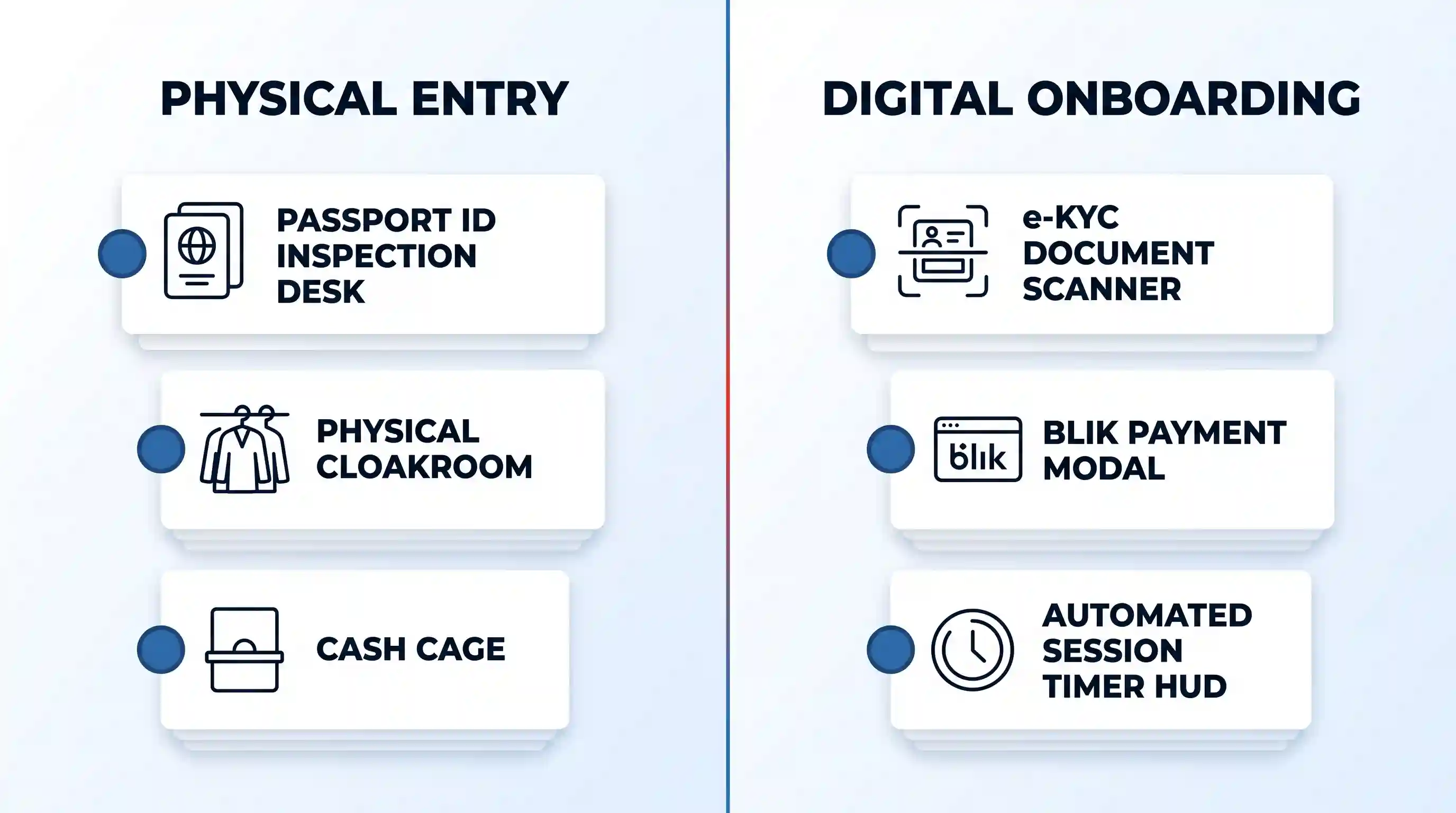
- Regulatory Onboarding: Physical casinos require compulsory passport or national identity card (Dowód Osobisty) presentation at the reception desk under the Polish Gambling Act, whereas digital casinos utilize asynchronous e-KYC document verification.
- Transaction Infrastructure: Brick-and-mortar gaming floors settle wins immediately in physical Polish Złoty (PLN) banknotes at the cashier cage; online platforms rely on instant domestic clearing rails like BLIK alongside electronic bank transfers that carry payment processor clearing windows.
- Catalog Capacity: Polish land-based venues are physically limited to several dozen cabinets and a handful of table games, while online platforms catalog several thousand titles across slots, live-dealer streams, and crash mechanics.
- Promotional Liquidity: Digital welcome packages offer substantial nominal sums but enforce 30x to 45x playthrough requirements, whereas land-based promotional chips carry minimal rollover hurdles before cashout.
System Architectures: How Physical Floors Compare to Digital Game Engines
The operational divide between brick-and-mortar casino halls and modern iGaming platforms is rooted in how game outcomes are produced, governed, and secured. Understanding this technological distinction helps players evaluate the integrity and pace of their play sessions.
Physical Casino Floor Operations: Hardware Maintenance and Mechanical Integrity
A physical casino floor functions through strictly calibrated mechanical hardware and continuous human surveillance. In premier venues across Warsaw, Kraków, and Wrocław, roulette wheels must conform to stringent manufacturing tolerances. Wheel bearings, frets (the metal dividers between pocket numbers), and ball tracks undergo regular physical audits to prevent mechanical tilt or directional bias caused by environmental wear.
Card games such as blackjack and baccarat rely on manual dealer cuts, mechanical continuous shuffling machines (CSMs), and optical shoe scanners that read card values as they are drawn. Floor security operates on a localized loop: pit bosses supervise table limits and chip counts, while closed-circuit overhead camera networks record every shuffle, cut, and chip exchange to resolve disputes and verify payouts in real time.
Digital Game Engines: PRNG Auditing and Server-Side Logic
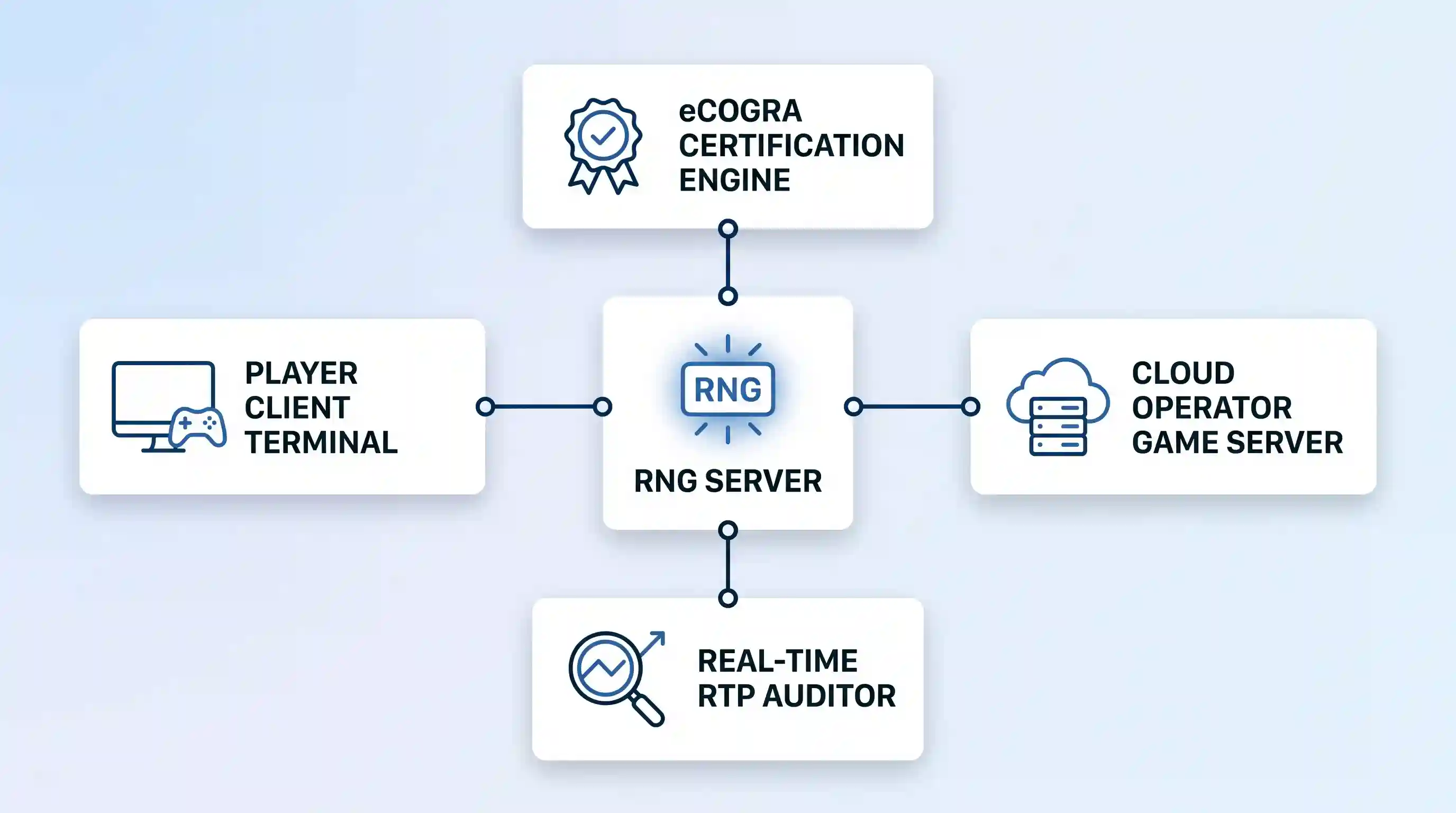
Online casino titles execute all gameplay logic on isolated remote game servers rather than the player’s web browser or mobile phone. Every spin of a digital reel or deal of a virtual card is determined by a cryptographic Pseudo-Random Number Generator (PRNG), such as the Mersenne Twister or cryptographically secure hardware-seeded RNGs. These mathematical algorithms produce millions of unpredictable number sequences every second.
To ensure game integrity, reputable software providers submit their raw source code and empirical game output to independent testing laboratories. Entities conforming to eCOGRA PRNG certification standards and iTech Labs run millions of test rounds to verify statistical randomness, uniform distribution, and compliance with advertised mathematical returns before a game title goes live. Players interested in game mechanics can review our detailed slot volatility and mathematical RTP guide to understand how variance models impact session bankrolls.
Live Dealer Infrastructure: Optical Character Recognition and Low-Latency Video
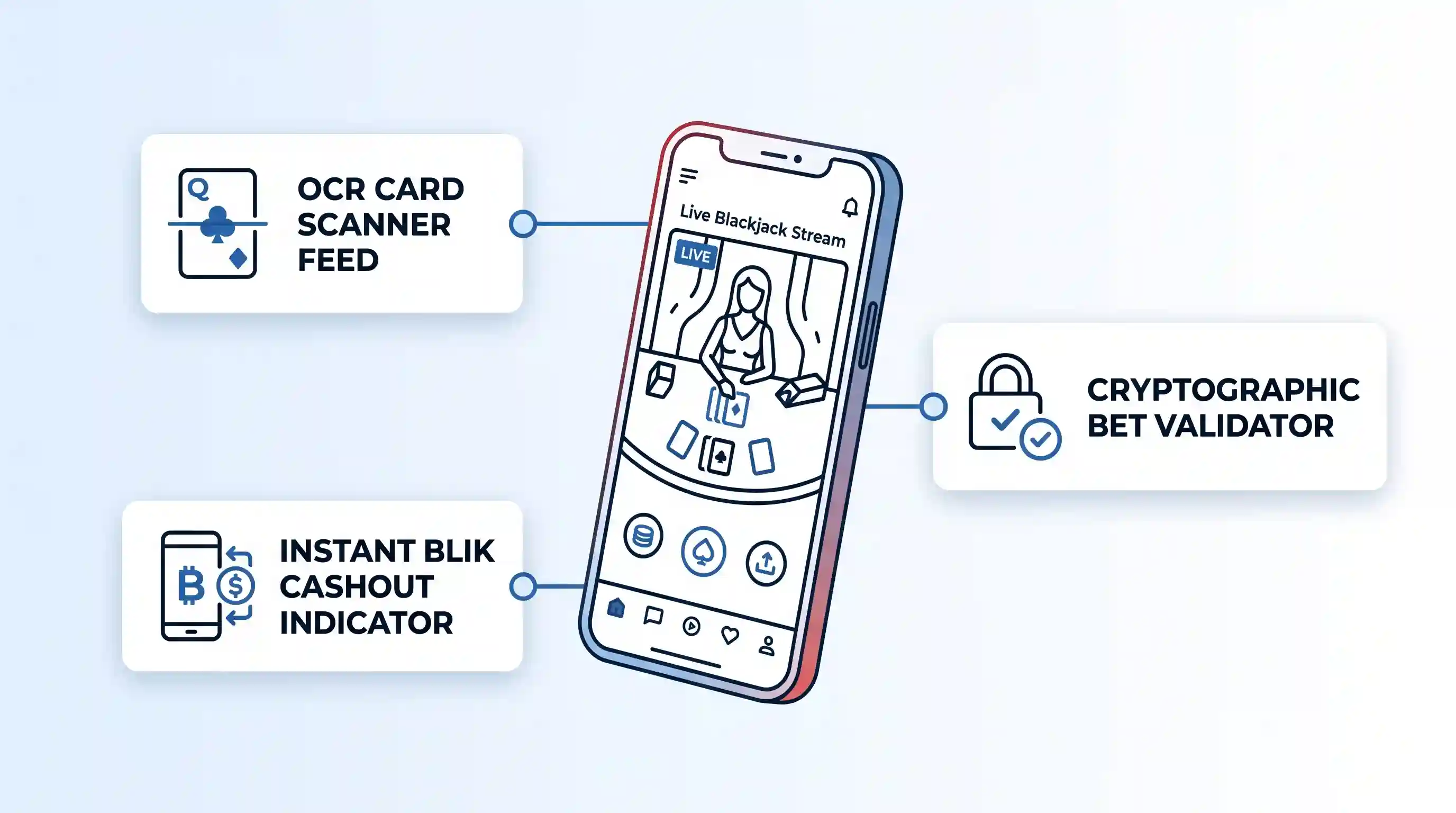
Live-dealer games bridge the physical and digital paradigms by deploying dedicated broadcast studios outfitted with specialized hardware. Physical cards are embedded with micro-barcodes or RFID microchips, while specialized overhead cameras run Optical Character Recognition (OCR) software. When the physical dealer pulls a card from the shoe, the OCR software decodes the suit and rank in milliseconds, writing the data directly into the platform’s betting engine.
Data transmission leverages modern WebRTC protocols, enabling high-definition, sub-second latency video streaming directly to user devices. This architecture allows hundreds of players to wager simultaneously on a single physical table without queuing for physical floor space. Further technical nuances are explored in our report on live dealer studio streaming architecture.
The Financial Math: Return to Player (RTP), Overhead, and House Edge
The statistical house edge is a constant across all gambling formats, but the operational realities of physical real estate create a significant divergence in mathematical player returns between physical and virtual environments.
Why Physical Slot Cabinets Deliver Lower RTP (85%–92%)
Physical casinos carry severe operational expenses. Operating a venue in central Warsaw—such as facilities inside major hotels—requires substantial commercial leases, continuous energy expenditure, physical hardware maintenance, and a multi-tiered staff of dealers, cashiers, pit bosses, and security personnel.
Crucially, physical machines in Poland must absorb substantial gaming duties under the Polish Gambling Act, which levies a 50% tax rate on gaming tables and machine games. As documented in UNLV gaming mathematics studies, operators adjust physical slot payout percentages downward to maintain net profitability amid fixed overhead. Consequently, land-based slot terminals in Poland typically deliver a Return to Player rate calibrated between 85% and 92%, resulting in an aggressive mathematical house edge of 8% to 15%.
Digital Overhead Efficiencies: Higher Payout Percentages (94%–97%)
Digital gaming platforms operate on fractional marginal costs. Once game server integrations and cloud server clusters are established, hosting an additional 10,000 concurrent players requires negligible incremental hardware expenditure. Virtual slot developers configure their base math models to default settings between 94% and 97% RTP, leaving an average house edge of only 3% to 6%.
Over extended sessions, this mathematical gap has a profound effect on player bankroll longevity. A game operating at 96% RTP returns an average of 96 PLN per 100 PLN wagered over millions of cycles, whereas a land-based cabinet operating at 88% RTP drains player capital at three times that rate. Readers can review our breakdown of Polish gambling taxation frameworks to examine how state levies influence both physical and remote operator margins.
Wagering Requirements vs. Physical Chip Redemption
While online casinos hold a mathematical edge on slot payouts, their promotional models introduce structural friction. Digital platforms routinely market 100% or 200% deposit match bonuses to attract players. However, these promotional funds remain locked behind strict wagering requirements—typically mandating that the bonus amount be wagered 30 to 45 times over before any balance becomes eligible for cash withdrawal.
Conversely, land-based casinos in Poland rarely issue restrictive promotional rollovers. When a player purchases physical gaming chips at the cash desk, those chips represent unencumbered liquid value. Any chips remaining at the end of a session can be returned immediately to the cage and redeemed for physical PLN cash with zero playthrough conditions.
Regulatory Protocols and Financial Rails in Poland
Both brick-and-mortar and remote gambling sectors are governed by strict administrative frameworks designed to prevent money laundering, protect minors, and enforce state fiscal revenues.
Land-Based Concessions and Entry Protocols Under the Polish Gambling Act
Physical casinos in Poland are strictly quota-managed under the Ustawa o grach hazardowych (Polish Gambling Act). The Polish Ministry of Finance regulations restrict casino concessions based on population density: exactly one casino concession is permitted per 250,000 residents in a given municipality, with a strict statutory cap of four venues in Warsaw.
Entering a Polish brick-and-mortar casino involves formal security screening. Under Article 15b of the Gambling Act, every visitor must present a valid national ID card or passport at the reception counter. Staff manually register the visitor’s full legal name, PESEL identification number, and date of entry into an internal visitor ledger. This process prevents individuals registered on national exclusion registries or under the legal age of 18 from stepping onto the gaming floor. Video recording on gaming floors is strictly prohibited by statute.
Digital Compliance, Identity Verification (KYC), and Platform Diversity
The remote gambling ecosystem in Poland is bifurcated. The domestic online casino space is restricted to a state monopoly managed by Totalizator Sportowy. Concurrently, a substantial segment of Polish-speaking players navigates internationally licensed operators holding concessions from jurisdictions like Malta or Curaçao, such as the Ice Casino platform, which tailors multi-currency interfaces and regional language support to European players.
In the digital sphere, Know Your Customer (KYC) onboarding is executed electronically. Rather than queuing at an entrance desk, players submit high-resolution scans of identity documents alongside selfie biometric verification via automated compliance portals. Platforms cross-reference user data against global anti-money laundering (AML) and politically exposed persons (PEP) databases. Detailed step-by-step procedures for navigating these identity checks are detailed in our guide to digital casino KYC document procedures.
Deposit and Withdrawal Infrastructure: BLIK vs. Cash Cages
Financial settlement demonstrates one of the sharpest contrasts between formats:
- Physical Cash Desks: Players buy in using physical cash or standard debit cards at the cashier cage. Chips are handed over directly. When cashing out, players return their chips and receive paper banknotes instantly, eliminating electronic processing delays or intermediary bank scrutiny.
- Digital Payment Rails: Online transactions rely heavily on domestic mobile payments. Integrating the Polski Standard Płatności BLIK rail allows players to deposit funds in under 15 seconds by generating a one-time six-digit code in their mobile banking app. While deposits settle instantly, withdrawals require secondary automated approvals, passing through clearing processors or payment networks that take anywhere from 15 minutes to three business days.
Operational Trade-Offs: Where Each Format Wins
Neither format delivers a universally superior experience; each satisfies distinct player priorities, bankroll constraints, and lifestyle preferences.
Tangible Atmosphere and Instant Cash Liquidity (Land-Based Advantages)
Brick-and-mortar establishments excel in delivering a tactile, social atmosphere that software cannot replicate. Players hear the physical resonance of the ball striking brass roulette frets, interact directly with professional dealers, and socialize with table companions. Complimentary venue hospitality, formal dress codes, and the energy of a crowded room create an entertainment event.
Furthermore, physical casinos completely eliminate withdrawal limits, pending verification queues, and digital payment gateway downtimes. When you decide to leave, your balance converts directly into currency in your pocket.
Catalog Scale, Micro-Stakes, and Total Privacy (Digital Advantages)
Online platforms offer unprecedented catalog diversity and accessible bankroll thresholds. While a physical blackjack table in Warsaw typically requires a minimum bet of 20 to 50 PLN per hand—excluding casual players—online video blackjack and live-dealer tables routinely accept stakes as low as 1 to 5 PLN. Online slot spins can be calibrated down to 0.10 PLN.
Moreover, digital platforms grant complete personal privacy. Players are not subject to public observation by onlookers, and there is no requirement to dress in smart-casual attire or navigate urban traffic. Modern iGaming sites also feature modern game categories that cannot exist physically, such as crash mechanics (e.g., Aviator), Slingo, and multi-layered Megaways slots featuring over 117,649 paylines.
Comparative Matrix: Online vs. Land-Based Casino Operations
The following operational matrix details the key technical, financial, and logistical differences between physical venues in Poland and remote iGaming platforms.
| Operational Dimension | Digital / Online Casinos | Land-Based Casinos (Poland) |
|---|---|---|
| Average Slot RTP | 94.00% – 97.00% | 85.00% – 92.00% |
| Table Game Minimums | 0.50 PLN – 5.00 PLN (Micro-stakes) | 20.00 PLN – 50.00 PLN (Standard tables) |
| Game Catalog Depth | 2,500 to 5,000+ titles | 50 to 150 slot cabinets, 5–15 tables |
| Operating Hours | Continuous 24/7/365 cloud availability | 24/7 in select cities; subject to municipal hours |
| Entry & ID Verification | Asynchronous e-KYC document upload | Mandatory passport/ID scanning at reception |
| Deposit Infrastructure | BLIK, Przelewy24, credit cards, e-wallets | Physical cash (PLN), debit/credit POS terminals |
| Payout Settlement Time | 15 minutes to 72 hours (method dependent) | Immediate cash handout at cashier cage |
| Promotional Wagering | 30x – 45x playthrough rollover standard | Zero to minimal wagering on promotional chips |
Responsible Gaming Tools vs. Physical Floor Interventions
Player safety mechanics differ fundamentally between remote servers and physical properties. Established digital operators implement proactive, automated responsible gaming frameworks aligned with European Gaming and Betting Association recommendations. Within user profile dashboards, players can configure hard session timers, daily loss caps, deposit ceilings, and automated reality checks that pause gameplay after continuous play intervals.
In contrast, physical casinos rely heavily on staff observation and manual self-exclusion registers. Pit personnel are trained to identify behavioral signs of tilt, fatigue, or distress, holding the authority to suspend play or deny alcohol service to agitated guests. Players seeking formal protection across both sectors can consult our detailed directory on self-exclusion registries and limit-setting tools.
Key Takeaways
- Digital casinos provide mathematically superior player odds, offering default slot RTPs roughly 4% to 8% higher than Polish physical cabinets due to lower overhead and scalable infrastructure.
- Physical casinos in Poland offer unmatched payout velocity and financial clarity, converting chips into physical currency immediately without identity lockouts or bonus playthrough conditions.
- Onboarding differs by medium: physical venues require mandatory on-site passport or ID registration under the Polish Gambling Act, while online sites deploy automated e-KYC document verification.
- Stakes and game variety favor digital environments, which support fractional micro-stakes (0.10 PLN) and thousands of multi-engine games compared to space-constrained physical floors.
- Land-based gaming delivers the sensory, social experience of live hospitality, while online platforms prioritize personal privacy, convenience, and granular automated budget controls.
Frequently Asked Questions
What is the average RTP difference between physical slot machines in Poland and online slots?
Physical slot machines located in Polish brick-and-mortar casinos typically operate at Return to Player (RTP) percentages between 85% and 92%. In contrast, digital slot games host default math models ranging from 94% to 97%. This mathematical gap exists because land-based operators must absorb heavy municipal commercial rents, physical hardware maintenance, staff salaries, and high localized gaming taxes.
What physical identification is legally required to enter a Polish land-based casino?
Under Article 15b of the Polish Gambling Act, all visitors must present an official government-issued photo ID—either a Polish National Identity Card (Dowód Osobisty) or a valid international passport—at the reception desk. Casino staff are legally mandated to register the individual’s full name, PESEL or birthdate, and arrival time in a formal guest registry before granting access to the gaming floor.
Can players test games for free in physical casinos like they do in demo mode online?
No. Physical casinos do not offer free trial runs or demonstration modes on their gaming floors. Every spin of a slot cabinet or hand at a table requires a real-money cash or chip wager. Online casinos, however, feature software-based RNG demo modes, enabling players to test game volatility, bonus triggers, and mechanics using virtual credits before committing actual funds.
How do wagering requirements differ between online casino bonuses and land-based casino promotions?
Online casino promotional bonuses typically carry strict wagering multipliers requiring the player to bet the bonus sum 30 to 45 times over before any winnings can be withdrawn. In physical casinos, promotional programs are typically distributed as direct match-play vouchers or complimentary hospitality perks, which carry no complex digital rollover rules once played through a single time at the tables.
How are online game outcomes verified as fair compared to mechanical roulette wheels and physical cards?
While physical venues rely on physical level testing of wheels, optical shoe scanners, and surveillance cameras, online games rely on cryptographic Pseudo-Random Number Generators (PRNGs). These software algorithms are audited and certified by independent, accredited testing laboratories like eCOGRA and iTech Labs, which evaluate millions of simulated game rounds to confirm mathematical randomness and verify that actual payouts match advertised RTP values.
