Technology improves your digital advertising ROI by automating who sees your ads, fixing what happens after the click, and giving you clearer data on what’s actually working. A bigger budget alone does not fix any of those three problems.
Quick Take
Most businesses that struggle with ad ROI are not spending too little. They are missing one of three things: smarter targeting technology, a website that converts clicks into sales, or clean data that shows which dollars are working. This article walks through each piece, in plain terms, so you can find the gap in your own setup.
Beyond Basic Ad Spend
Putting money into an ad platform is only the first step, not the whole plan. You get real returns when you use technology to reach the right people, at the right time, with the right message. That means going past basic keyword bidding and trying more advanced tools.
Programmatic advertising is one example. It uses automated software to buy ad space in real time, aiming at specific types of users with strong accuracy. As of 2026, programmatic buying makes up roughly 90% of global digital display ad spend, according to industry data pulled from IAB, GroupM, and eMarketer figures. That scale is why most mid-size and large advertisers now run at least part of their budget through it.
Retargeting works alongside programmatic buying. It uses data on how a visitor already behaved on your site to show them a personalized ad later, bringing interested people back. Setting up a retargeting campaign usually starts with a small tracking snippet on your site, so the ad platform knows who to follow up with. These tools work together to send your budget toward the people most likely to buy, which is how you get more out of every ad dollar instead of just spending more of it.
Website Experience Drives Conversions
You can build the best-targeted ad campaign in the world. If it sends people to a slow or confusing website, that money is wasted. How a visitor experiences your landing page decides whether your ad campaign actually pays off.
When someone clicks your ad, they expect the page to load fast, look right on their phone, and clearly show them what to do next. A clunky website creates friction. People leave fast, and you lose the sale you already paid to win. This is why professional web design & development should be part of your advertising plan, not an afterthought. A well-built site with clear navigation and a obvious next step turns ad clicks into real customer actions.
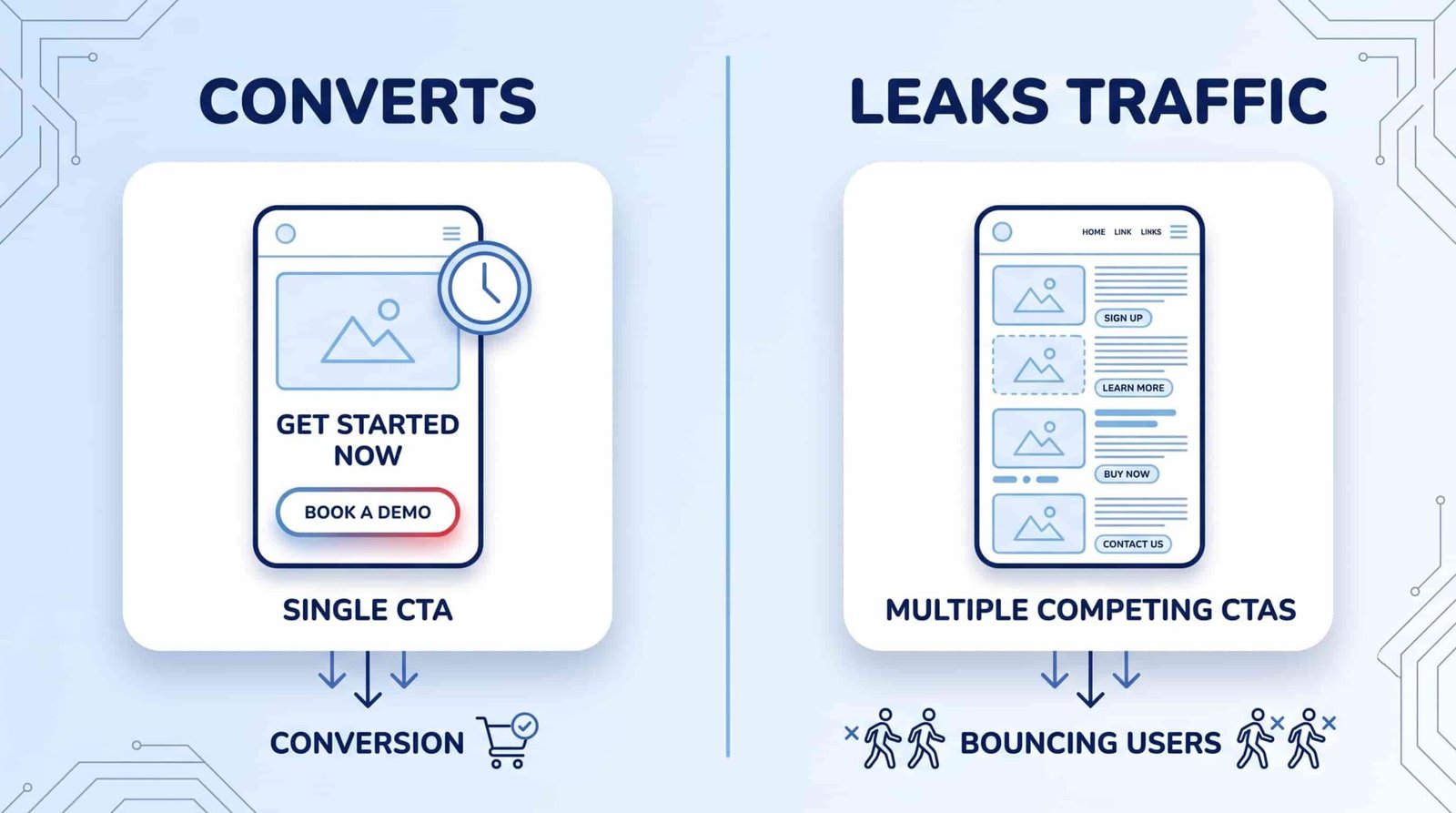
Small, specific fixes often matter more than a full redesign. Page speed, mobile layout, and a single clear call-to-action button are usually the first three things worth checking. A conversion rate optimization review can point you to which of these is actually costing you sales.
Integrating SEO for Ad Performance
Search Engine Optimization, or SEO, and paid advertising work better together than apart. SEO is the practice of improving your site so it ranks higher in unpaid search results. When you connect SEO and paid ad data, each one makes the other stronger.
Keyword data from your SEO work shows you what people are actually searching for. That gives you a proven list of terms to test in your ad campaigns. Paid ads, in turn, let you test new keywords fast, before you commit to a longer SEO push around them. You can read more on how the two disciplines connect in this overview of digital marketing strategy.
One common misunderstanding is that a high Quality Score directly buys you a better ad position or a lower cost per click. According to Google’s own Ads documentation, Quality Score is not actually used in the ad auction itself. It is a diagnostic score built from three things: how likely people are to click your ad, how closely your ad matches what someone searched for, and how useful your landing page is. What does affect your placement and cost per click is Ad Rank, which uses those same underlying factors, plus your bid, directly in the auction. In practice this means the same work still pays off. Fast load times and a clear page structure raise your Ad Rank inputs, even though the Quality Score number itself is not what the auction reads.
Measuring Impact with Analytics
To improve your ROI, you have to measure it correctly first. Modern analytics tools show you far more than clicks and impressions. The trick is tracking the numbers that actually match your business goals: cost per acquisition, conversion rate, and customer lifetime value.
Tools like Google Analytics let you set up conversion tracking, so you can see exactly which ads drove a sale, a sign-up, or another action you care about. Attribution modeling goes one step further. According to Google’s own Analytics documentation, attribution models assign credit for a conversion across every touchpoint in a customer’s path, not just the last ad they clicked. This matters because a customer often sees several ads before they buy, and last-click tracking alone hides that. Pairing this data with a marketing mix modeling approach can help you spot which channels are quietly wasting spend, even when each one looks fine on its own.
Future-Proofing Your Ad Strategy
Digital advertising keeps changing, and privacy is a big part of that. For years, marketers expected Chrome to remove third-party cookies, the small files that let ad platforms track users across different websites. That plan has changed. In April 2025, Google announced it would keep third-party cookies enabled by default in Chrome, giving users a setting to turn them off instead of removing them for everyone.
That does not mean you can ignore the shift toward privacy. Other major browsers, including Safari and Firefox, already block or limit third-party cookies by default. Building a direct relationship with your own audience still matters, through things like useful content, a newsletter, or a loyalty program that earns first-party data honestly. A clear CRM strategy helps you organize and use that data once you have it, instead of losing it in a spreadsheet.
At the same time, artificial intelligence is now built into most major ad platforms, handling parts of bidding, targeting, and creative testing automatically. Guidance from ad-tech vendors in 2026 is consistent on one point: AI works best with human oversight, not as a full replacement for it. Someone on your team still needs to check that automated decisions match your actual business goals and margins, since the software cannot know those on its own.
Common Misconceptions
A higher Quality Score directly lowers your cost per click. This is the most common mix-up in this space. As explained above, Quality Score is a diagnostic tool. The auction itself runs on Ad Rank, which shares some of the same inputs but is a separate calculation.
Programmatic advertising runs itself once it is set up. Automated bidding still needs a person checking in regularly. Left alone for months, a campaign can drift toward the wrong audience or waste spend on stale settings nobody reviewed.
More ad technology always means more sales. Technology only helps if the page it sends people to actually works. A fast, well-targeted ad pointed at a broken landing page still fails.
Where This Approach Has Limits
Automated bidding tools, including the AI-driven ones built into most ad platforms, need a certain amount of conversion data before they optimize well. A very small daily budget or a low number of monthly conversions can leave these tools stuck in what’s sometimes called a cold start, where they simply do not have enough signal yet to make good decisions. If that’s your situation, a simpler, manually managed campaign may outperform an automated one until your volume grows.
Connecting SEO and paid data also takes time and, often, more than one person’s skill set. A small team running ads part-time may not have the bandwidth to build attribution models or run a full SEO-and-PPC integration. In that case, focus first on the landing page and tracking basics covered above. They matter more, and cost less to fix, than advanced automation.
Key Takeaways
Ad spend alone does not create ROI. The technology behind targeting, your website, and your data does the actual work. Programmatic buying and retargeting put your budget in front of the right people. A fast, clear website turns those clicks into sales instead of losing them. Connecting SEO and paid data, and understanding what really drives Ad Rank, helps you spend less to get the same result. Accurate analytics and attribution show you which of these pieces is actually paying off, so you can put more budget behind what works and less behind what doesn’t.
FAQ
Is programmatic advertising only worth it for big companies with big budgets?
No. Self-serve platforms like Google Ads and Meta Ads Manager already run on programmatic-style automated bidding, and small businesses use them every day. The caution is different: very low budgets may not generate enough data for the automation to optimize well, which is covered in the limits section above.
Do I need to hire a developer to fix my landing page for better ad performance?
Not always. Small fixes, like shortening a page, adding one clear button, or compressing images for faster load times, can often be done with no-code website tools. A full site rebuild, or fixing deeper technical SEO issues, usually benefits from a developer’s help.
How long does it take to see an ROI improvement after adding these tools?
This varies by budget, industry, and how much conversion data your account already has, so there’s no single reliable number. As a general pattern, retargeting and landing page fixes tend to show results faster, often within a few weeks, while automated bidding models typically need more time and data to fully learn.
Chrome kept third-party cookies. Does that mean I can stop worrying about privacy changes?
No. Chrome is only one browser. Safari, Firefox, and privacy-focused browsers like Brave still block or limit third-party cookies by default, which together cover a meaningful share of web traffic. Building first-party data through your own audience relationships still protects you if browser policy shifts again.

💬 Comments