If you’re like many modern homeowners, you may be thinking about adding a kitchen to your outdoor living space. Not very long ago, this concept was little more than a dream—a run-down refrigerator standing idly on the back porch accompanied by a bulky shop sink.
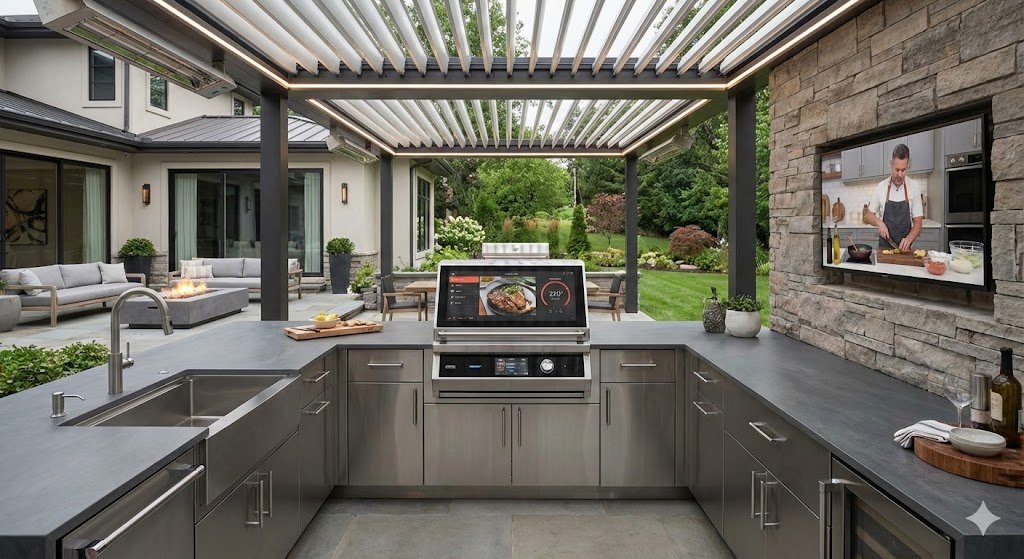
These days, that mental picture is far from reality. In 2025, outdoor kitchens have evolved into elegant, high-tech entertainment hubs. From Wi-Fi-enabled pellet grills to weather-proof 4K TVs, technology has revolutionized how we cook and entertain outside.
Step 1: Visualize with Kitchen Design Software
So many possibilities are available that naming them all would be impossible. This makes designing an outdoor kitchen complex. Fortunately, you don’t have to rely on sketched-out plans. You can use kitchen design software to take the guesswork out of the mix.
Here are the top-rated tools for homeowners in 2025:
- Cedreo: A powerful, user-friendly tool that creates photorealistic 3D renderings in minutes. Perfect for visualizing materials and lighting.
- SketchUp (Free Version): Offers immense flexibility. You can download specific appliance models from their “3D Warehouse” to see exactly how that new pizza oven will fit.
- RoomSketcher: Excellent for planning the entire backyard flow, allowing you to place your kitchen in context with your pool or patio.
- Brand-Specific Tools: Companies like RTA Outdoor Living and Coyote Outdoor offer free, specialized configurators that ensure all cabinets and grills fit perfectly together.
Step 2: Smart Technology Trends for 2025
An outdoor kitchen in 2025 is smarter than ever. Integrating technology doesn’t just mean adding a TV; it means creating a connected ecosystem.
Smart Grills & Smokers
The days of guessing when your steak is done are over. Look for appliances like the Traeger Timberline or Weber Genesis Smart Grills. These connect to your smartphone, allowing you to monitor internal meat temperatures, adjust smoke levels, and receive alerts when your fuel is low—all from your living room.
Weather-Proof Entertainment
Don’t just drag an indoor TV outside. Dedicated outdoor TVs, like the Samsung The Terrace or Furrion Aurora, are built to withstand rain, dust, and extreme temperatures while offering anti-glare screens visible even in direct sunlight.
App-Controlled Lighting
Lighting is crucial for evening ambiance. Modern LED systems can be controlled via apps (like Philips Hue Outdoor), letting you change colors for a party or dim the lights for a romantic dinner.
Step 3: Planning Your Space & Dimensions
Space is a crucial factor. If you have a small deck, take a minimalist approach. If you have a massive backyard, you can design a sprawling entertainment area. However, successful designs rely on standard dimensions:
- Standard Counter Height: Aim for 36 inches, the same as your indoor kitchen.
- Counter Depth: A standard depth of 24 to 30 inches ensures you have enough prep space behind the grill.
- The “Zones” Rule: Divide your layout into four zones: Hot (Grill/Pizza Oven), Dry (Prep space), Wet (Sink), and Cold (Fridge).
- Clearance: Ensure you have at least 36 inches of walkway space between islands or furniture for safe movement.
[Image of outdoor kitchen layout dimensions diagram]
Step 4: Choosing the Best Layout
The best layout depends on your available footprint. Here are the most popular configurations:
Linear (Straight) Layout
Best for: Small spaces, balconies, or against a wall.
This keeps all appliances in a single line. It’s efficient but requires smart spacing to ensure your hot grill isn’t right next to your cold fridge.
L-Shaped Layout
Best for: Corners and creating a “social” bar area.
This is the most popular layout. One leg is typically dedicated to cooking (grill/side burner), while the other is for prep and socializing, often with bar seating on the outside edge.
U-Shaped Layout
Best for: Serious chefs and large spaces.
This freestanding design surrounds the cook on three sides, offering maximum counter space and storage. It creates a distinct “kitchen zone” separate from the rest of the patio.
Step 5: Essential Features & Appliances
While there’s no end to the appliances and features available, focus on what fits your lifestyle:
- Cooking: A built-in gas grill is standard, but consider adding a pizza oven (like Ooni or Gozney) or a side burner for boiling water and sauces.
- Refrigeration: An outdoor-rated fridge is essential. Brands like HCK and Danby offer weather-proof models that maintain safe temperatures even in 100°F heat.
- Sink & Prep: A sink makes cleanup simple and prevents constant trips inside. Ensure you have winterization valves if you live in a cold climate.
- Heating: Extend your season with built-in infrared heaters or a gas fire pit table.
Bringing Your Outdoor Kitchen to Life
It’s important to decide just what you want to include and which features will make cooking outdoors simpler. Failing to size up all those elements could result in a cramped disaster. Be sure to plan ahead and use design software to visualize your project before you break ground. With the right tech and planning, your backyard will become your favorite room in the house.
Frequently Asked Questions (FAQ)
How much does an outdoor kitchen cost in 2025?
Costs vary widely based on materials and appliances. A DIY modular setup might start around $3,000–$5,000, while a custom-built luxury kitchen with smart appliances and stone countertops typically ranges from $15,000 to over $30,000.
Do I need a permit for an outdoor kitchen?
Yes, most likely. If you are running gas, electricity, or plumbing lines, you will almost certainly need a permit. Always check with your local municipality before starting construction.
Can I put a regular fridge outside?
No. Indoor refrigerators are not insulated enough to handle extreme temperature fluctuations. An “outdoor-rated” fridge is essential to keep food safe and prevent the compressor from burning out.

💬 Comments