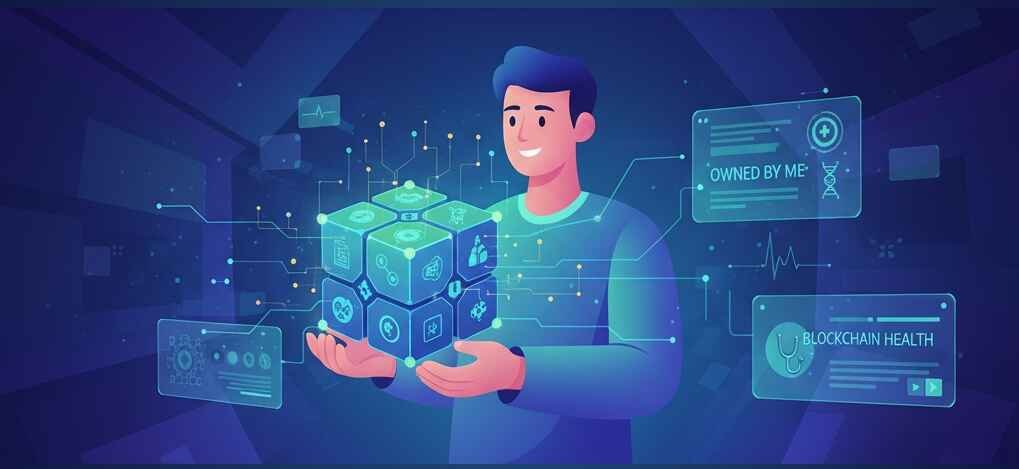
Have you ever wondered what happens to your healthcare data after you get your blood drawn, go to a hospital, or see the doctor? You might assume that those charts—full of intimate details about your life and medical conditions—belong to you. But in the traditional system, they don’t.
Our healthcare data has historically belonged to the industry. While your private information (like your name) is protected by HIPAA, the valuable clinical data is often owned, siloed, and monetized by large healthcare corporations. They use it to conduct research, develop drugs, and train AI models—all while the data generators (you) see none of the profit.
But in 2025, this dynamic is shifting. With the rise of Web3 and decentralized science (DeSci), the technology transforming healthcare is finally putting the patient in charge.
Quick Fact: What is Your Data Worth?
The healthcare data monetization market is projected to exceed $1 billion by 2025. On the open market, a comprehensive individual medical record can be valued between $1,500 and $5,000 depending on the complexity and rarity of the data. It’s time you claimed your share.
1. Monetary Compensation: The “Data Dividend”
The most immediate change in the future of healthcare data is financial. For the first time, you can treat your medical history as an asset.
New platforms are emerging that allow you to “lease” your anonymized data to researchers rather than giving it away for free. By aggregating data from wearables, genetic tests, and electronic health records (EHRs), you can participate in a marketplace where pharmaceutical companies pay for access. Instead of the industry profiting quietly, you receive direct compensation—often in the form of utility tokens, services, or direct currency—putting money back in your pocket.
2. Total Control: Who Sees What?
Ownership is about more than money; it’s about consent. In the traditional model, once you sign a release form, you often lose track of where your data goes. Does it go to a university? An insurance company? A tech giant?
True ownership of your healthcare data allows you to determine exactly who has access. Using blockchain technology, you can grant “permissioned access.” You might allow a diabetes study to see your glucose levels but keep your mental health history completely private. You can also revoke that access at any time. It is the ultimate form of privacy.
3. AI-Driven Product Recommendations
Retaining ownership of your data unlocks a new level of personalized care. When your data is fragmented across five different doctors, no one sees the full picture.
By consolidating your records on a platform like JennyCo, you create a complete “digital twin” of your health. Artificial Intelligence (AI) can analyze this holistic view to offer:
- Hyper-personalized diet plans based on your actual metabolic data.
- Targeted supplement recommendations that address specific deficiencies in your bloodwork.
- Sleep optimization strategies based on data from your wearable devices.
This moves us away from “one size fits all” medicine to a tailored approach where you are more likely to achieve your health goals.
4. Better Science: A Win-Win for Corporations
Interestingly, this shift benefits large corporations, too. Currently, drug developers struggle with “dirty data”—incomplete, outdated, or fragmented records that lead to failed clinical trials.
When you choose to participate in a study through a patient-owned platform, you are providing high-quality, longitudinal data that researchers desperately need. They get better insights to develop products and medications that actually work, and they save billions on failed research. They are willing to pay for this privilege because it helps them target the right problems with the right solutions.
Final Thoughts: Join the Beta
Healthcare data is moving in a new direction—one where the patient is the CEO of their own health. By retaining ownership, you not only open a new stream of potential income but also gain access to superior, AI-driven medical insights that traditional doctors often miss.
The medicine of the future is efficient, equitable, and personalized. Don’t let your valuable data sit idle in a corporate server. Join the movement of individuals taking ownership of their health assets.
Ready to take control? Sign up today to become a beta tester and start your journey toward data sovereignty.

💬 Comments