Franchise-inspired slot games adapt familiar films, television series and video games into casino games, often translating recognizable characters, settings and story elements into reel features and bonus mechanics. Examples include Game of Thrones, Tomb Raider, Street Fighter II, Narcos and Jurassic Park, but the way each title uses its source material differs considerably.
The most useful way to examine these games is not to rank them, but to look at what actually changes when an entertainment property becomes a slot. Some adaptations mainly use recognizable imagery and terminology, while others build mechanics around ideas taken directly from the original franchise.
What Makes a Slot “Franchise-Inspired”?
A franchise-inspired slot uses intellectual property from an existing entertainment brand, such as a film, television series or video game. With an officially licensed game, the developer has permission to use protected elements of that property under its licensing arrangement.
That distinction matters because a familiar title does not prove that two entertainment products are connected. A Western-themed game, for example, can use gunslingers, saloons and train robberies without being based on an existing Western film or video game.
Info
NetEnt’s Dead or Alive 2 is not an adaptation of Koei Tecmo’s fighting-game franchise with the same name. NetEnt identifies it as a Wild West-themed slot and sequel to its own Dead or Alive game, so it does not belong in this list of adaptations from outside entertainment franchises.
Licensed adaptations can also outlive a particular version of a game. A studio may produce multiple titles from the same entertainment property, while individual games can later become unavailable through some operators or markets. That makes it important to distinguish the franchise itself from the specific slot being discussed.
5 Franchise Slot Adaptations and What They Borrow
The following five examples come from television, film and video games. They are informational examples, not rankings or recommendations. Each shows a different way developers have translated recognizable elements of an entertainment property into slot-game presentation or mechanics.
1. Game of Thrones: Turning the Great Houses Into Bonus Choices
Microgaming released its Game of Thrones slot in 2014 as a licensed adaptation of the HBO television property. The game appeared in both a 243-ways version and a 15-payline version, so specifications should be tied to the particular version rather than generalized across every release.
In the 243-ways version, the free-spins feature allowed a choice among House Baratheon, Lannister, Stark and Targaryen. Each House used a different combination of free spins, multipliers and stacked symbols, as documented in current catalogue information for Game of Thrones 243 Ways.
That approach goes beyond placing television imagery on the reels. The political factions central to the source material became part of how the bonus feature was organized. The documented specifications describe that version of the game and should not be assumed to represent every operator configuration.
The title also belongs to a broader period in which Microgaming produced both original games and licensed adaptations with distinctive feature structures. Several Microgaming-era casino games and their mechanics provide additional context for that design history.
2. Tomb Raider: Turning Adventure Into a Long-Running Slot Brand
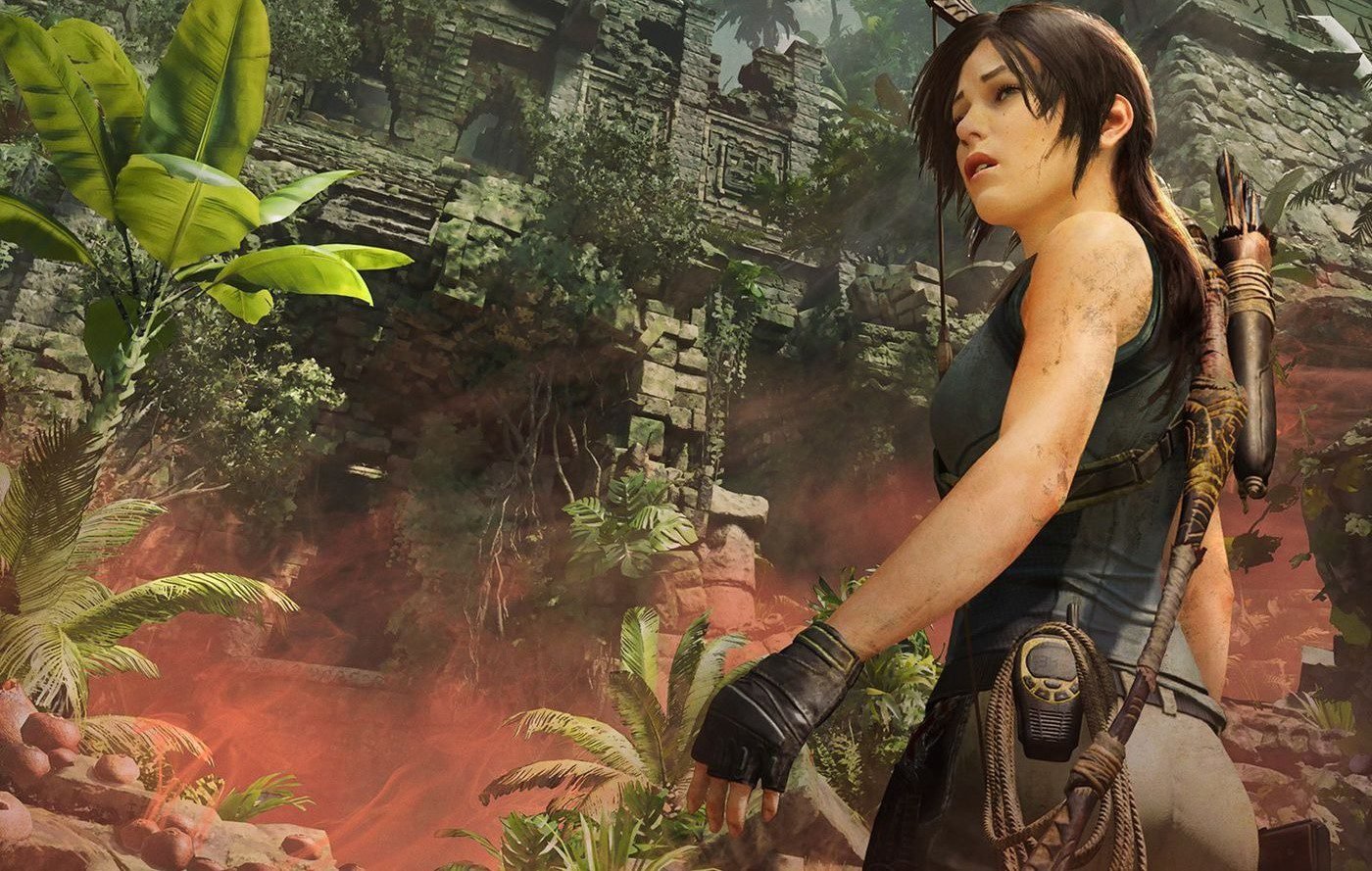
Tomb Raider is a useful example because the franchise has appeared in multiple slot adaptations rather than one fixed game. That means mechanics should be attributed to a specific Tomb Raider title instead of being generalized across the entire slot series.
Later releases also show how the mechanical interpretation can change while the entertainment property remains recognizable. In 2023, Games Global announced Lara Croft: Tomb of the Sun, developed by Triple Edge Studios and based on the Tomb Raider franchise. Games Global’s release announcement documents Rolling Reels, 1,024 ways to win and a multiplier trail among its mechanics.
The distinction illustrates an important point about franchise adaptations: the intellectual property can remain recognizable while the underlying game design changes substantially. Saying that a feature belongs to “the Tomb Raider slot” can therefore be misleading unless the specific title is identified.
3. Street Fighter II: Making Combat Part of the Reel System
NetEnt’s Street Fighter II: The World Warrior Slot provides one of the clearest examples of a source game’s mechanics influencing a slot adaptation. NetEnt released the Capcom-based title in 2020 with a five-reel, five-row Cluster Pays format and eight selectable original characters.
Instead of relying only on familiar fighters and retro visuals, the adaptation incorporated combat into its structure. The selected character battles an opponent, winning combinations determine damage, and a battle continues until one fighter runs out of health points. NetEnt also documented the Car Smash bonus and multi-level Beat the Bosses Free Spins in its Street Fighter II release announcement.
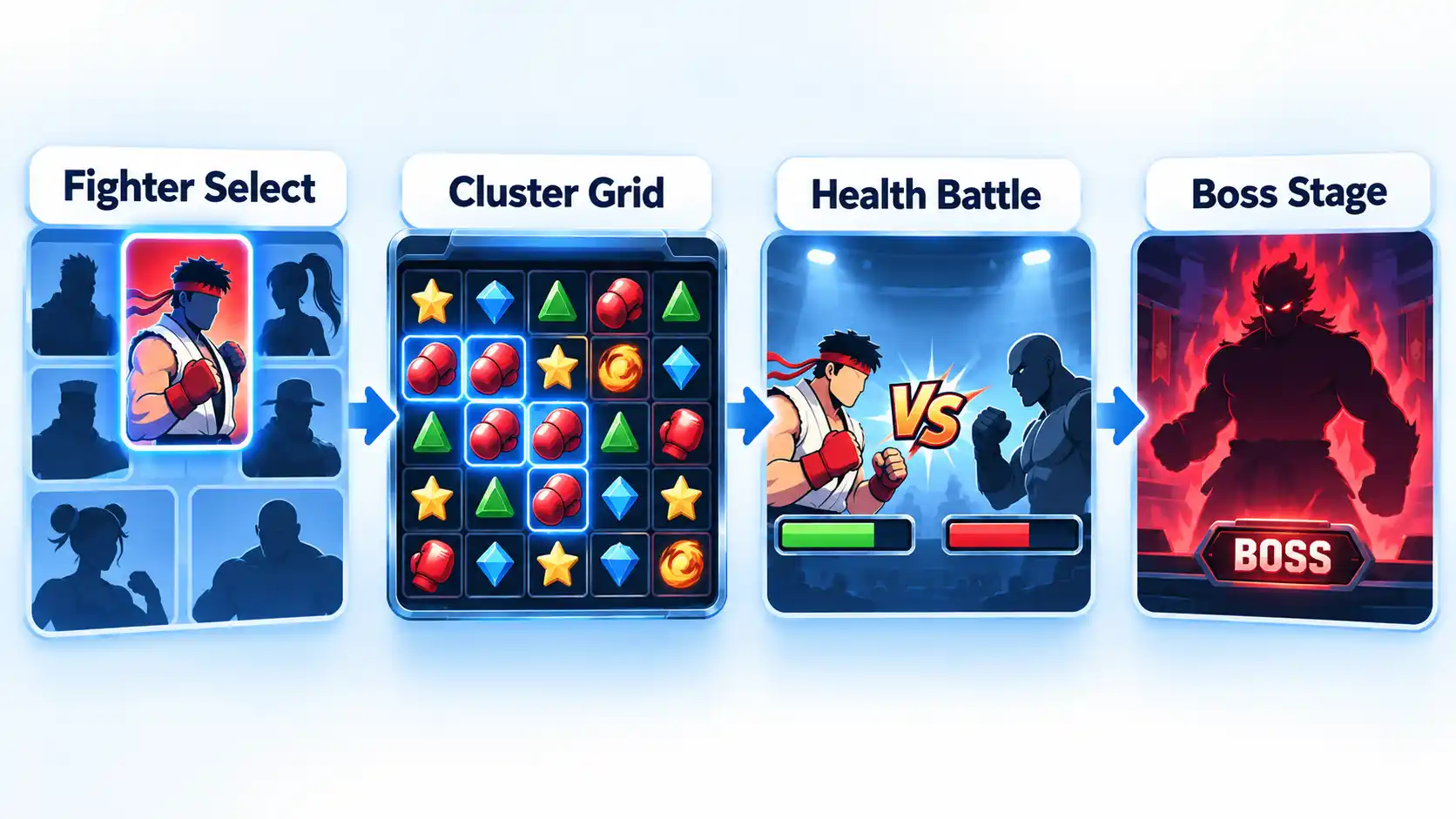
This makes the adaptation structurally different from a slot that merely places licensed character portraits on otherwise unrelated reels. The original game’s ideas of selecting a fighter and progressing through opponents become part of the slot’s feature structure.
4. Narcos: Translating Story Motifs Into Named Features
NetEnt’s Narcos slot was created through a licensing arrangement with Gaumont and released in 2019. NetEnt described it as a five-reel, three-row game with 243 bet ways based on the television drama.
The adaptation incorporates its source material primarily through characters, presentation and feature names. Its mechanics include Walking Wilds, Drive-By, Locked Up and Free Spins. These features and the licensing relationship are documented in NetEnt’s Narcos release announcement.
Here, the connection between franchise and mechanics is less about reproducing an existing game system, as with Street Fighter II, and more about converting recognizable narrative motifs into slot terminology and feature events. The underlying format remains a slot even when the presentation borrows heavily from a television narrative.
5. Jurassic Park: Using Dinosaurs as Feature Modes
Microgaming released Jurassic Park in 2014 as an adaptation of the film property. Contemporary coverage documented a five-reel format with 243 ways to win and five dinosaur-themed free-spin modes.
Those modes associated different dinosaurs with different feature behavior, turning recognizable creatures from the film into mechanically distinct events. Contemporary coverage of Microgaming’s Jurassic Park release documented the five dinosaur-themed features as well as the separate T-Rex Alert mode.
The important point is not a particular payout specification but the adaptation method: dinosaurs and scenarios associated with the film provided the framework for different game features. Current availability should be treated separately from the game’s documented historical release.
What These Adaptations Actually Change
Franchise licensing can affect several layers of a slot at once. The most obvious is visual identity, but the examples above show that developers can also translate characters, factions, conflicts and story events into feature names or mechanical structures.
| Game | Source | Adaptation approach | Defining mechanical link |
|---|---|---|---|
| Game of Thrones | Television | Houses and Westeros imagery | House selection changes free-spin, multiplier and stacked-symbol combinations |
| Tomb Raider | Video games | Adventure setting and Lara Croft branding across multiple slots | Different licensed titles use different reel and feature systems |
| Street Fighter II | Video games | Fighters and arcade combat | Character selection, health-based battles and boss progression |
| Narcos | Television | Characters and narrative motifs | Story-themed Walking Wilds, Drive-By and Locked Up features |
| Jurassic Park | Film | Dinosaurs and film scenarios | Different dinosaurs are associated with distinct feature modes |
The depth of adaptation therefore varies. At one end, licensed artwork, terminology and audio can provide much of the connection. At the other, a developer can make an idea from the original property part of the game’s mechanical structure, as NetEnt did with fighter selection and combat progression in Street Fighter II.
None of those thematic changes alters the basic fact that an online slot uses a random number generator (RNG), software that determines outcomes independently from previous spins. Evolution’s explanation of online slot mechanics also distinguishes return to player (RTP), a long-run theoretical payout percentage, from volatility, which describes the pattern and size of payouts. A recognizable franchise can change presentation and feature design, but it does not provide a way to predict the next outcome.
Why You May Not Find Every Franchise Slot Everywhere
A documented franchise slot is not necessarily available through every operator or in every country. Online casinos maintain different game catalogues, while regulatory restrictions, commercial arrangements and licensing conditions can affect where particular games or features are offered.
Availability can also differ by jurisdiction. Evolution states that free-play demo mode and individual game features on its site are subject to jurisdiction. Historical launch information therefore establishes that a game existed with documented features, but it does not prove that the same title or configuration is currently accessible in every market.
For an Ireland-specific view of current operators and their slot coverage, the sponsored directory of online slot sites in Ireland focuses on that market rather than establishing availability elsewhere.
The same caution applies to technical specifications. Older launch material can establish what a game originally contained, but details presented by a current operator or provider may differ by version or market. When a particular configuration matters, check the information supplied with that version rather than assuming an older specification applies universally.
The Bigger Pattern Behind Franchise Slots
Franchise-inspired slots are most useful here as examples of adaptation. The familiar property supplies characters, settings and narrative ideas, while the developer decides how deeply those elements influence the game design.
Game of Thrones turned Houses into bonus choices, Street Fighter II translated combat into progression, and titles such as Narcos and Jurassic Park used recognizable story elements to organize named features. The Tomb Raider lineage also shows that the same franchise can support multiple slot designs rather than one fixed mechanical formula.
That distinction is more useful than treating every branded title as interchangeable. A license establishes the connection to an entertainment property; the game’s mechanics determine how much of that property reaches beyond the artwork and into the way the slot functions.

💬 Comments