Investing in modern truck technology is essential for businesses because it lowers collision rates, reduces fuel waste, improves driver retention, automates dispatch, and controls commercial insurance premiums. Equipping commercial fleets with connected safety tools protects operational profit margins and keeps drivers safe on the road.
Quick Take: Top Fleet Technology Priorities
Commercial transport companies operate on thin profit margins and face strict federal safety rules. Equipping heavy trucks and utility vans with modern onboard technology is no longer optional for growing businesses. These systems protect your vehicles, support your staff, and prevent catastrophic liability losses.
Quick Take
- Crash Prevention: Automated braking and lane assist systems reduce heavy vehicle rear-end crashes by more than 40 percent.
- Fuel and Maintenance Control: Telematics monitors engine idling and diagnostic trouble codes to stop costly roadside breakdowns.
- Driver Retention: Modern coaching tools replace punitive micromanagement with objective safety bonuses and faster exoneration.
- Dispatch Automation: Real-time GPS and digital proof of delivery eliminate administrative paperwork and wasted miles.
- Insurance Cost Containment: Documented safety data qualifies commercial carriers for insurance policy discounts and protects safety scores.
1. Reduce Severe Collisions and Protect Driver Safety
Operating commercial trucks involves high physical and financial risk. Heavy trucks require significantly longer stopping distances than passenger cars. When road hazards appear suddenly, human reaction time alone is often not enough to prevent a collision.
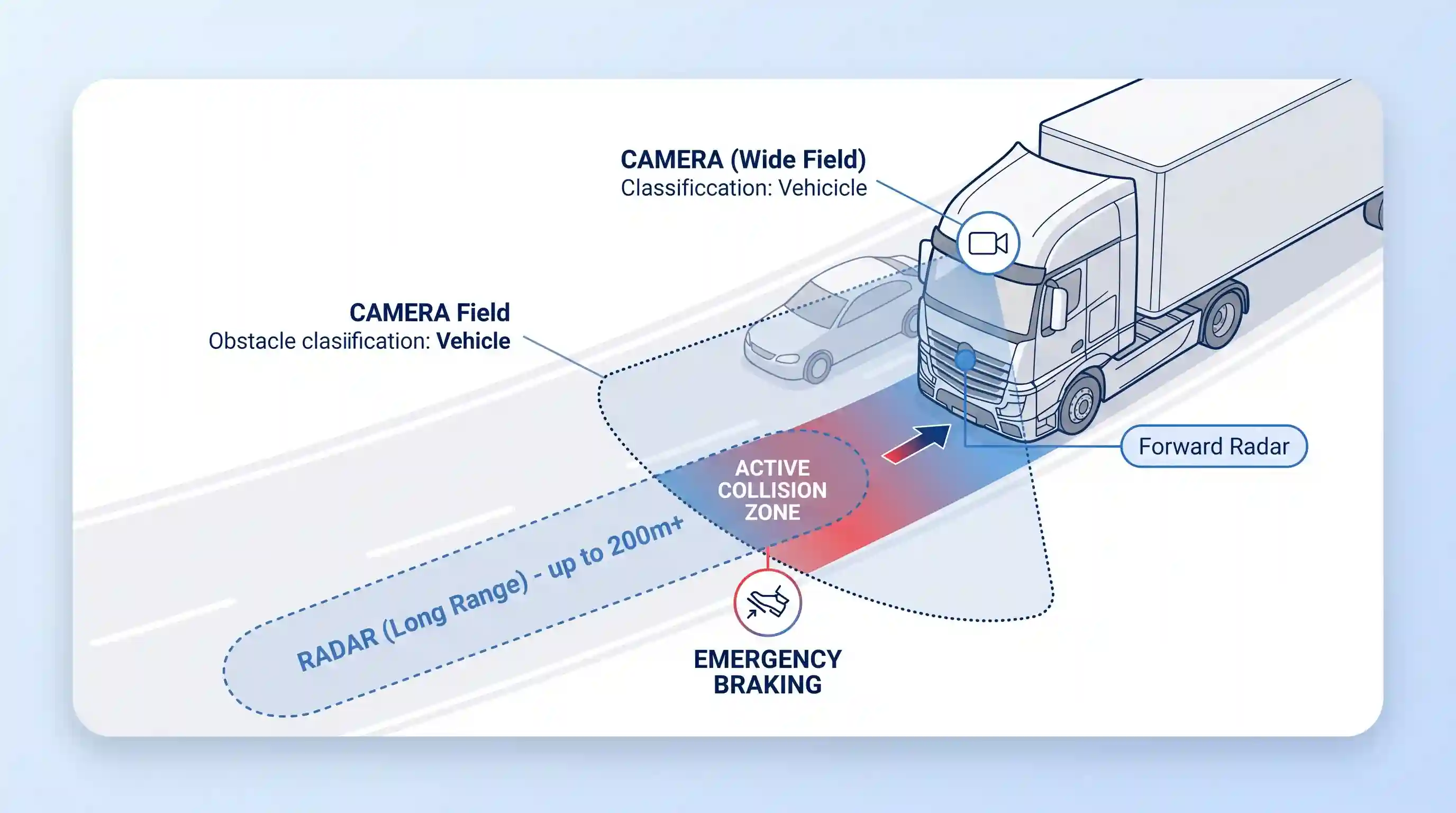
Advanced Driver Assistance Systems, known as ADAS, provide an active safety cushion for commercial drivers. These systems use radar sensors, cameras, and computer software to scan the roadway continuously. Key ADAS components include:
- Forward Collision Warning (FCW): Alerts drivers with sound and visual signals when approaching another vehicle too quickly.
- Automatic Emergency Braking (AEB): Applies vehicle brakes automatically if the driver fails to react in time to avoid an impact.
- Lane Departure Warning (LDW): Warns the driver if the truck begins to drift out of its designated highway lane.
- Blind Spot Detection: Scans adjacent lanes and cab blind spots to ensure safe lane changes on multi-lane highways.
Research confirms the life-saving impact of these active safety tools. An extensive IIHS study on large truck safety revealed that forward crash prevention and emergency braking reduce truck rear-end collisions by over 40 percent. These safety systems share core engineering principles with consumer car accident prevention technologies, but they are specially calibrated for the heavier weights and longer stopping distances of commercial vehicles.
Federal data highlights the constant hazards commercial drivers encounter. Official FMCSA crash statistics show that commercial motor vehicles are involved in thousands of fatal collisions each year, with unexpected lane encroachment by passenger cars serving as a primary factor. Equipping vehicles with video safety systems also protects drivers from unfair blame. As detailed in this commercial collision avoidance systems guide, dual-facing cameras record video evidence of road incidents, allowing businesses to exonerate innocent drivers quickly during disputed claims.
When collisions do happen on busy interstate corridors, injured drivers and fleet operators often consult experienced lawyers for 18-wheeler crash in Houston to navigate complex liability claims and protect their legal rights.
2. Protect Profit Margins by Lowering Fuel and Maintenance Costs
Fuel and mechanical maintenance represent two of the largest recurring expenses for any transportation business. Without direct visibility into how trucks operate on the road, small inefficiencies quickly erode company profits.
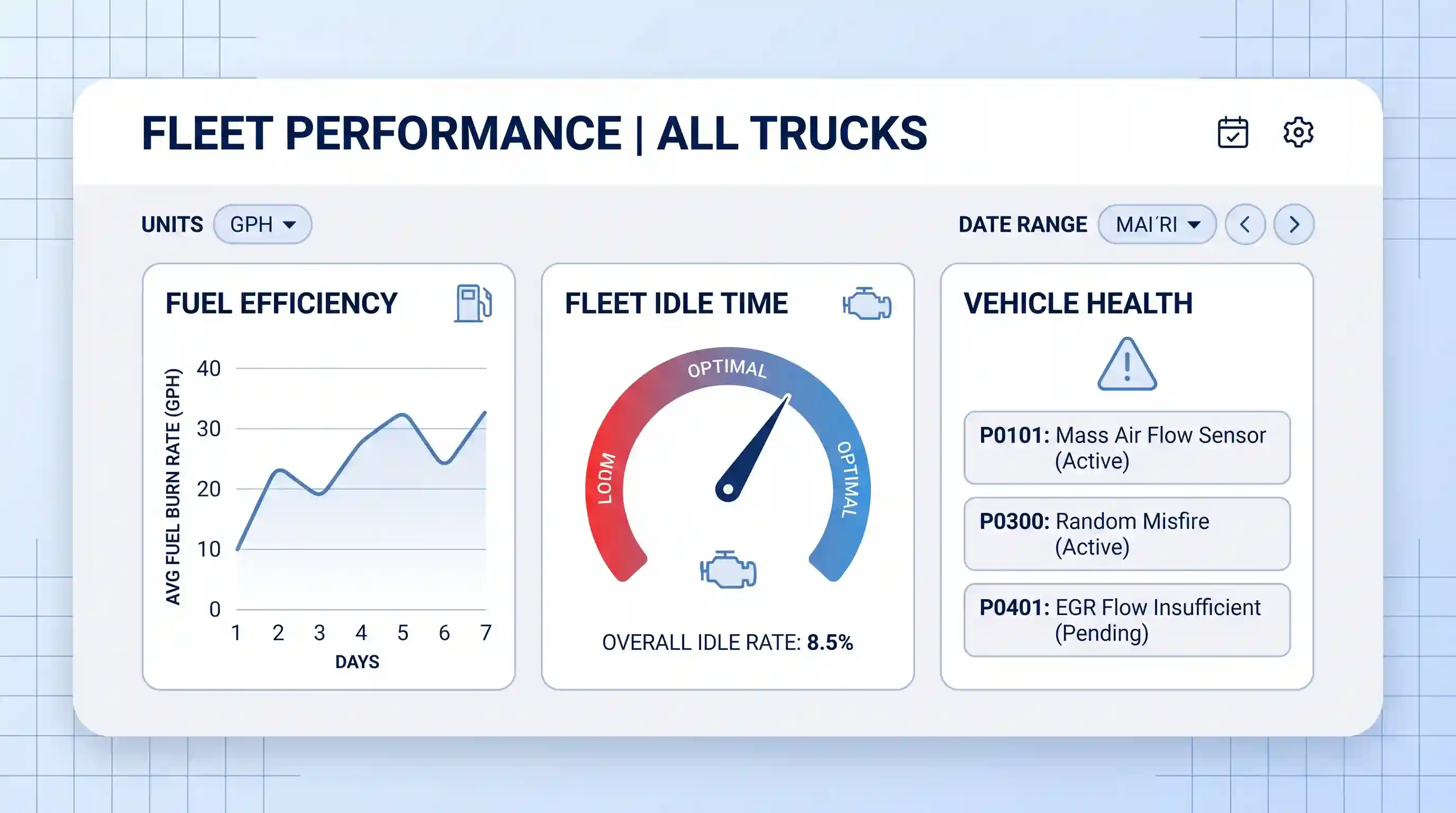
Modern telematics devices plug directly into a truck diagnostic port, such as the J1939 or OBD-II connector. These devices collect real-time data from the engine control module and transmit it to a central fleet dashboard. This tracking allows managers to pinpoint waste across several operational areas:
- Excessive Engine Idling: Running an engine while parked burns up to one gallon of diesel per hour without producing revenue.
- Speeding and Harsh Acceleration: Driving above highway speed limits increases aerodynamic drag and burns fuel at a much higher rate.
- Unplanned Route Detours: Inefficient driving patterns add unnecessary mileage, increasing tire wear and scheduled maintenance frequency.
According to annual ATRI commercial fleet cost priorities, escalating fuel costs and operational expenses per mile remain critical challenges for commercial carriers nationwide. Deploying connected fleet telematics systems allows business owners to establish automated alerts for excessive idling, helping drivers build fuel-efficient habits.
Telematics hardware also transforms vehicle maintenance from a reactive chore into a scheduled process. Instead of waiting for a truck to break down on the highway, diagnostic sensors monitor engine temperature, battery voltage, and brake pad wear. Industry fleet safety technology ROI data shows that proactive engine diagnostics reduce unplanned equipment downtime significantly. Connecting these live engine feeds into established preventative maintenance schedules prevents minor mechanical faults from turning into catastrophic engine failures.
3. Improve Driver Retention and Build a Culture of Fair Recognition
Driver turnover is a persistent challenge across the commercial transportation industry. Long hours on the road, isolation from family, and intense delivery deadlines place heavy physical and emotional demands on commercial drivers.
When fleet technology is deployed poorly, drivers can feel mistrusted. If cameras and sensors are used only to punish minor errors, workplace morale drops rapidly. In contrast, successful transport companies use safety technology to support and reward their workforce through transparent safety programs.
Modern safety systems with machine vision can run structured driver safety coaching programs that benefit employees directly:
- Objective Performance Scorecards: Software tracks smooth braking, safe following distances, and speed compliance to create fair safety scores.
- Performance-Based Bonuses: Fleet managers can tie monthly or quarterly financial bonuses directly to verified safety achievements.
- Targeted In-Cab Alerts: Gentle audio tones alert drivers to mobile phone distraction or lane drifting, allowing them to self-correct before an incident occurs.
Technology also simplifies daily administrative burdens for drivers. Compliance rules require strict recordkeeping of driving and rest periods. Modern hardware tracks these intervals automatically according to federal electronic logging device rules. Automating Hours of Service (HOS) logs removes stressful manual paperwork, allowing drivers to focus entirely on operating their vehicles safely.
4. Streamline Dispatch Schedules and Eliminate Inefficiencies
Manual dispatch processes create constant bottlenecks for growing transport businesses. Relying on phone calls, physical paper manifests, and static map software leads to miscommunication, missed delivery windows, and wasted driver hours.
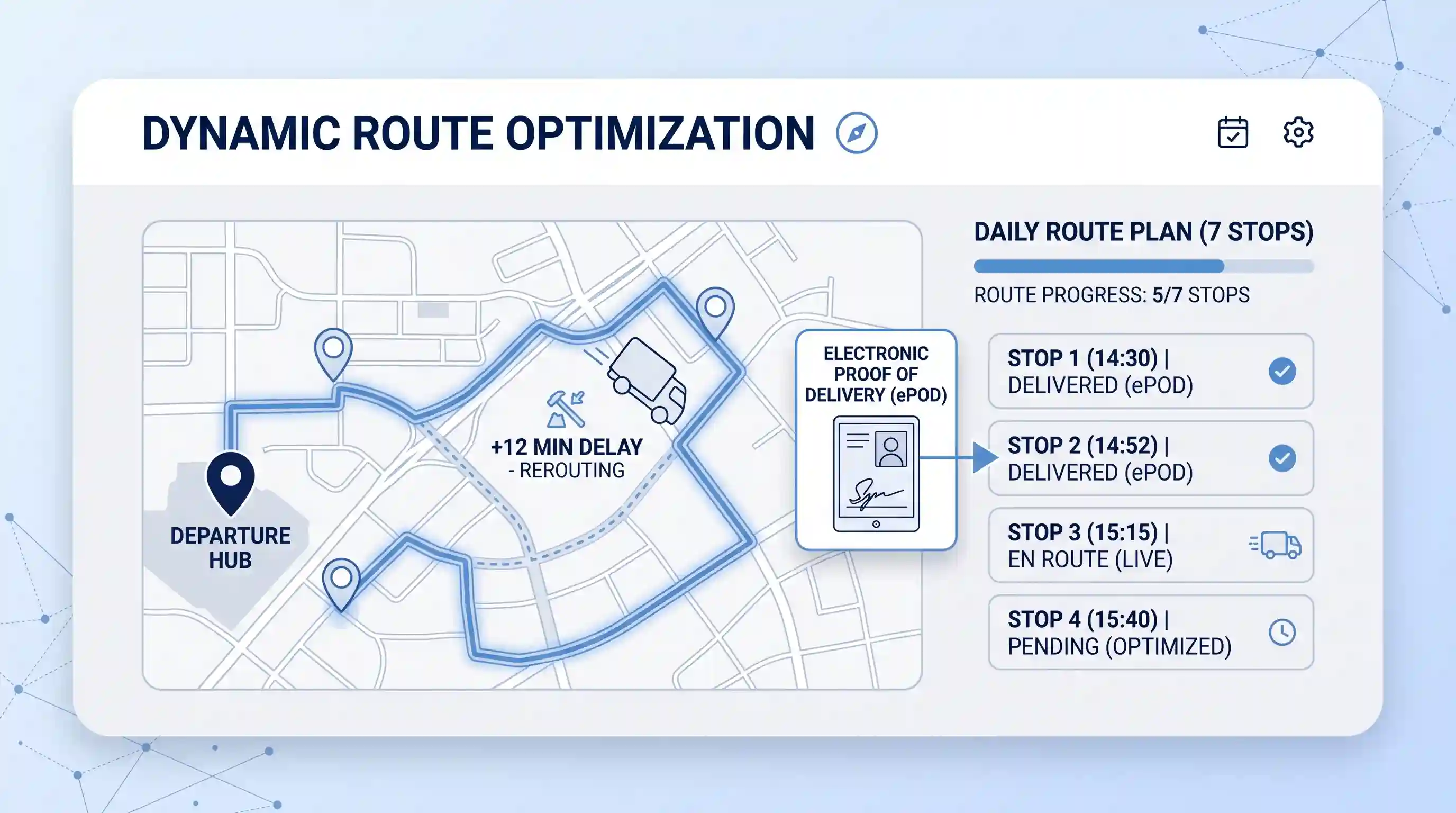
Integrated fleet management systems connect drivers, dispatchers, and customers through a single digital platform. Dispatch software uses commercial navigation to generate efficient routes based on vehicle height, weight restrictions, and real-time traffic conditions. Using dedicated route planning software ensures trucks avoid low-clearance bridges and heavy urban congestion.
This streamlined workflow benefits businesses across multiple daily touchpoints:
- Dynamic Schedule Adjustments: If unexpected highway construction creates a delay, dispatchers can reroute vehicles immediately or reassign nearby stops.
- Accurate Delivery Windows: Customers receive automated arrival alerts with live GPS tracking, reducing customer support calls.
- Electronic Proof of Delivery (ePOD): Drivers capture customer signatures and cargo photos directly on a mobile tablet, uploading delivery confirmations instantly.
Connecting vehicle telematics with modern courier management software tools allows businesses to link proof of delivery directly to automated accounting systems. Invoices can be generated the moment a delivery is completed, accelerating cash flow and eliminating lost paper delivery slips.
5. Lower Commercial Insurance Premiums and Protect Safety Records
Commercial auto insurance rates have risen dramatically in recent years. Insurance underwriters evaluate fleets based on risk exposure, claims history, and regulatory safety scores. Fleets that cannot prove they follow proactive safety practices face steep annual premium increases.
Installing verified safety technology gives businesses strong leverage when negotiating insurance renewals. Commercial underwriters frequently offer premium discounts to carriers that install forward-facing video cameras, speed limiters, and telematics hardware. In the event of an accident, having recorded video footage and electronic brake data allows insurers to resolve claims quickly, preventing costly legal battles over false allegations.
Technology also helps protect your company public safety standing. The Federal Motor Carrier Safety Administration tracks carrier violations through its Compliance, Safety, Accountability (CSA) system. High CSA scores lead to frequent roadside inspections, DOT safety audits, and lost commercial contracts. Automated loggers and speed governors help prevent Hours of Service and moving violations before they harm your operating record.
Federal programs actively assist commercial carriers in evaluating these safety investments. Recent TechCelerate Now program updates provide motor carriers with validated return-on-investment calculators to measure how driver-assist tools offset equipment costs through lower claims and reduced insurance overhead.
Commercial Truck Technology Comparison
Selecting the right technology depends on your vehicle types, fleet size, and primary business challenges. The table below outlines core commercial truck technologies, their typical deployment difficulty, and expected business benefits.
| Technology Type | Primary Function | Target Fleet Size | Deployment Effort | Core Business Return |
|---|---|---|---|---|
| Fleet Telematics & GPS | Monitors vehicle location, engine diagnostics, idle time, and fuel consumption. | 1 to 500+ Vehicles | Low (Plug-and-play OBD-II / J1939 port) | 5% to 12% fuel savings; proactive maintenance alerts. |
| Dual-Facing AI Dash Cams | Records road conditions and cab events with automated distraction alerts. | 5 to 500+ Vehicles | Moderate (Professional windshield & power wiring) | Driver exoneration; up to 40% reduction in collision claims. |
| Automatic Emergency Braking (AEB) | Radar and camera sensors apply brakes automatically to prevent front collisions. | All Commercial Trucks | High (OEM factory install or certified retrofit) | Substantial reduction in severe front-to-rear highway crashes. |
| Dynamic Dispatch & ePOD | Automates route planning, real-time rerouting, and digital proof of delivery. | 3 to 200+ Vehicles | Moderate (Cloud software and driver mobile app) | Faster billing cycles; fewer customer support disputes. |
| Electronic Logging Devices (ELD) | Tracks driving hours and rest breaks automatically to satisfy DOT regulations. | All Regulated Carriers | Low (Certified hardware syncs with driver tablet) | Eliminates HOS log violations; protects CSA safety ratings. |
When rolling out new technology across your fleet, avoid these common deployment pitfalls:
- Deploying Hardware Without Driver Training: Failing to explain why cameras and sensors are being installed creates employee resistance. Hold open meetings to demonstrate how video protects drivers from false accident claims.
- Ignoring Incoming Telematics Alerts: Installing tracking devices without assigning a manager to review diagnostic fault codes wastes your investment. Establish a weekly routine to review engine health and fuel reports.
- Selecting Disconnected Software Tools: Avoid purchasing standalone dispatch, maintenance, and telematics systems that cannot share data. Choose platforms that integrate seamlessly to prevent duplicate data entry.
Key Takeaways
- Active Safety Saves Lives: Automatic braking and collision warnings significantly reduce severe rear-end crashes and commercial liability risk.
- Telematics Protects Margins: Real-time engine monitoring curbs excessive fuel burn from idling, speeding, and overdue maintenance.
- Safety Tech Empowers Drivers: Transparent safety scorecards and automated loggers reduce job stress and support fair performance bonus programs.
- Digital Dispatch Accelerates Billing: Dynamic routing and electronic proof of delivery streamline operations and speed up cash flow.
- Insurance Rates Drop with Verified Data: Underwriters reward carriers that provide verifiable telematics data and video safety records with lower premium rates.
Frequently Asked Questions
How long does it take for truck technology to pay for itself?
Most commercial fleets achieve a complete return on investment within 4 to 12 months after deploying telematics and safety cameras. Financial payback comes from direct fuel savings, reduced brake and tire wear, fewer roadside breakdowns, and the avoidance of a single costly collision claim.
Will driver-facing cameras cause truck drivers to quit?
Driver turnover related to cameras usually happens only when management fails to communicate clearly. When companies explain that dual-facing cameras protect drivers against false accident claims and serve as the foundation for safety bonuses, driver acceptance increases significantly. Transparent coaching policies ensure cameras are viewed as protective tools rather than punitive surveillance.
What is the difference between basic GPS tracking and full fleet telematics?
Basic GPS tracking only shows the physical location and movement history of a vehicle on a digital map. Full fleet telematics connects directly into the vehicle engine control module, transmitting deep mechanical diagnostic codes, fuel burn rates, tire pressure readings, hard braking events, and seatbelt usage in real time.
Do small trucking businesses with under five trucks need fleet technology?
Yes. Small trucking operators are often the most vulnerable to unexpected financial shocks. A single severe collision, major engine failure, or disputed cargo claim can bankrupt a small business. Plug-and-play telematics and dash cameras provide small carriers with the same operational protection and insurance savings enjoyed by large enterprise fleets.

Las carreteras de Los Ángeles son cada vez más peligrosas, tanto para los conductores como para los peatones, y los conductores comerciales no son inmunes a este tipo de incidente vehicular.
Las malas carreteras hacen que los camiones se descompongan con facilidad, lo que reduce el crecimiento del negocio y provoca la insatisfacción de los clientes.
Creo que los grandes empresarios deberían exigir una buena rendición de cuentas del gobierno.