To host a successful virtual holiday celebration for a remote team, select interactive, low-friction activities such as themed sweater days, automated gift exchanges, structured trivia, or coordinated treat tastings, and establish at least two weeks of lead time for physical shipping logistics. Structuring events around shared experiences rather than unstructured video calls keeps remote employees engaged while preventing screen fatigue across distributed time zones.
When remote work forces teams out of a shared physical office, traditional holiday gatherings—like casual catered lunches or after-hours bar outings—cannot simply be replicated over a video camera. Unstructured virtual happy hours frequently devolve into awkward silences, cross-talk, and video fatigue, leaving remote employees feeling disconnected rather than celebrated. Transitioning to a high-engagement virtual event requires intentional structure, inclusive planning, and clear operational logistics.
This operational guide breaks down seven field-tested virtual holiday activities, complete with step-by-step setup workflows, budget estimates, time-zone considerations, and solutions for common edge cases.
Quick Take: Virtual Holiday Activities at a Glance
Compare key requirements, effort levels, and estimated budgets across all seven virtual holiday concepts before selecting an activity for your remote workforce:
| Activity | Best For | Budget / Person | Effort Level | Key Benefit |
|---|---|---|---|---|
| 1. Cookie Decorating Contest | Creative & casual teams | $15 – $35 | Moderate | High visual engagement with async submission options |
| 2. Themed Sweater Day | Large or distributed teams | $0 – $35 | Low | Low-friction, fast-paced fun with zero scheduling overhead |
| 3. Desk Decorating Challenge | Tech-savvy & craft enthusiasts | $0 – $15 | Low | Highlights individual personality and workspace creativity |
| 4. Gourmet Treat Tasting | Foodies & social snackers | $20 – $50 | Moderate | Shared sensory experience via food stipends or shipped treat boxes |
| 5. Family Recipe Exchange | Global & multi-cultural teams | $0 – $10 | Low | Deep cultural connection; fully time-zone flexible |
| 6. Virtual Secret Santa | Small to mid-sized teams | $15 – $25 | Moderate | Personalized gift matching paired with live video unboxing |
| 7. Team Trivia & Escape Room | Competitive & puzzle-loving teams | $15 – $45 | High | Active breakout room collaboration and problem-solving |
What Makes a Remote Holiday Event Successful?
Planning an effective remote celebration requires shifting from passive entertainment to active, structured participation. Successful remote team events rest on four core operational principles:
- Advance Shipping Buffers: Any activity involving physical items—such as gift exchanges, recipe cards, or snack boxes—requires a minimum of 14 to 21 days of lead time to account for peak holiday shipping delays across domestic and international carriers.
- Inclusive Event Design: Avoid framing company events around single religious traditions. Offer non-denominational themes (winter celebration, year-end wrap-up, seasonal cheer) and ensure dietary options accommodate vegan, gluten-free, kosher, and non-alcoholic preferences.
- Time-Zone and Async Balance: Distributed teams across multiple continents struggle to find live meeting slots that do not force someone to attend during dinner or early morning hours. Incorporate asynchronous submission channels alongside live calls.
- Combating Camera Fatigue: Keep live calls under 60 to 75 minutes, assign a dedicated live host or moderator, and make video participation welcoming without forcing uncomfortable spotlighting.
1. Cookie Decorating & Remote Bake-Off Contest
What It Is & Best For
A cookie decorating contest invites team members to unleash their visual creativity by icing, decorating, and presenting holiday cookies during a live call or through an asynchronous photo showcase. This activity suits creative, casual teams that enjoy hands-on projects and light competition.
Step-by-Step Setup & Logistics
- Establish the Format: Decide between pre-baked cookie decorating kits shipped directly to employees or digital stipends (e.g., $20 via UberEats or virtual credit cards) for employees to purchase plain sugar cookies and icing locally.
- Send Instructions Early: Provide details 10 days before the event, outlining decorating categories such as “Most Architectural,” “Funniest Holiday Fail,” and “Company Logo Masterpiece.”
- Host the Live Reveal: Reserve 30 minutes of a virtual meeting for a live “runway reveal” where participants present their creations on camera and share the story behind their design.
- Execute Anonymous Voting: Collect votes using an online poll tool (like Slido or Zoom Polls) during the event to declare winners and distribute digital gift card prizes.
Known Limitations & Fixes
The Taste Dilemma: Because remote colleagues cannot sample one another’s bakes, judge strictly on visual humor, artistic effort, and presentation storytelling. For international workers who cannot receive physical shipping kits, issue localized meal delivery vouchers or reimbursement stipends instead, adhering to standard virtual event planning practices.
2. Themed Sweater Day & Virtual Fashion Runway
What It Is & Best For
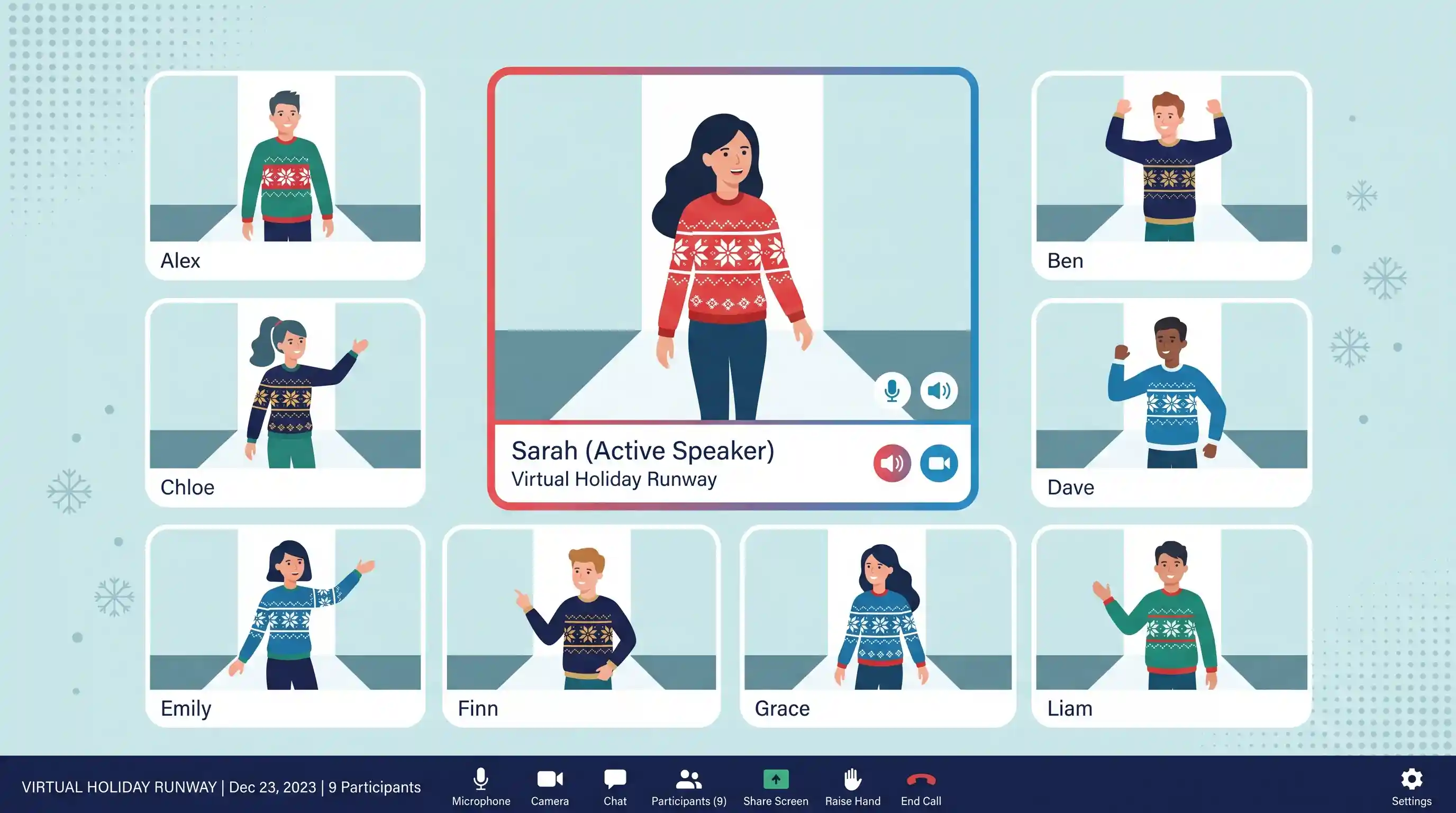
A themed sweater day encourages team members to wear festive holiday apparel during regular meetings or a designated virtual runway session. This activity works exceptionally well for large, highly distributed organizations seeking maximum holiday spirit with minimal scheduling overhead.
Step-by-Step Setup & Logistics
- Select Theme and Options: Give team members freedom to choose between traditional holiday knits, funny seasonal apparel, or winter headwear.
- Provide Outfit Sources: Direct employees seeking new apparel to specialized options like the ugly Christmas sweater catalog at Tipsy Elves at least three weeks prior to the event date.
- Stage the Runway Walk: During your year-end call, spotlight each team member on video for 10 seconds while playing upbeat background music. Encourage participants to strike a dramatic fashion pose.
- Award Novelty Titles: Create lighthearted contest categories, such as “Most Blinding Glitz,” “Classic Retro Vibe,” and “Best Diy Addition.”
Known Limitations & Fixes
Sizing & Personal Comfort: Purchasing specific clothing items for employees often leads to sizing errors or discomfort. Avoid buying apparel directly for staff; instead, host the event as a voluntary dress-up contest using clothing items employees already own or choose to source themselves.
3. Virtual & Physical Desk Decorating Challenge
What It Is & Best For
This dual-track challenge allows remote workers to decorate either their physical home office background or their digital video background (Zoom/Teams) using festive graphics, lighting, or crafts. It is ideal for tech-savvy teams and home-decorating enthusiasts.
Step-by-Step Setup & Logistics
- Announce Competition Tracks: Define two clear categories: Track A for physical workspace styling (streamers, lights, holiday trees) and Track B for custom digital backdrops designed in tools like Canva or Photoshop.
- Set Guidelines: Emphasize that physical decorations should be easy to set up and remove without damaging home walls or equipment.
- Host a Background Tour: Give each participant 45 seconds during a team gathering to explain their background concept and highlight hidden easter eggs in their design.
- Cast Digital Votes: Have team members submit top choices via private chat messages to the event host to select category winners.
Known Limitations & Fixes
Home Privacy Concerns: Some employees feel uncomfortable showing their home environment on video. Ensure Track B (digital backgrounds) is framed as an equally valued category so anyone can participate without opening their physical space to scrutiny. Building an inclusive environment helps strengthen long-term remote company culture.
4. Gourmet Treat Tasting & Coordinated Snack Hour
What It Is & Best For
A gourmet treat tasting pairs distributed snacking with shared social conversation. Team members unbox and sample artisanal desserts, specialty chocolates, or gourmet snacks simultaneously during a video call. It is best for small-to-mid-sized teams that appreciate culinary experiences.
Step-by-Step Setup & Logistics
- Gather Dietary Data: Distribute a private survey 3 weeks in advance to log allergies and dietary restrictions (nut-free, gluten-free, vegan, halal, kosher).
- Select Delivery Provider: Coordinate direct bakery shipping using services like Milk Bar holiday gift boxes for artisanal cakes, cookies, and dessert assortments.
- Schedule Unboxing Call: Instruct participants not to open their packages upon arrival. Set a strict “do not open until our call” label on the outside shipping box.
- Guide the Tasting: Host a 45-minute casual hour where team members open their treats together, rate flavors, and chat informally.
Known Limitations & Fixes
Perishable Delays: Shipping baked goods during peak winter weather can lead to transit delays or spoiled packages. Mitigate risk by pairing physical gift shipments with local food delivery stipends (DoorDash or UberEats vouchers) for team members living outside major delivery corridors, aligning with modern event food stipend strategies.
5. Distributed Family Recipe Exchange & Digital Cookbook
What It Is & Best For
The recipe exchange encourages team members to share treasured holiday dishes, family recipes, or personal cooking traditions with colleagues. This low-stress, meaningful activity works across global time zones and supports asynchronous participation.
Step-by-Step Setup & Logistics
- Distribute Blank Recipe Cards: Mail physical recipe stationery—such as decorative Rifle Paper Co. recipe cards—or share a fillable digital PDF template.
- Collect Submissions: Ask participants to submit one recipe along with a 2–3 sentence story explaining why the dish matters to their family or regional culture.
- Compile a Digital Cookbook: Assemble submitted cards, story notes, and dish photos into a polished PDF team cookbook using design tools like Canva.
- Distribute Final Copy: Send the compiled cookbook to all team members before the annual holiday break as a permanent keepsake.
Known Limitations & Fixes
Non-Cook Intimidation: Employees who do not cook may feel excluded by a culinary challenge. Expand criteria to include quick holiday beverages, festive mocktails, store-bought childhood favorite snacks, or simple zero-cook desserts. Implementing structured submission processes demonstrates effective async communication tips for distributed teams.
6. Virtual Secret Santa & Live Unboxing Session
What It Is & Best For
Virtual Secret Santa adapts the classic holiday gift exchange for remote workers. Using automated online software, team members receive secret assignments, buy targeted gifts within a strict budget, ship them directly to their recipient, and open them together on camera.
Step-by-Step Setup & Logistics
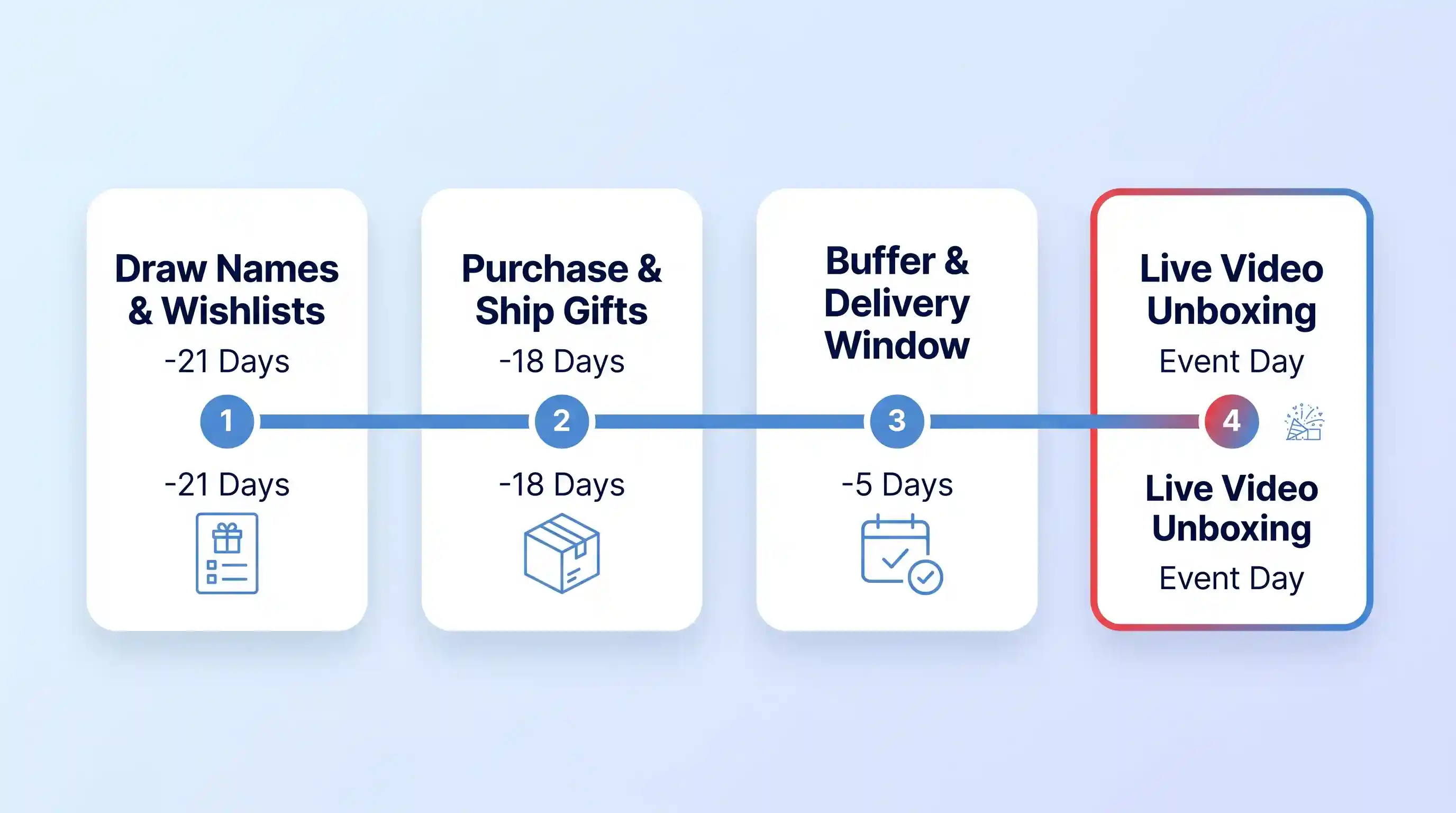
- Set Up Exchange Platform: Use an automated Secret Santa generator to draw names, collect shipping addresses privately, and establish budget limits (e.g., $20 limit).
- Collect Wishlists: Require participants to list 3 specific interests, hobbies, or item links to prevent guesswork gift buying.
- Enforce Shipping Cutoffs: Set the gift-purchasing deadline 18 days prior to your live meeting so packages arrive well before the party date.
- Host Unboxing Call: Gather the team on video. Each person opens their package on camera and guesses who their Secret Santa was before expressing thanks.
Known Limitations & Fixes
Lost Packages & Unequal Spending: Package losses during holiday shipping can leave a participant empty-handed during live calls. Require all senders to submit tracking numbers to the organizer, and maintain emergency backup e-gift cards ($20 value) to award immediately if a physical shipment goes missing, as recommended in the U.S. Chamber remote holiday guidelines.
7. Interactive Team Trivia & Digital Escape Room
What It Is & Best For
Interactive trivia and digital escape rooms place remote workers into small breakout teams to solve puzzles, answer pop-culture questions, or decode challenges under a time limit. This activity suits energetic, competitive groups that thrive on structured problem-solving.
Step-by-Step Setup & Logistics
- Select Event Vendor or Platform: Choose between self-hosted trivia (using platforms like Kahoot or Quizizz) or professionally moderated virtual escape rooms (such as Outback Team Building or Virtual Roam).
- Form Balanced Breakout Teams: Divide participants into cross-functional teams of 4 to 6 people to encourage cross-departmental bonding.
- Establish Game Rules: Run 3 distinct rounds (e.g., Year in Review Company Trivia, Holiday Movie Lore, and Visual Puzzle Decoding) lasting 10 minutes per round.
- Crown Champions: Tabulate live scores on a shared leaderboard and send winning team members digital gift vouchers or team trophies.
Known Limitations & Fixes
Dominant Personalities: In competitive trivia, extroverts can accidentally overpower quieter team members. Structure breakout rooms with clear roles (e.g., designated scribe, spokesman) and utilize chat-based submission forms so everyone can contribute equally. Reviewing effective virtual event moderation tips ensures smooth breakout room execution. Pair these games with ongoing virtual team building activities throughout the year.
Decision Framework: How to Choose the Right Activity
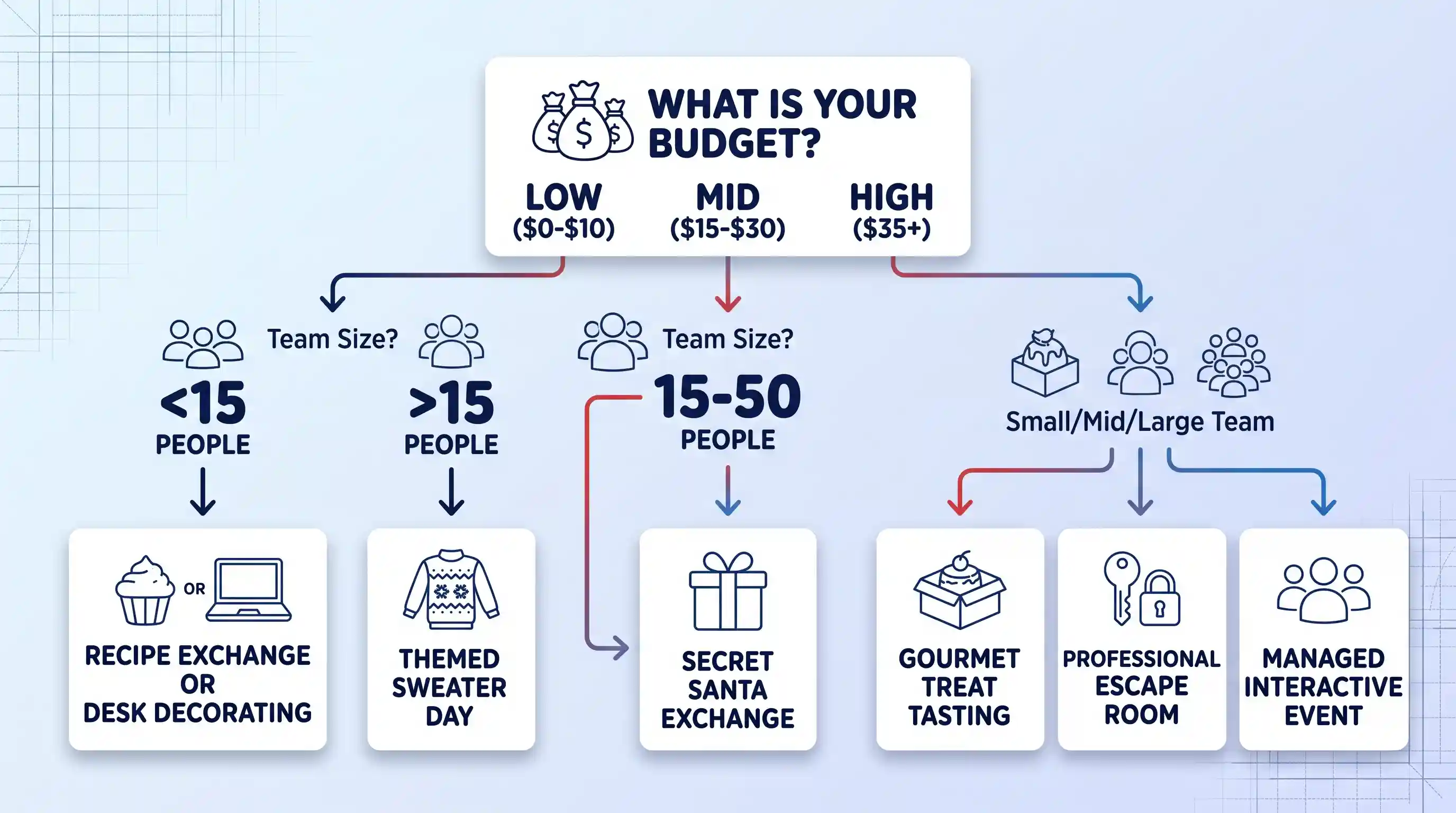
Selecting the ideal activity requires evaluating your team size, available budget, time zone dispersion, and administrative bandwidth. Use this decision matrix to identify the best operational fit:
| Constraint Variable | Low-Budget ($0–$10/person) | Mid-Budget ($15–$30/person) | High-Budget ($35+/person) |
|---|---|---|---|
| Small Team (<15 People) | Recipe Exchange or Desk Decorating | Virtual Secret Santa Exchange | Gourmet Treat Tasting & Unboxing |
| Mid Team (15–50 People) | Themed Sweater Runway Walk | Self-Hosted Kahoot Trivia | Professional Escape Room Host |
| Large Team (50+ People) | Async Photo Contest & Polls | Digital Gift Vouchers & Sweater Day | Multi-Room Managed Interactive Event |
| Global / Multi Time Zone | Async Recipe Book & Desk Photos | Digital Delivery Vouchers (DoorDash) | Staggered Regional Tasting Sessions |
Combining thoughtful event planning with formal employee recognition strategies ensures remote team members feel valued for both their work contributions and personal engagement.
Key Takeaways for Remote Event Planning
- Plan Early for Physical Items: Allow at least 14 to 21 days of buffer time for shipping physical care packages, recipe cards, or Secret Santa gifts during peak holiday shipping windows.
- Embrace Asynchronous Options: Mitigate time-zone friction by offering digital recipe exchanges and photo galleries alongside live video meetings.
- Keep Live Gatherings Focused: Limit live video calls to 60–75 minutes with active moderation, clear agendas, and breakout groups to prevent camera fatigue.
- Prioritize Inclusivity: Use non-denominational themes, accommodate dietary restrictions, and make dress-up or decorating challenges voluntary.
- Utilize Proven Work Tools: Rely on established software tools for polling, Secret Santa generation, and digital cooking collections, referencing established remote knowledge sharing methods and remote work collaboration tools to keep team administrative effort low.
Frequently Asked Questions (FAQ)
How far in advance should we plan a virtual holiday event?
Planning should begin 3 to 4 weeks prior to your target event date. If your event involves shipping physical packages across international borders or organizing Secret Santa exchanges, lock in participant addresses and order items at least 21 days early to avoid seasonal shipping delays.
How do we make holiday celebrations inclusive for non-denominational or international teams?
Focus event messaging on end-of-year celebrations, team gratitude, and winter themes rather than specific religious holidays. Ensure food or snack stipends offer inclusive choices for diverse dietary needs (such as vegan, halal, kosher, and gluten-free), and structure activities so employees in any global region can participate equally.
What is a reasonable per-employee budget for a virtual holiday event?
Typical virtual event budgets range from $15 to $50 per employee. Low-cost activities like recipe exchanges or sweater contests require $0 to $10 per person, while gourmet treat boxes, managed escape rooms, or Secret Santa gifts generally fall in the $20 to $40 range.
How can we prevent Zoom fatigue during virtual holiday parties?
Cap live video gatherings at 60 minutes, utilize breakout rooms of 4 to 6 people for intimate conversation, assign an energetic host to moderate, and replace passive speeches with active, hands-on activities like games or gift reveals.
