To get more likes on TikTok, focus on making videos that the right viewers want to watch, understand, discover, and respond to. There is no single algorithm trick that guarantees likes, so the practical approach is to improve several parts of the viewing experience and use your own performance data to decide what to repeat.
Quick Take
Start with a clear audience, make the opening worth watching, cover topics people already care about, give TikTok enough context to understand the video, encourage genuine interaction, and compare your results in TikTok Studio. Treat likes as one audience signal among several, not as a shortcut to guaranteed reach.
What Actually Influences TikTok Reach and Likes?
A like matters on TikTok, but likes are not the only factor involved in deciding what people see. TikTok says its recommendation systems consider three broad groups of signals: user interactions, content information, and user information. The importance of individual factors can vary depending on the recommendation system and can change over time.
For the For You feed, TikTok lists interactions such as likes, shares, comments, watching a video in full, and skipping it. It also considers content information such as sounds, hashtags, video views, and the country where the content was published. TikTok says that for most users, interaction signals, including time spent watching a video, are generally weighted more heavily than other categories.
This matters because optimizing only for the visible like counter can miss the larger problem. A video first has to reach people who find it relevant enough to watch and engage. Understanding the broader TikTok recommendation system can help you separate documented signals from unsupported algorithm myths.
11 Ways to Get More Likes on TikTok
These 11 tactics target different parts of the path between publishing a video and earning a genuine reaction from a viewer. They are informational strategies rather than ranked choices, so you do not need to apply them in a fixed order.
1. Create for a Clear Audience
Start by deciding who a video is meant to help, entertain, inform, or interest. “People who like technology” is broad. “First-time iPhone owners who want simple battery-saving tips” gives you a clearer subject, vocabulary, example, and reason for the viewer to care.
A clear audience also makes your results easier to interpret. If one video is a phone tutorial, the next is a comedy sketch, and the third covers personal finance, strong or weak engagement tells you little about what one consistent audience wants from you.
You do not need to make every post identical. Keep the underlying problem, interest, or perspective consistent enough that viewers can understand why your videos belong together.
2. Give Viewers a Reason to Keep Watching
The opening of a TikTok video should make its value understandable quickly. That does not require a loud or misleading hook. You can show the result first, name the problem clearly, or start at the most useful part instead of spending several seconds on an introduction.
This matters because TikTok includes watching a video in full, skipping, and time spent watching among the interaction signals used by its recommendation systems. TikTok does not publish a universal rule saying every successful video must capture a viewer within an exact number of seconds, so avoid treating claims such as a mandatory “three-second rule” as platform fact.
For example, a repair tutorial might open with the broken setting on screen and the line, “If this option is greyed out, check this first.” The viewer immediately knows what the video solves.
3. Make the Video Easy to Understand
A viewer is less likely to respond positively if the video is difficult to follow. Aim for clear speech or usable audio, readable on-screen text, framing that keeps the important subject visible, and editing that removes unnecessary pauses.
Good production does not mean expensive production. A well-lit phone recording that clearly demonstrates one idea can communicate better than a heavily edited video whose effects compete with the explanation.
Think about comprehension before aesthetics. If text disappears too quickly, the camera hides the object being demonstrated, or the key point arrives only after a long introduction, fix those obstacles first.
4. Build Videos Around Topics People Already Want
Instead of relying entirely on inspiration, look for evidence that people are already interested in a subject. TikTok introduced Creator Search Insights to show creators topics people search for and, in supported regions, identify “content gap” topics that receive frequent searches but have relatively limited video coverage.
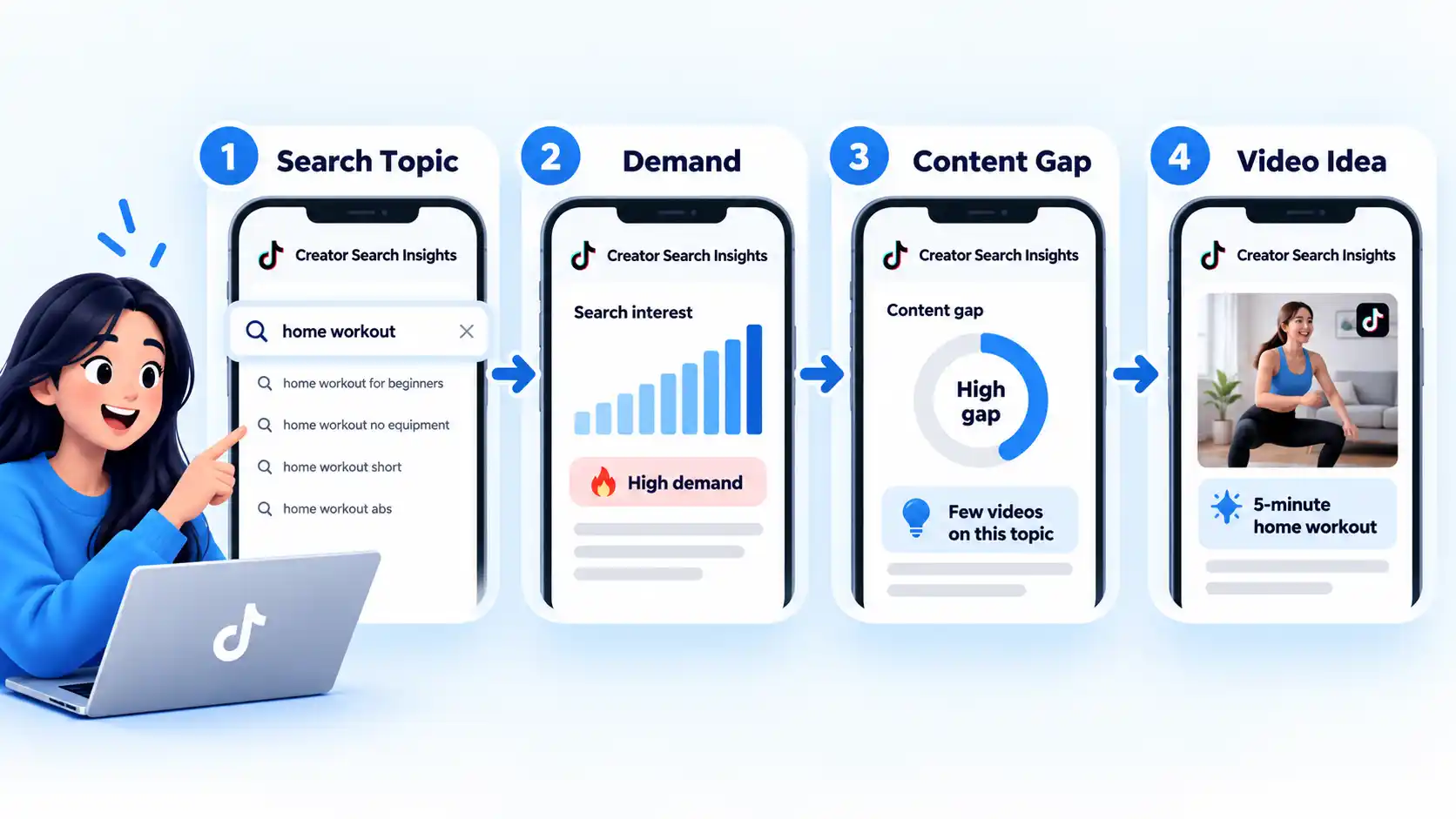
TikTok’s Creator Search Insights announcement explains that creators can explore frequently searched topics and filter for content gaps. Availability can vary by region, so treat the tool as one research source rather than a requirement for every account.
The practical lesson still applies when the feature is unavailable: begin with a real question or need your audience has, then make the video answer it directly. A creator covering home networking, for example, will usually learn more from a specific question such as “Why does Wi-Fi slow down upstairs?” than from the broad instruction “make a Wi-Fi video.”
5. Use Relevant Keywords, Hashtags, and Sounds
Keywords, hashtags, and sounds can help keep a video’s subject clear to viewers and aligned with the topic being searched. TikTok specifically identifies hashtags and sounds among the content information considered by its recommendation systems. For Search, TikTok says content information can include how well content matches the search term a person entered.
The safest practical approach is to describe the video accurately rather than fill the post with unrelated popular terms. If you are explaining how to clean a laptop keyboard, a clear caption about cleaning a laptop keyboard gives the viewer useful context. Relevant hashtags or sounds can add further context when they genuinely fit the video.
The same principle applies to TikTok search optimization: relevance matters more than adding every keyword or hashtag you can find.
6. Use Trends Only When They Fit Your Audience
A trend can give viewers a familiar format, sound, joke, or visual pattern, but familiarity alone does not make a video relevant. Use a trend when you can connect it naturally to the subject people already expect from you.
For example, a cooking creator might adapt a trending format to compare two preparation methods. Copying the same trend with no connection to food may attract viewers who have little reason to care about the creator’s next post.
TikTok Studio includes Trending and Inspiration areas that can surface content ideas. The Trending feed can be filtered by region and topic, while the Inspiration feed can provide performance insights. Treat these tools as idea sources, not as guarantees of additional distribution.
7. Give Viewers a Natural Reason to Respond
If a video creates a genuine decision, opinion, or question, make that interaction easy. Ask something that follows naturally from the content, such as “Which layout would you use?” or “What part should I demonstrate next?”
Avoid tactics designed only to inflate engagement. TikTok has publicly stated that it prohibits fake engagement, including services or schemes that artificially increase likes, followers, or other engagement signals. That makes “like-for-like” exchanges and similar manipulation poor substitutes for a real viewer response.
A useful call to action should extend the conversation rather than make the viewer complete an arbitrary engagement task.
8. Turn Useful Comments Into More Content
Comments can tell you what viewers understood, what they disagreed with, and what they still want explained. A recurring question is often a stronger starting point for another video than guessing at a completely new subject.
You can answer directly in the comments when the response is short. When a question needs demonstration or context, build another post around it. This creates a simple feedback loop: publish something useful, observe what viewers ask, and use those questions to refine future content.
TikTok Studio also lets creators manage comments and, depending on location and feature availability, can surface aggregated information such as commonly used words in comments. The dependable habit is still to inspect the actual responses on your posts rather than rely on any single automated insight.
9. Collaborate With Relevant Creators
A collaboration works best when the two audiences have a reason to care about the same video. Audience fit is usually more useful than choosing the largest creator who might agree to participate.
Look for complementary expertise or perspectives. A smartphone photographer and a mobile video editor could demonstrate the same shot from capture through final edit. Both audiences receive something relevant, and each creator contributes information the other would not provide alone.
Depending on the content and permissions involved, collaboration can include a joint concept, a Duet, a Stitch, or separate posts built around the same subject. Keep the value of the video clear even for viewers who have never seen the collaborator before.
10. Post Consistently Enough to Learn
Consistency is useful because it gives you more opportunities to learn, not because there is one mandatory posting quota that unlocks reach. Choose a pace you can sustain while maintaining useful content.
If publishing every day forces you to rush weak ideas, a slower schedule may give you cleaner information about what your audience actually values. The goal is to create enough comparable posts that patterns become visible without sacrificing the reason people would watch them.
The same caution applies to posting times. Generic studies can suggest broad patterns across many accounts, but your viewers may behave differently. When available, use your own audience activity information before assuming someone else’s “best time” is yours. A deeper TikTok posting-time analysis should start with account-specific data rather than a universal clock time.
11. Use TikTok Studio to Test What Works
After publishing several videos, compare their actual results. TikTok Studio is designed to help creators review account and content performance, including post metrics, viewer information, follower information, likes, shares, views, and other analytics available in the interface.
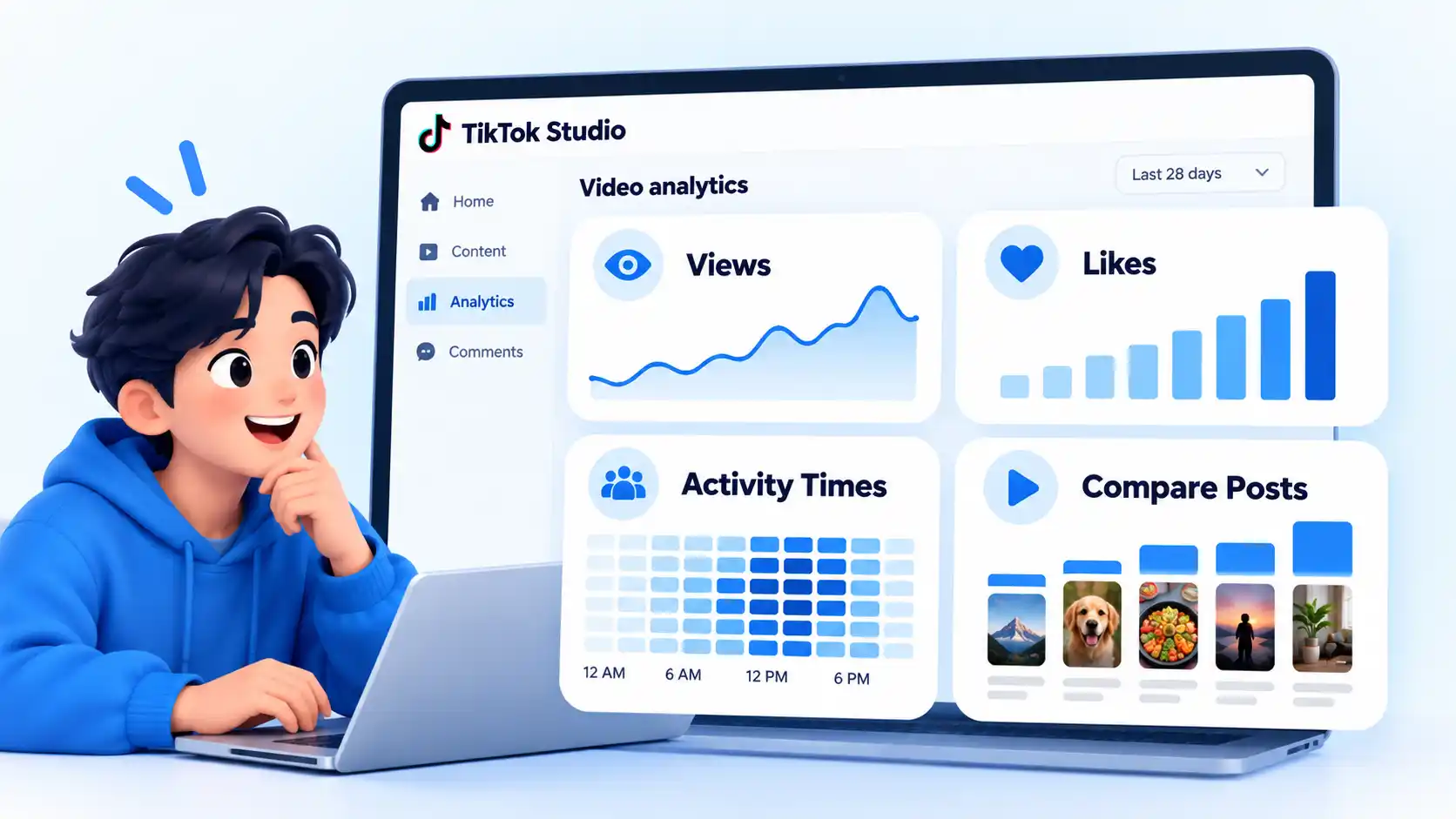
TikTok’s Studio documentation describes analytics for account performance, posts, viewers, and followers. Its Viewer analytics include demographics and activity times, while the Manage area displays post metrics such as likes, shares, and views. Some additional performance insights depend on location.
Do not judge a strategy from one unusually strong or weak post. Compare groups of posts and look for repeatable differences. You might discover that demonstrations outperform talking-head explanations, that a narrow topic attracts more useful comments, or that certain openings consistently hold attention better.
Then change one meaningful variable at a time when practical. If you alter the topic, opening, format, length, caption, and posting time simultaneously, it becomes harder to tell which change was associated with the result.
Should You Buy TikTok Likes?
Buying a larger displayed like count is not the same as earning genuine audience interest. It also conflicts with TikTok’s stated rules against services that artificially increase engagement.
Warning
TikTok says it does not allow fake-engagement services that artificially increase likes or other engagement signals. TikTok also documents preventing and removing large numbers of fake likes, so purchased engagement can disappear rather than provide dependable audience feedback.
Commercial providers still sell these services. For example, this paid TikTok likes service sells packages of likes and makes its own claims about delivery quality, authenticity, safety, and engagement benefits. Those are vendor claims and are not evidence that purchased likes improve organic recommendation performance or comply with TikTok’s rules.
TikTok has stated that it prohibits the trade or marketing of services that artificially increase engagement, including selling followers or likes. It has also reported preventing and removing fake likes as part of its efforts against deceptive behavior.
That makes purchased likes a poor substitute for the feedback you actually need. A genuine like tells you that a viewer chose to react to the content. An artificial metric can make the number larger without telling you whether the topic, opening, explanation, or format resonated with the audience you want to reach.
A Simple Testing Routine
Use this four-step cycle to turn each batch of posts into evidence you can use for the next one. The goal is not to chase every fluctuation, but to make one informed adjustment at a time.
- Create a focused video. Pick one clear audience problem, question, or interest and build the video around it.
- Publish it with accurate context. Use a caption, hashtags, sounds, or other context that genuinely matches the subject instead of attaching unrelated trends.
- Measure the response. Review views, likes, comments, viewer activity, and other useful post metrics available in TikTok Studio.
- Adjust one meaningful variable. Test one change worth repeating, such as the topic, opening, format, presentation style, or publishing time, then compare the next results with similar posts.
A tactic that works for another creator may not work the same way with your audience. Repeating this cycle gives you account-specific evidence instead of forcing generic benchmarks onto every post.
Conclusion
Getting more likes on TikTok is less about finding a hidden algorithm trick and more about creating videos that fit a real audience, hold attention, match genuine interests, and invite authentic reactions. TikTok’s own documentation shows that likes sit alongside several other interaction and content signals, so optimize the whole viewing experience rather than the like counter alone.
Use search and comments to find better subjects, TikTok Studio to compare what happens after you publish, and repeated testing to decide what deserves another attempt. That gives you something more useful than a one-time spike: evidence about what your own audience responds to.
