Facebook Stories already solves several problems that affected earlier versions of the feature. Users can control who sees a Story, save past Stories in an archive, keep selected Stories visible for longer, and manage Page content and performance data.
The more useful improvements now are refinements rather than basic missing features. Facebook could make repeated audience choices easier, reduce differences between phone and desktop creation, make cross-posting clearer, improve Page analytics, and make large Story archives easier to organize.
These are product-improvement ideas, not announced Facebook features or roadmap claims.
What Facebook Stories Already Does Well
Facebook already lets users adjust Story visibility through its privacy settings. Stories appear under the Audience and visibility controls, alongside other settings that affect who can see shared content. For personal Stories, current options can include Public, Friends, and Custom audiences.
Stories also do not have to disappear permanently after their normal viewing period. They can be saved to Story Archive, and selected archived Stories can remain available through Story Highlights.
Facebook Pages have additional tools. People with the appropriate access can create and manage Page content including Stories, while Page access can also include Page and content Insights. That distinction matters because a person sharing family updates and a business managing frequent Story content have different needs.
Beginners may still want a Facebook Stories guide for the basic creation flow. The more interesting product questions begin after those fundamentals, with how easily audiences, creation tools, analytics, and archived content can be reused or understood.
Reusable Audience Presets for More Precise Sharing
Imagine regularly sharing one type of Story with relatives, another with work contacts, and another with most of your Facebook friends. Facebook already lets you adjust Story visibility, but repeating the same audience choices can still take extra effort.
A useful improvement would be reusable Story audience presets. Someone could save familiar groups with names such as Family, Work Friends, or Close Friends and select the right group when publishing instead of rebuilding the same audience repeatedly.
This would extend Facebook’s existing privacy controls rather than replace them. The main benefit would be consistency: people who use Stories for different parts of their lives could make the same audience choice again without having to remember every individual contact.
The active audience should still remain obvious before publication. A saved group may change over time, so Facebook should make it easy to review who is included before the Story goes live.
More Consistent Creation Tools Across Devices
A Story created on a phone does not always offer the same workflow as one created on a computer. Current Facebook Story guidance notes that desktop creation has fewer editing features than the mobile app.
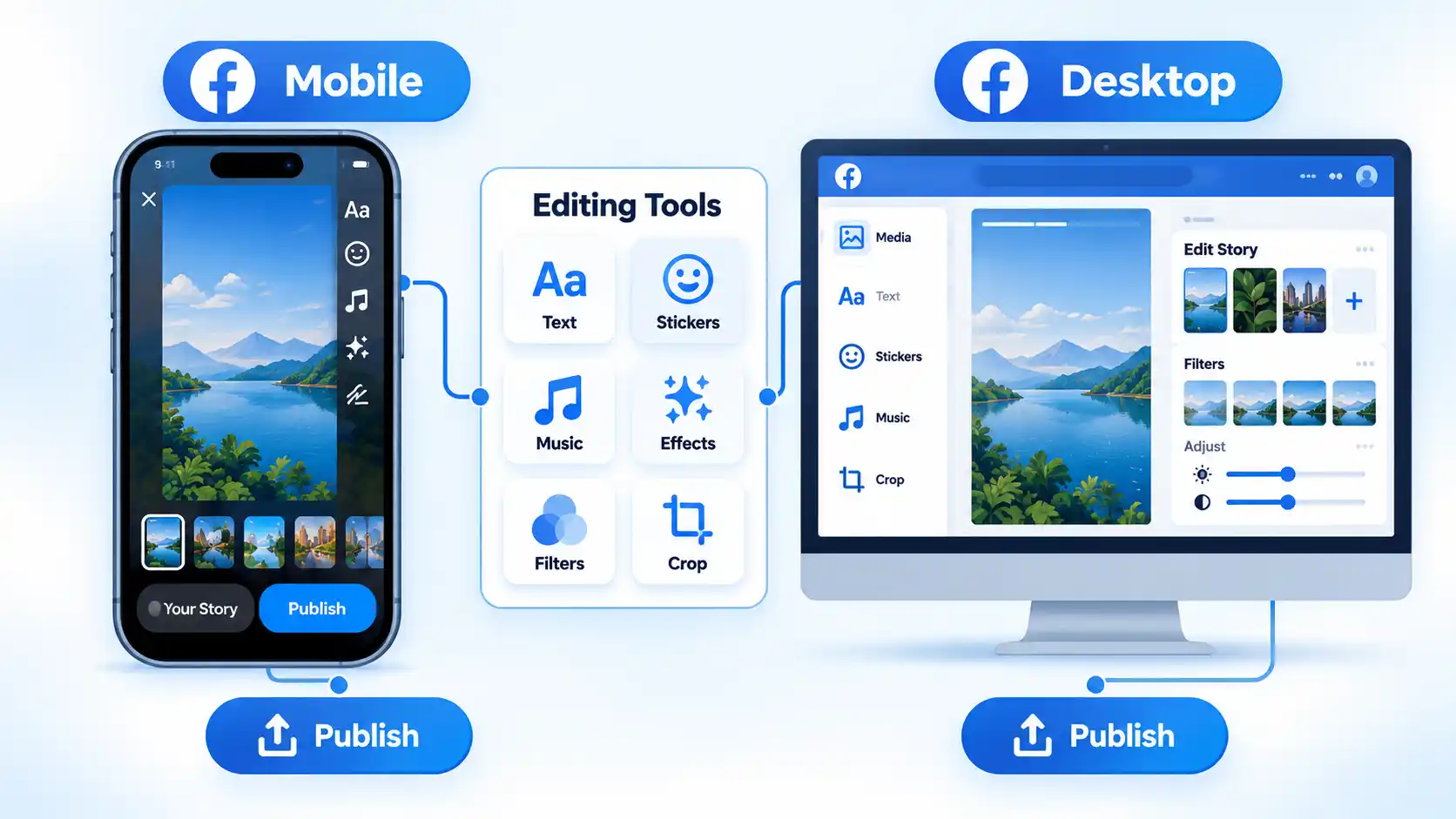
That difference matters when someone prepares media on a computer but needs a phone to finish the Story with particular creative controls. It can also make work less efficient for people who prepare Page content on desktop systems.
Facebook does not need to make the two interfaces identical. Phones and computers have different screen sizes and input methods. A better goal would be closer parity for commonly used tools such as text, basic editing, previews, interactive elements, and publishing controls.
When a feature is genuinely available only on mobile, Facebook could also make that limitation clearer earlier in the creation process. That would reduce the chance of someone building most of a Story on desktop before discovering that the final tool they need is unavailable there.
Clearer Cross-Posting Controls Between Facebook and Instagram
Connected Facebook and Instagram accounts can share Stories between the two platforms, which avoids uploading the same media twice.
The audiences on the two networks may still be different. Someone’s Facebook audience might consist mainly of relatives and long-time friends, while their Instagram audience includes customers, colleagues, or people they do not know personally.
A stronger cross-posting experience could therefore make the final publishing destinations more obvious. Before a Story is shared, Facebook could show Facebook and Instagram separately, display the relevant destination settings, and flag any important difference that affects how the Story will appear.
This would be a usability improvement rather than a claim that Facebook’s current cross-posting is unsafe. When one action can publish in more than one place, the final confirmation should make those destinations easy to understand.
Deeper Story Analytics for Pages
A Page operator needs more than a simple count of people who viewed a Story. Facebook already lets appropriately authorized Page managers access content and performance Insights, so the more useful improvement would be making Story data easier to compare and interpret.
Consider a Page that publishes several Stories about the same event or product. Individual view and engagement figures can show what happened to each Story, but comparing several pieces of content over time is what helps a manager recognize a pattern.
Facebook could make those comparisons easier by showing clearer Story-to-Story trends, longer-term performance context, and the points where viewer interaction changes. The goal should not be to add more numbers simply because they are available. It should be to help Page managers understand what happened and decide what to change next.
Facebook would also need to keep the information approachable. A beginner should be able to see the most important outcomes first, while experienced Page managers can inspect more detailed metrics when they need them.
Exact metrics and labels can change across Facebook tools and account types, so the improvement is better decision support rather than any particular unverified metric.
Better Organization for Archived Stories and Highlights
Story Archive already solves the basic problem of losing content after its temporary viewing period, while Highlights can keep selected archived Stories visible for longer.
Saving content and finding it later are different problems. Someone with months or years of archived Stories may remember the event they want but not its posting date.
Facebook could make large archives easier to work with through stronger organization tools. Depending on what is already available to a particular account, useful additions could include clearer categories, better filtering, search, or easier grouping of related archived Stories before they are used in Highlights.
The benefit grows as the archive grows. A restaurant might want to find Stories from earlier events, a business might reuse old product demonstrations, and an individual might want to revisit several years of travel Stories. An archive becomes much more useful when finding a specific item does not depend mostly on remembering when it was posted.
Which Older Improvement Ideas Facebook Has Already Addressed
The earlier version of this article proposed several changes that made sense when Facebook Stories had fewer controls. Some of those ideas are now obsolete, while others still make sense only after being narrowed to a more specific problem.
| Earlier idea | Current treatment | Why |
|---|---|---|
| Freedom of Selection | Retire the original claim | Facebook now includes Stories among the content covered by its audience and visibility settings. |
| Data to Predict | Exclude | Automatically prompting Stories from detected events or tags would need stronger evidence of user value and a careful privacy justification. |
| Highlights | Retire the original claim | Story Archive and Highlights already provide ways to preserve and resurface past Stories. |
| User Behavior | Reframe | For Pages, the stronger question is whether existing performance information makes audience patterns easy to understand. |
| Interactive Tutorial | Consolidate | Reducing differences between creation surfaces addresses the underlying workflow problem more directly than adding another standalone tutorial feature. |
| Metrics | Reframe | Page Insights already exist, so the more useful improvement is clearer comparison and interpretation of Story performance. |
| Grouping Users | Consolidate | Where appropriate, audience and engagement patterns fit more naturally into Page analytics than into a separate Story feature. |
The useful question is no longer whether Facebook Stories should have privacy controls, archives, Highlights, or analytics. It is how those existing features could become easier to use and more informative.
Which Improvements Would Make the Biggest Difference?
The five ideas solve different problems, so there is no strong basis for ranking them from best to worst.
People who frequently share different kinds of personal Stories may get the most value from reusable audience presets. Users who move between phones and computers would notice better consistency in creation tools more often.
Creators publishing to both Facebook and Instagram would benefit from clearer cross-posting confirmation. Page operators are more likely to gain from stronger analytics and better organization of older Story content.
Facebook Stories has already gained many of the basic capabilities that earlier versions lacked. The next useful improvements are smaller but more practical: make existing controls easier to reuse, make publishing behavior clearer across devices and platforms, and make stored content and performance data easier to work with.

💬 Comments