Measuring employee performance requires clear criteria that evaluate workplace behavior, goal achievement, and job skills. Organizations measure performance using goal-based frameworks like Management by Objectives alongside feedback tools like 360-degree reviews and graphic rating scales.
Quick Take: Key Evaluation Methods at a Glance
Selecting the right performance review system depends on your team size, job roles, and available management time. Here is how the six main measurement methods compare:
| Method | Best Used For | Primary Advantage | Main Limitation |
|---|---|---|---|
| Behavioral Checklist | Operational and entry-level roles | Simple yes-or-no scoring format | Requires detailed pre-written question lists |
| Graphic Rating Scale | Standardized company-wide reviews | Easy to compare across departments | Subject to manager rating bias |
| 180-Degree Feedback | Individual contributors without direct reports | Gathers focused feedback from close peers | Misses external and cross-department views |
| 360-Degree Feedback | Managers and cross-functional team leaders | Provides a complete, multi-source picture | Takes significant time to collect and analyze |
| Management by Objectives (MBO) | Goal-driven sales and project roles | Objective measurement against set targets | Focuses on outcomes rather than behavior |
| Essay Evaluation | Specialized or technical positions | Delivers detailed qualitative context | Time-consuming and highly subjective |
Why Employee Performance Evaluation Matters for Retention
Regular employee evaluations play a critical role in keeping team members engaged. Many workers leave companies not because of their workload, but because management fails to acknowledge their contributions. Unclear evaluation systems make employees feel trapped without a clear career path.
Strategic reviews help companies invest in your employees by showing them where they excel and how they can grow. Tracking employee turnover costs shows that keeping experienced workers costs far less than recruiting and onboarding replacement staff.
Data shows that structured reviews directly boost workplace morale. Organizations that implement continuous feedback processes create stronger trust between managers and direct reports. Furthermore, strong team engagement and morale depend heavily on how supervisors deliver feedback.
Building a culture of appreciation requires consistent action. Combining performance tracking with employee recognition ideas helps workers feel valued for their daily contributions.
6 Proven Methods to Measure Employee Performance
Different job roles require different measurement techniques. Below are six established ways to track and evaluate employee performance effectively.
1. Behavioral Checklist (Weighted Checklist Method)
A behavioral checklist measures specific workplace actions using a series of yes-or-no questions. Managers complete the list by checking off behaviors the employee demonstrates on the job. Each question carries a pre-assigned numerical weight based on its importance.
This method removes guesswork by asking simple, concrete questions about daily work habits. It works best for structured roles with clear daily responsibilities. However, HR teams must spend time writing clear, unbiased questions before launching the assessment.
2. Graphic Rating Scales
Graphic rating scales evaluate employees on a numerical range, typically from 1 to 5 or 1 to 10. Evaluators rate specific traits such as punctuality, teamwork, job knowledge, and quality of work. This is one of the most widely used methods across companies of all sizes.
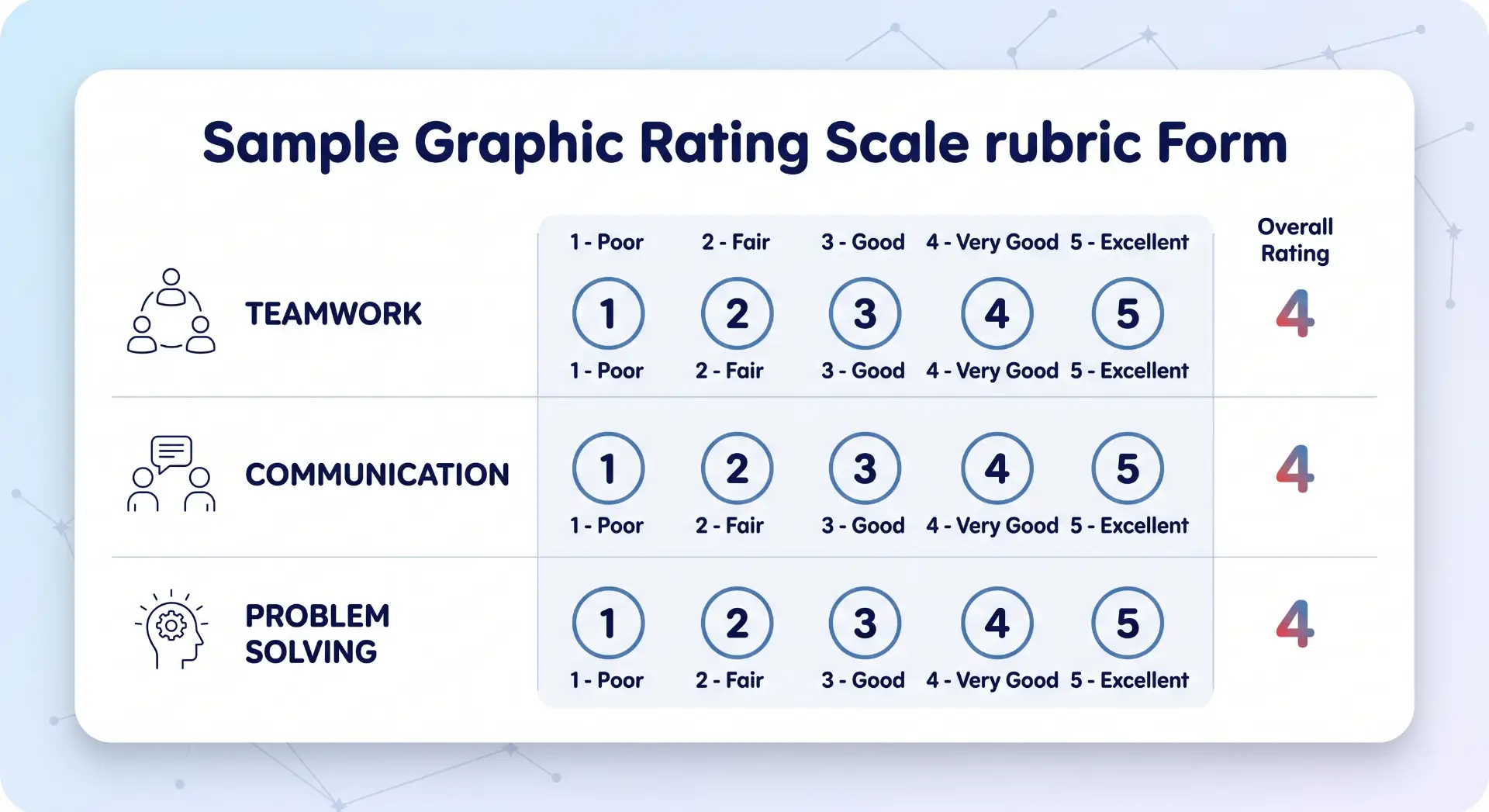
The primary benefit of graphic scales is their simplicity and ease of comparison across departments. The main risk is subjective scoring. A score of “4” might mean exceptional performance to one manager, but only average work to another. Companies must define clear standards for each number on the scale to maintain fairness.
3. 180-Degree Feedback
180-degree feedback collects performance evaluations from two sources: the employee’s immediate manager and the employee’s direct peers. This approach works well for staff members who do not manage others and do not interact directly with clients.
By gathering input from immediate coworkers, managers get a clearer view of daily teamwork and collaboration. It provides a balanced perspective without overwhelming the team with complex administrative forms.
4. 360-Degree Feedback
360-degree feedback gathers evaluation input from all around the employee. This includes direct managers, peers, subordinates, cross-functional team members, and sometimes external clients. Evaluators complete anonymous surveys to share insights on leadership, communication, and work ethic.
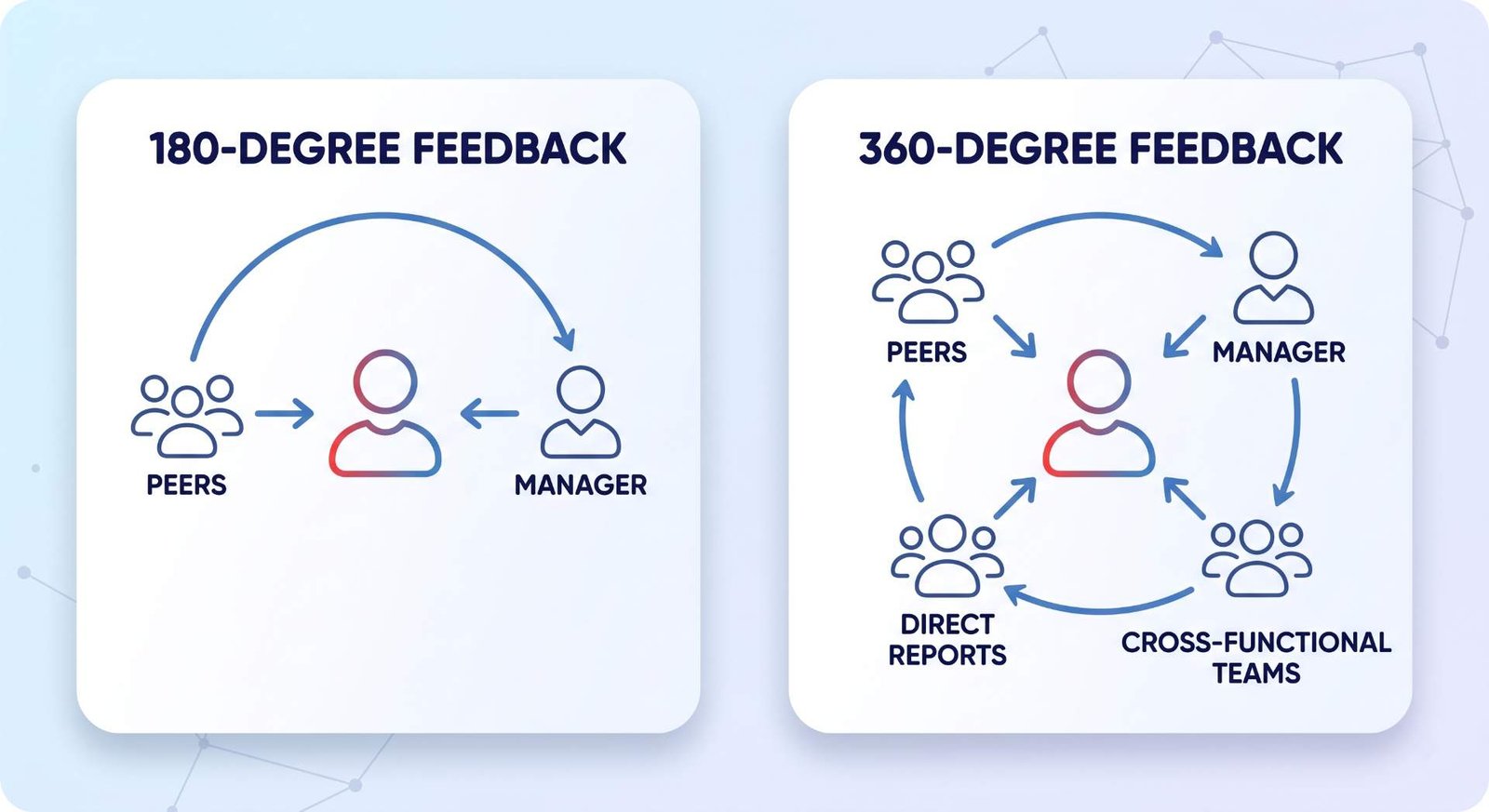
Many organizations rely on 360-degree feedback evaluation tools to build holistic reviews for managers and department heads. While this method delivers deep insights, gathering input from multiple reviewers takes significant time. Managers should use specialized performance management software to streamline survey collection and protect respondent anonymity.
5. Management by Objectives (MBO)
Management by Objectives is a goal-centric evaluation method. The manager and employee meet at the beginning of a review cycle to agree upon specific, measurable goals. At the end of the period, the manager evaluates the worker based on whether they achieved those target goals.
MBO shifts the focus from subjective personal traits to clear professional outcomes. Pairing MBO with framework tools for setting SMART goals ensures that targets remain realistic and achievable. The primary limitation of MBO is that it may overlook soft skills, like helpfulness or team leadership, if those items are not explicitly written into the goals.
6. Essay Evaluation
The essay evaluation method requires supervisors to write a detailed narrative describing an employee’s strengths, weaknesses, and key achievements. This free-form approach allows managers to provide rich context that numbers alone cannot capture.
Essay evaluations work well for complex technical roles where quantitative metrics do not tell the whole story. However, writing thorough essays requires considerable time from managers. Furthermore, review quality depends heavily on the supervisor’s writing skills, which can introduce personal bias.
How to Choose the Best Evaluation Method for Your Business
No single performance evaluation method fits every company or department. HR leaders and business owners should select methods based on three primary criteria:
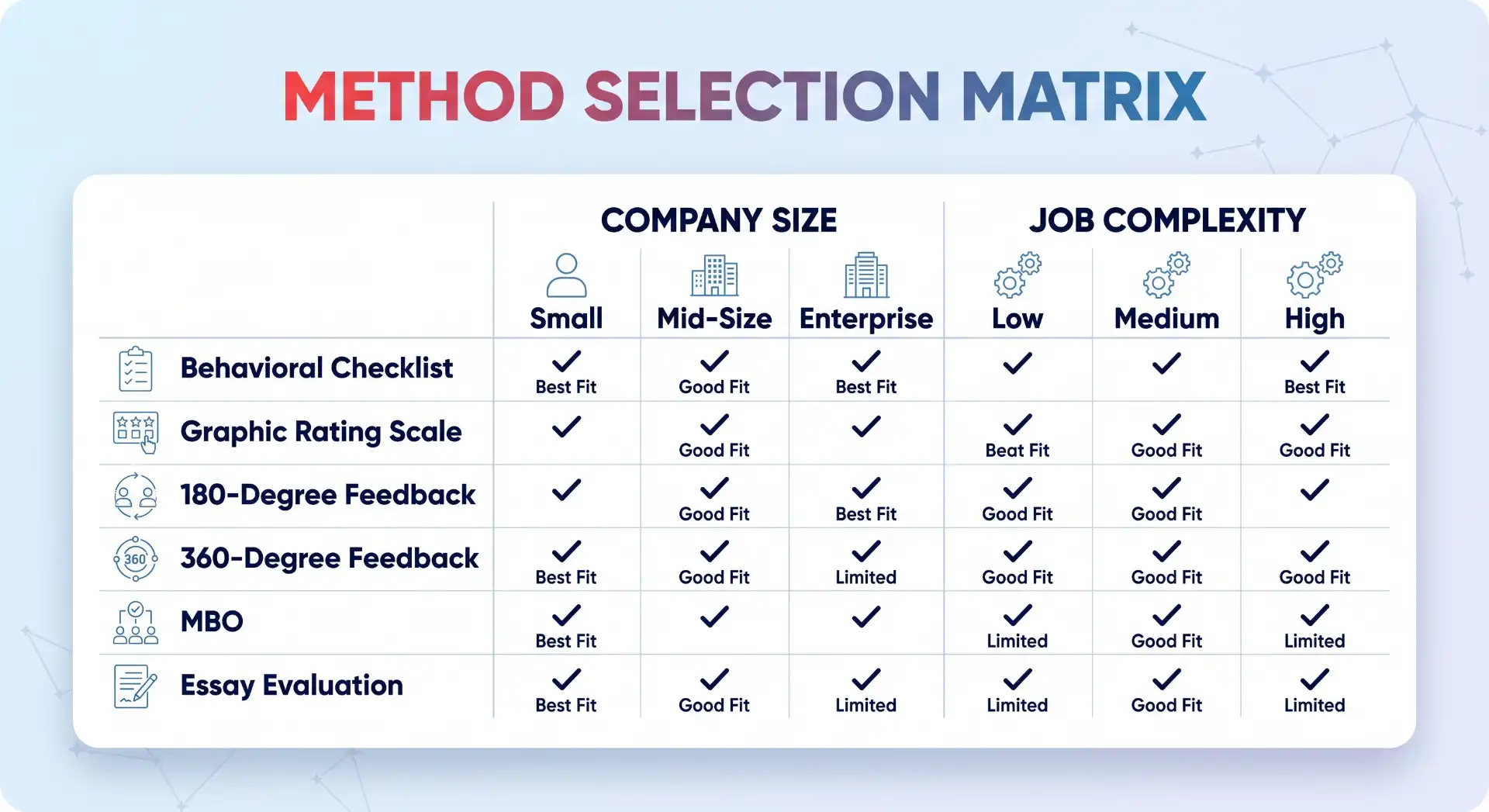
- Job Role Complexity: Structured operational roles benefit from behavioral checklists or graphic rating scales. Leadership roles require comprehensive methods like 360-degree feedback or MBO.
- Management Time: Small teams with limited administrative capacity should start with graphic scales or 180-degree feedback. Complex systems like 360-degree reviews require dedicated administrative bandwidth.
- Company Culture: Organizations that value objective target delivery perform best with MBO systems. Companies that emphasize collaboration thrive using multi-rater peer reviews.
To implement these reviews smoothly, supervisors should use structured one-on-one meeting templates during appraisal discussions. Pairing clear evaluations with broader employee retention strategies helps turn review findings into long-term staff career growth.
Key Takeaways
- Standardized evaluations give employees clarity on performance expectations and career growth opportunities.
- Objective goal-setting methods like MBO measure measurable outcomes, while feedback tools like 360 reviews capture interpersonal dynamics.
- Combining multiple feedback methods prevents manager rating bias and builds a fairer review system.
- Regular performance reviews improve staff retention by ensuring team members feel seen and supported.
Frequently Asked Questions
How often should a business conduct performance evaluations?
Most businesses conduct formal reviews annually or semi-annually, supported by monthly or quarterly check-ins. Modern organizations use regular informal conversations alongside annual formal reviews to keep goals current and prevent surprise ratings.
Can a company combine different evaluation methods?
Yes, many organizations successfully combine multiple methods. For instance, a manager might use Management by Objectives to track key performance goals while using a Graphic Rating Scale or 360-degree feedback to assess soft skills and leadership traits.
What should a manager do if an employee disagrees with an evaluation?
When an employee disagrees with a rating, the manager should schedule a dedicated follow-up meeting. Review specific work examples, clarify performance standards, and listen to the employee’s perspective. If necessary, involve HR to calibrate the score or adjust goals for the next review cycle.

💬 Comments