Web3 game development means building games where players truly own their in-game items, recorded on a blockchain instead of a company’s private database. That single shift changes how these games make money, how players trade items, and how much risk is involved.
Quick Take
A Web3 game uses blockchain technology to record who owns what. Smart contracts, digital wallets, and non-fungible tokens (NFTs) are the core building blocks. Players can trade or sell in-game items outside the game itself, something normal games don’t allow. This freedom is real, but so is the risk: hacks, unstable token prices, and unaudited code have cost players billions of dollars industry-wide. Before you build or invest, you need to understand both sides.
What Actually Makes a Game “Web3”
In a normal game, you don’t own your items. You buy a sword, a skin, or a character, but the game studio still controls it. If the studio shuts down the game, your items disappear. You only ever held a license to use them, not real ownership.
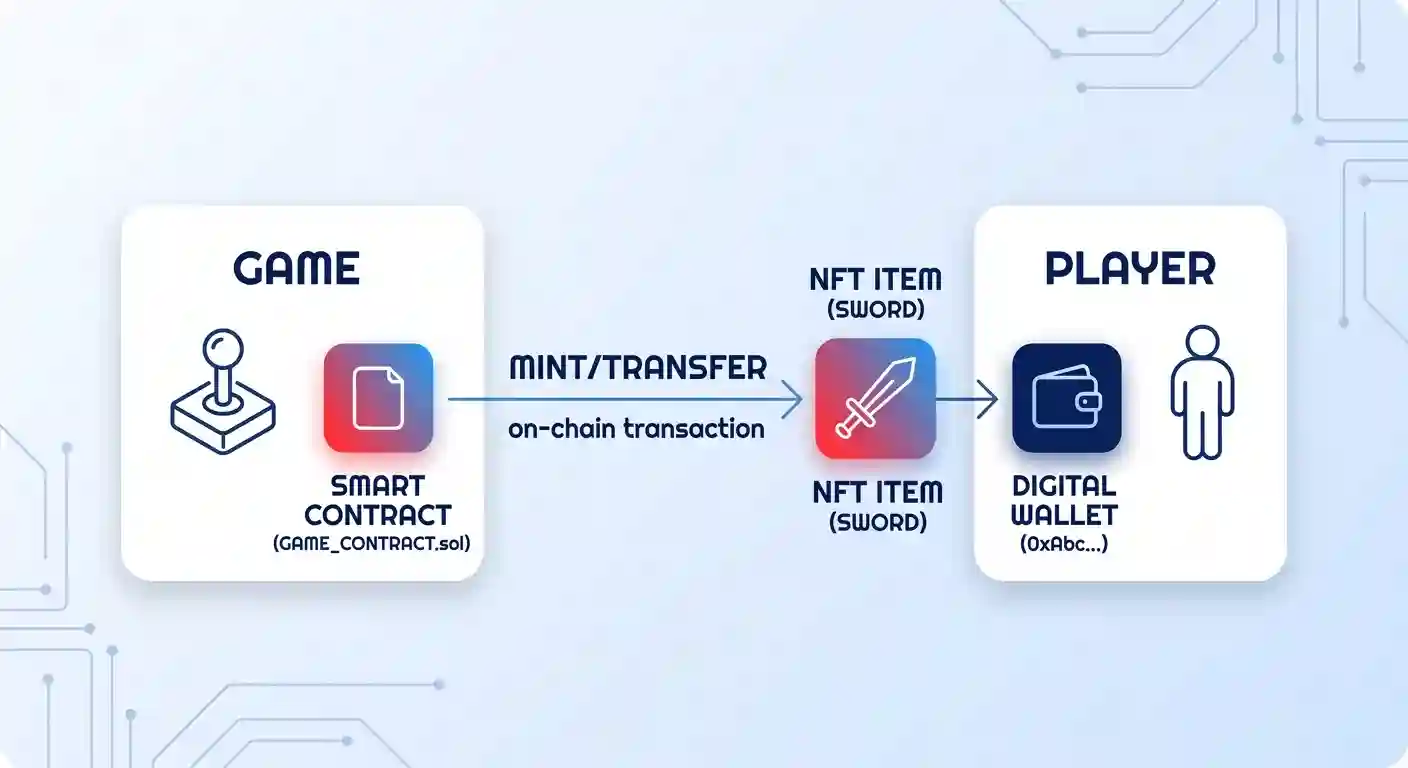
Web3 games work differently. They record item ownership on a blockchain, a shared digital record that no single company controls. Once an item is recorded under your wallet address, no game studio can simply delete it. You can move it to another game that supports the same token, sell it, or keep it.
This is the core promise of Web3 gaming: player-owned assets instead of studio-controlled licenses. Everything else in this article builds on that one idea.
The Building Blocks: Smart Contracts, Wallets, and NFTs
Three technical pieces make Web3 gaming work. Learning what each one does will help you understand the rest of this guide.
A smart contract is a small program stored on a blockchain. It runs automatically when certain conditions are met. In a game, a smart contract might transfer an item to your wallet the moment you pay for it, with no staff member needed to approve the trade. You can read more about how smart contracts work if you want the fuller technical picture.
A digital wallet is where you store your blockchain-based items and currency. It’s controlled by a private key, a kind of password only you should know. Every Web3 game needs a wallet connection before you can own or trade anything, which is a bigger reason to understand how digital wallets work before you start.
NFTs, or non-fungible tokens, represent unique items. A sword with a specific set of stats is one NFT. A different sword, even one that looks similar, is a separate NFT. This is different from a fungible token, like an in-game currency, where every unit is identical and interchangeable. Ethereum’s official token standards explain this split clearly: ERC-721 covers unique NFTs, ERC-20 covers fungible currencies, and ERC-1155 lets one contract handle both at once, which many games use to cut costs. If you haven’t used cryptocurrency basics before, it’s worth learning them before you connect a wallet to any game.
Play-to-Earn and In-Game Economies
Some Web3 games let players earn value just by playing. This model is usually called play-to-earn. Players complete tasks, win battles, or trade items, and the game rewards them with tokens or NFTs.
Those rewards can sometimes be sold on NFT marketplaces or exchanged for other cryptocurrencies. This is a real difference from traditional gaming, where playing more never adds money to your bank account.
It is not a guaranteed income, though. Token values move up and down, sometimes sharply, based on how many people are playing and trading. A reward worth real money today can be worth much less next month. Treat play-to-earn rewards as a possible bonus, not as reliable income, until you have watched a specific game’s token perform over time.
Interoperability adds another layer. Some blockchains, including Solana and Polkadot, support cross-chain bridges that let items or tokens move between different games or platforms. This is still an emerging feature, and not every game supports it, so check a specific game’s documentation before assuming your items will transfer elsewhere.
The Web3 Game Development Tech Stack
If you’re building rather than just playing, you’ll work with a specific set of tools. Here is what a typical Web3 game development stack includes.
Web3 libraries connect your game’s code to the blockchain. Web3.js, ethers.js, and Web3.py are common choices, each tied to a specific programming language. For writing and testing smart contracts, most developers use the Remix IDE for quick work, and Truffle, Hardhat, or Brownie for a full local development setup.
Node providers and RPC services let your Web3 library actually talk to the blockchain network. Without one, your game code has no way to read or write on-chain data.
Game engine support matters too. Standard engines like Unity and Unreal now have blockchain-specific SDKs (software development kits) that add wallet connections and NFT handling without forcing you to write blockchain code from scratch. Immutable, a blockchain built specifically for games, is one concrete example: its gaming-focused blockchain platform offers native Unity and Unreal SDKs and reports gas-free transactions for players, meaning players don’t pay network fees directly on every action.
The table below compares a few gaming-oriented blockchain options at a glance. Fees and transaction speeds change over time, so treat these as general patterns, not fixed numbers.
| Blockchain | Typical use case | Player-facing gas fees | Engine SDK support |
|---|---|---|---|
| Ethereum mainnet | High-value, high-security assets | Can be high and unpredictable | Wide third-party SDK support |
| Polygon | General-purpose games needing lower fees | Low, but still variable | Wide third-party SDK support |
| Immutable | Games built specifically for NFT trading at scale | Gas-free for players (vendor-reported) | Native Unity and Unreal SDKs |
| Solana-based chains | Fast, high-throughput game economies | Typically low | Growing but narrower SDK support |
Storage and identity standards round out the stack. Open, interoperable media standards handle 3D assets, textures, and audio so decentralized apps can share them. And decentralized autonomous organizations, or DAOs, sometimes let players vote on future updates to a game’s economy or rules, instead of leaving every decision to the studio.
Building this entire stack alone is a lot for one team. Many studios instead bring in outside blockchain specialists for the parts they don’t want to build in-house. A Web3 Development Company can handle smart contract development, wallet integration, or NFT marketplace setup, while your team focuses on gameplay.
How to Choose Your Blockchain and Tools
There’s no single “best” blockchain for every Web3 game. The right choice depends on your specific situation. Ask yourself these questions before committing:
- How crypto-familiar is your target audience?
If most of your players have never used a wallet before, prioritize a chain and SDK that hide the blockchain complexity, like gas-free transaction options. - Does full decentralization matter to your players, or does smooth gameplay matter more?
Some chains trade a bit of decentralization for speed and lower fees, which is often the right trade for a game. - Which game engine does your team already know?
Switching engines to chase a specific blockchain’s SDK usually costs more time than it saves. - What’s your budget for a smart contract security audit?
If the answer is “none,” that’s a sign to slow down before launch, not a reason to skip the audit.
Faster and cheaper is not automatically better. A chain with low fees but few security audits, a small developer community, or unreliable node providers can cost you more time later than it saves now.
Security and Financial Risks You Need to Understand
This is the part vendor guides tend to skip, and it matters more than any feature list. Web3 gaming carries real financial risk, for both developers and players.
The clearest example is the Ronin Network, the blockchain behind the play-to-earn game Axie Infinity. In March 2022, attackers exploited weaknesses in the network’s validator system and stole about $625 million in one exploit, one of the largest thefts in crypto history at that point. It happened to a major, well-funded game, not an obscure side project.
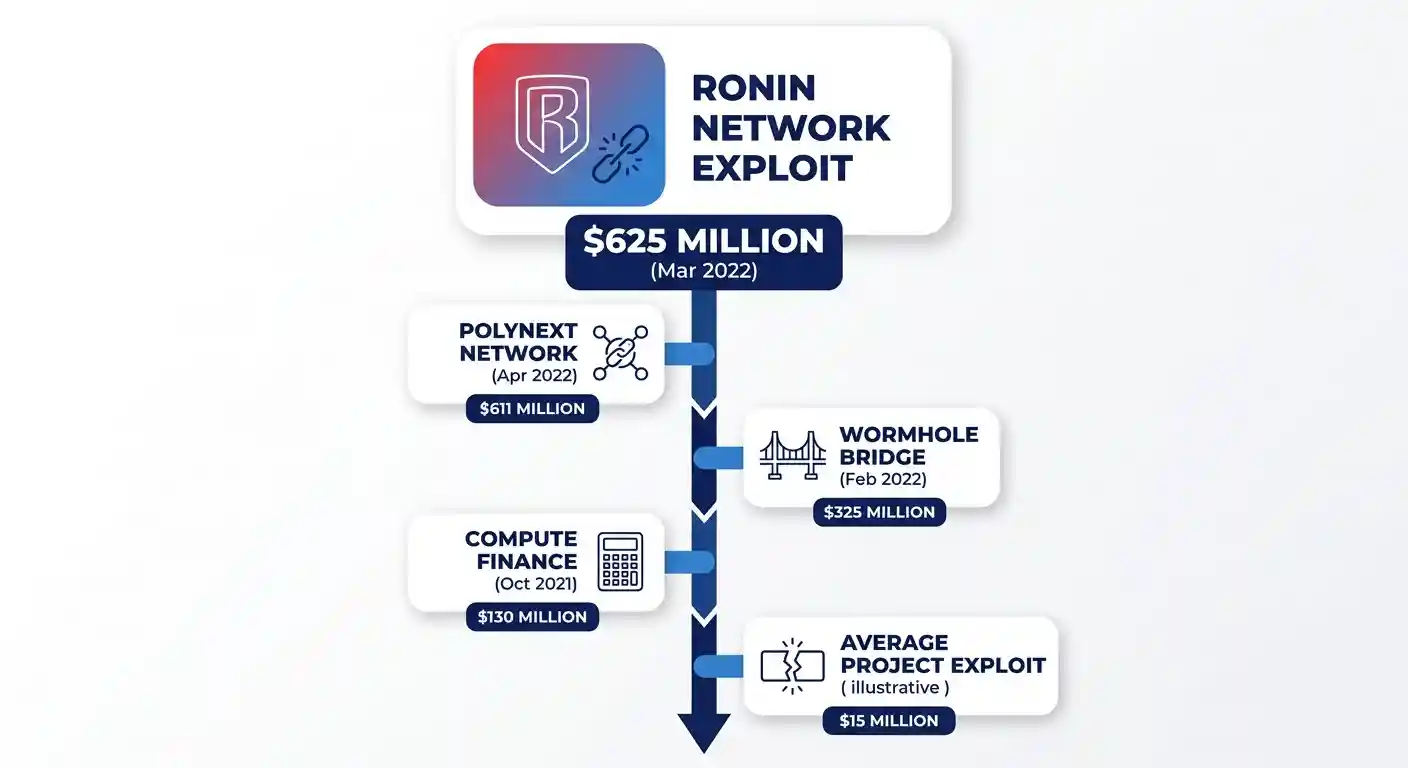
That incident wasn’t a one-time fluke. A 2025 Web3 security report found that total losses from Web3 exploits reached roughly $3.35 billion that year, up about 37% from 2024. Phishing attacks and code vulnerabilities were among the most common causes, not just headline-grabbing bridge hacks.
None of this means Web3 gaming is inherently unsafe to touch. It means you should treat security as a first-class part of development or spending, not an afterthought. If you’re building a game, budget for an independent smart contract audit before launch and never assume “it worked in testing” is the same as “it’s secure.” If you’re a player, only connect your wallet to games and marketplaces you’ve verified through official channels, and never share your wallet’s private key with anyone. Reviewing common hacking myths is a useful starting point, since several of the same false assumptions show up in Web3 gaming scams. This article can’t tell you whether a specific game or contract is safe right now; check the project’s own audit reports and official communication channels before committing real money.
Common Misconceptions About Web3 Gaming
A few beliefs about Web3 gaming show up constantly and aren’t quite true.
Info“Owning an NFT guarantees it will hold or grow in value.” It doesn’t. An NFT’s value depends entirely on ongoing demand for that specific item, which can drop to nearly nothing if a game loses players.
“Play-to-earn means guaranteed income.” As covered above, rewards fluctuate with token prices and player activity. Some players have earned meaningful money; many others have earned very little.
“Decentralized means no rules and no risk.” Decentralization removes a single controlling company, but it doesn’t remove bugs, scams, or bad actors. If anything, it means no central support team can reverse a mistake or a theft for you.
“Every Web3 game runs entirely on the blockchain.” Most don’t. Typically only ownership records and trades happen on-chain, while gameplay, graphics, and servers run the same way traditional games do.
Where Web3 Gaming Still Falls Short
Web3 gaming has real limits worth knowing before you build or invest heavily in it.
Onboarding is still hard for players who have never used a crypto wallet. Creating a wallet, safely storing a recovery phrase, and understanding gas fees adds friction that traditional games simply don’t have.
Token and NFT prices are volatile. A game’s entire in-game economy can be disrupted by a broader crypto market downturn that has nothing to do with the game itself.
Rules around play-to-earn games vary by country, and some regulators have questioned whether certain reward structures resemble gambling. This is an evolving legal area, and the rules that apply depend on your specific jurisdiction, so check local regulations rather than assuming a game is compliant everywhere it’s available.
Finally, scalability and user experience still lag behind traditional gaming in many cases. Network congestion can slow transactions, and not every blockchain handles a sudden spike in players gracefully.
Key Takeaways
- Web3 games record item ownership on a blockchain, so players keep control of assets even if a studio shuts the game down.
- Smart contracts, digital wallets, and NFTs are the three building blocks every Web3 game relies on.
- Play-to-earn rewards are real but not guaranteed income; token values can fall as easily as they rise.
- No single blockchain is “best” — match your choice to your audience’s crypto familiarity, your team’s engine experience, and your security budget.
- Security risk is real and well documented, from the $625 million Ronin Network exploit to billions in industrywide losses in 2025 alone.
- Most Web3 games keep gameplay off-chain and only record ownership and trades on the blockchain.
FAQ
Do I need to know how to code to get started with Web3 game development?
To build a Web3 game, yes, you’ll need standard game development skills plus some blockchain-specific knowledge, though SDKs for engines like Unity and Unreal reduce how much blockchain code you have to write yourself. If you’re only interested in playing Web3 games, no coding is required at all.
What’s the difference between a Web3 game and an NFT game?
The terms overlap but aren’t identical. An NFT game specifically uses NFTs for in-game items. A Web3 game is the broader category, which might use NFTs, fungible tokens, DAOs, or a combination, built on blockchain-based ownership generally.
Can I lose real money playing a Web3 game?
Yes. If you buy tokens or NFTs with real money and their value drops, or if a game’s smart contract is exploited, you can lose that money. Only spend what you’re prepared to lose, and treat any in-game earnings as uncertain until you’ve seen them hold value over time.
Which blockchain should a beginner developer start with?
There’s no universal answer, but a good starting point is a chain with strong documentation, an active developer community, and an established game engine SDK, since that combination shortens your learning curve the most. Test on that chain’s free test network before deploying anything with real value.
Are Web3 games legal everywhere?
Web3 games themselves generally aren’t restricted, but rules around play-to-earn rewards and crypto transactions vary significantly by country. Check your local regulations, particularly around gambling-adjacent reward structures, before building or heavily participating in one.

💬 Comments