Branding helps customers recognize your business, understand what makes it different, and remember it when they need your products or services. It also gives your marketing a consistent identity, although earning trust and loyalty still depends on what customers actually experience.
For a small business, branding doesn’t have to begin with an expensive logo or advertising campaign. It starts with knowing what your business stands for, who it serves, and how you want to communicate those things.
Quick Take
Branding creates a clear identity that helps people distinguish and remember your company. However, visual identity cannot compensate for operational shortcomings; lasting trust and business value come from consistently delivering what your brand promises.
What Is Business Branding?
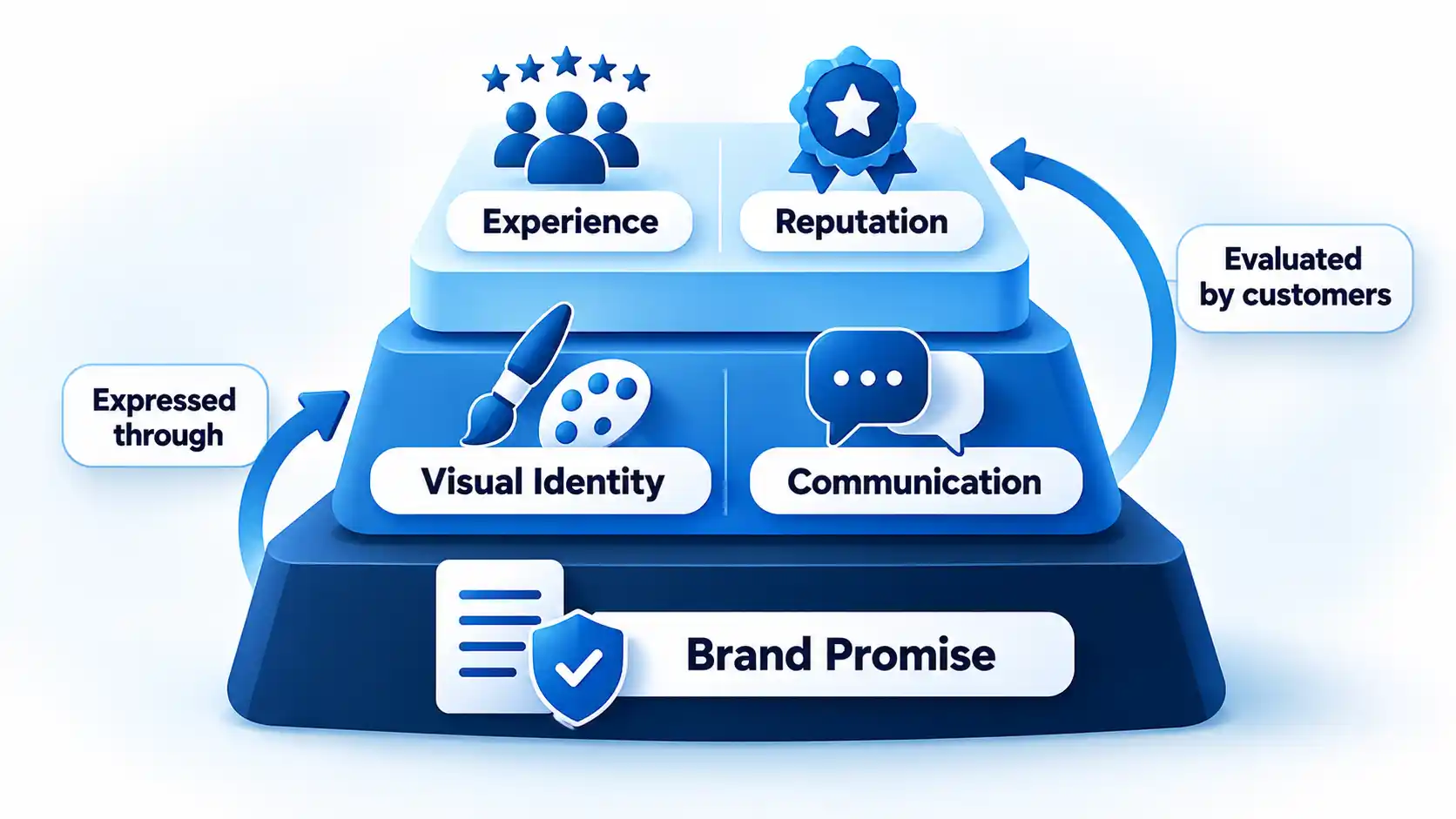
Business branding is the process of creating and maintaining a recognizable identity for a business while influencing how customers understand and experience it. It connects what a company wants to be known for with what people actually see, hear, and experience when dealing with it.
A brand includes more than a business name or logo. Branding involves defining the company’s identity, the people it serves, what makes its offer different, and how these things are communicated. The elements of a brand include recognizable features such as names, designs, and symbols, while brand positioning concerns how a business is distinguished from competitors.
Consider a neighborhood bakery that wants to be known for fresh bread and friendly service. Its name, packaging, shop sign, and social media posts can communicate that identity. But the quality of its bread and the way staff treat customers help determine whether people believe the message.
The bakery’s logo is part of its visual identity, alongside its colors, fonts, and other design elements. Good recognizable logo design can make a business easier to identify, but a logo cannot represent everything a customer experiences.
This distinction matters because the identity a business creates and the reputation customers form are not always the same. Branding aims to influence that reputation, but the business must deliver what its identity promises.
6 Reasons Why Branding Is Important for Business
The following six benefits explain why branding deserves attention even when a business has a limited marketing budget. They are different ways branding can support a company, not a ranking or a promise that every business will achieve the same results.
Helps Customers Recognize Your Business
Customers cannot always remember every business they encounter. A familiar name, logo, color combination, or packaging style gives them something to recognize when they come across the company again.
For example, a customer who sees the same bakery sign on a storefront, delivery bag, and social media page may find it easier to connect those appearances with one business. Repeated identity elements reduce confusion about which company is behind the offer.
This is brand recognition: the ability to identify a brand from familiar features. Recognition differs from preference. A customer may remember a business without liking its products or deciding to buy from it.
For a small business, the useful starting point is consistency. Choose a clear business name and recognizable visual elements, then use them across the places customers are likely to encounter you.
Makes Your Business Different From Competitors
Two companies can sell similar products while giving customers different reasons to choose them. Branding helps communicate those differences instead of leaving customers to compare businesses only by price.
Consider two hypothetical local cleaning services that offer comparable household cleaning. One focuses on flexible appointments for busy professionals. The other emphasizes detailed cleaning procedures for households with particular product preferences. Their branding can communicate those priorities through service descriptions, messaging, and presentation.
This is known as brand positioning: establishing how a business wants its offer to be understood in relation to competing options. The difference should come from something the business can genuinely provide, not merely an unusual logo or catchy slogan.
A 2025 systematic review of 63 studies on small-business branding examined how identity, marketing, and business performance relate to the brand-building process. The research supports treating branding as a wider business activity rather than only a design exercise, although the relationships described across the studies do not establish a guaranteed competitive advantage for every company.
Helps Build Customer Trust
Customers have more reason to trust a business when its promises match what happens after they make contact or place an order.
A repair company might promise clear pricing and timely updates. Consistent branding can communicate those expectations on its website, quotations, and customer messages. Trust becomes more justified when the company actually explains charges and keeps customers informed.
A 2013 study involving 285 German small and medium-sized enterprises found a positive relationship between aspects of brand authenticity and brand trust. The research examined brand consistency, customer orientation, and whether a company’s behavior matched its identity. Because the study used business-level data and statistical modeling, its findings should not be treated as proof that particular branding changes will cause customers to trust every business.
A polished website may create a favorable first impression, but repeated missed appointments, misleading descriptions, or poor support can quickly undermine it. Trust needs more than a professional appearance.
Supports More Consistent Marketing
Advertising becomes harder to recognize when a business changes its message, appearance, and tone without a clear reason. An established brand gives marketing activities a common direction.
For instance, a tutoring business might emphasize patient teaching and straightforward explanations. Its website, lesson descriptions, social media posts, and promotional materials can express those qualities in different ways while keeping the central message consistent.
Branding and advertising are related, but they serve different purposes. Branding establishes the identity and expectations a business wants to communicate. Advertising is one way to bring a message or offer to an audience.
Consistent branding can help customers connect different campaigns with the same business. It also prevents brand dilution—a common pitfall where expanding businesses invent disconnected logos, conflicting sub-brands, or jarring color palettes for every new service before their primary brand has established solid recognition in the local market. Maintaining a unified brand architecture keeps marketing recognizable and cost-effective.
At the same time, consistency does not automatically make advertisements cheaper or more successful. The offer, audience, channel, and quality of the campaign still matter.
Encourages Customer Loyalty and Referrals
A business that delivers a satisfying, recognizable experience gives customers reasons to return. When people know what to expect and continue receiving it, they may be more comfortable buying again or recommending the company to someone else.
Consider a hypothetical online clothing store with clear size information, predictable delivery updates, and helpful support. Customers who consistently receive that experience may begin to associate the store’s name with convenience and reliability, not just its clothing.
Customer loyalty means customers develop a preference for a business and continue choosing it when other options are available. Referrals happen when customers recommend that business to others. Customers can also make repeat purchases out of convenience, price, or limited choice, so repeat buying alone does not always prove brand loyalty.
Research on small-business branding links brand development with customer relationships and loyalty. However, branding cannot make customers recommend an experience they found disappointing. A business still needs to satisfy customers, address problems, and offer value that makes another purchase worthwhile.
Can Contribute to Long-Term Business Value
Over time, a business that customers recognize, understand, and prefer may develop something valuable beyond its physical products and equipment: an established place in customers’ minds.
This is related to brand equity, the added value associated with a brand because of customer recognition, perceptions, and preferences. Favorable associations may help a business maintain customer relationships or introduce related products, although neither outcome is guaranteed.
Brand equity should not be confused with a proven increase in a company’s financial valuation. Sales, profitability, operating costs, competition, and many other factors influence what a business is worth.
For a small business, the sensible goal is to build positive customer associations through a clear offer and dependable experiences. Any financial benefit should be assessed through actual business results rather than assumed from a new identity or marketing campaign.
What Branding Cannot Do on Its Own
Branding shapes customer expectations, but it cannot repair flawed operations. A polished visual identity will not make an unreliable product durable, fix customer service delays, or justify misaligned pricing. If customers understand your offer but consistently leave negative feedback about quality or support, operational fixes must take priority over a redesign.
It is also difficult to separate the effects of branding from other business decisions. An increase in sales after a rebrand might involve better products, changes in pricing, greater advertising exposure, or improved customer service. A new logo alone does not establish the reason for that increase.
There are limits to consistency, too. Keeping the same message is not helpful if the message is inaccurate or no longer reflects what customers need. A business may need to adjust its positioning as its products, audience, or market change.
How to Strengthen Your Business Branding
You can improve a business’s brand without replacing every visual element or paying for a full redesign. Begin with what customers need to understand about the business, then make sure its appearance and actions support that message.
- Identify the customers you want to serve. Write down who typically needs your products or services, what problem they want solved, and what matters when they compare providers. Look at customer questions, feedback, and purchasing patterns when available. The result should be a description of the people your business is trying to reach and the needs it can realistically meet.
- Clarify what your business offers. State what you provide, who it is for, and the main reason someone might choose you. Keep that reason specific and supportable. For example, reliable appointment scheduling is a clearer promise than claiming to be the best service in town. If you cannot support a claim, revise it before using it in promotional materials.
- Establish recognizable identity elements and verify availability. Choose a business name, suitable logo, consistent colors, and readable fonts. You can explore logo design tools when creating an affordable visual identity. Before committing capital to signage, packaging, or marketing collateral, search official corporate registries and national trademark databases (such as the USPTO or UK IPO) to confirm your chosen name and visual mark are legally clear and defensible. Check that the design remains readable on your website, signage, and other materials.
- Apply the identity across customer touchpoints. Review your website, social profiles, business listings, advertisements, packaging, and customer messages. Make the business name, contact information, presentation, and core message consistent while allowing the wording to suit each channel. Correct outdated or conflicting information as you find it.
- Check that the customer experience matches the promise. Compare what your business claims with what customers actually receive. Examine recurring complaints, unanswered questions, delays, and other gaps. Fix the issues that contradict the brand’s stated priorities. Review customer feedback and business results after making changes, and adjust the branding or service when the evidence calls for it.
Not every company needs professional help with every branding task. Businesses that need outside support with positioning, visual identity, or campaign development can work with a branding agency such as Passport Brand Design.
Once the identity is in use, check whether customers can recognize the business, understand its offer, and see that its actions match its message. If one of those conditions is missing, return to the relevant step rather than treating the branding work as finished.
The Bottom Line
If your branding budget is limited, prioritize the problem that is holding the business back. When people struggle to recognize or understand your offer, clearer branding may help. When they understand it but are disappointed after buying, improve the product or service before investing heavily in a new look.
A recognizable identity gives people a way to remember your business. A dependable experience gives them a reason to choose it again.

💬 Comments