Everyday consumer electronics are anchored by eleven core hardware categories: smartphones, laptops, desktop PCs, tablets, smart TVs, wireless headphones, smartwatches, GaN chargers, robot vacuums, gaming consoles, and consumer drones. Together, these devices handle personal computing, biometrics, home automation, and portable power across connected ecosystems.
Quick Take: The Everyday Tech Foundation
Modern personal hardware operates as an interconnected ecosystem rather than isolated tools. If you are auditing or upgrading your daily setup, three hardware categories serve as the backbone:
Quick Take
- Smartphones: The primary authentication, communication, and on-device processing hub that anchors wearable telemetry and smart home controls.
- GaN Power Hubs: Universal Gallium Nitride chargers that replace bulky proprietary power bricks by negotiating up to 240W over USB Power Delivery.
- Laptops & Hybrid PCs: Silicon-efficient mobile machines that balance battery endurance with desktop-class sustained processing power.
11 Essential Gadgets That Define Modern Everyday Tech
1. Smartphones: Pocket Compute & Communication Hubs
Smartphones serve as the operational core of daily life, consolidating banking, secure identity verification, navigation, and professional communication into a single pocketable device. Modern mobile silicon pairs dedicated neural processing units (NPUs) with advanced camera sensors, processing high-dynamic-range imaging and real-time translation on-device without continuous cloud dependency.
According to quarterly smartphone market share data from IDC, global shipments exceed hundreds of millions of units each quarter, showing sustained reliance on iOS and Android platforms. For deeper hardware benchmarks on premium mobile devices, check our Apple iPhone hardware review for an in-depth breakdown of sensor-shift stabilization and thermal throttling behavior under continuous compute loads.
Primary Limitation: Lithium-ion battery capacity degrades naturally after 500 to 800 charge cycles, typically dropping below 80% maximum capacity within two to three years of daily fast charging.
2. Laptops: Mobile Workstations & Everyday Productivity
Laptops bridge the gap between fixed desktop computing and handheld mobility. Modern system-on-chip (SoC) architectures combine CPU, GPU, and unified system memory onto a single die, drastically reducing power draw and extending real-world battery endurance beyond twelve hours of mixed productivity.
While ultrabooks prioritize thin chassis designs, thermal management remains a critical differentiator. Compact chassis rely on dynamic thermal throttling under extended compilation or 4K video rendering workloads. If you frequently travel with a mobile workstation, pairing your machine with external portable monitors expands screen real estate without tethering you to a stationary desk.
Primary Limitation: Soldered memory and unified storage in thin-and-light laptops eliminate post-purchase hardware upgrades, requiring buyers to configure sufficient RAM and NVMe storage at the point of sale.
3. Desktop PCs: Sustained Workstation Compute & Maximum Airflow
Desktop personal computers remain the standard for high-draw professional rendering, simulation workflows, complex local machine learning models, and uncompromising gaming performance. By utilizing dedicated power supplies and spacious computer cases, desktops eliminate the severe thermal constraints inherent to mobile form factors.
Unlike all-in-one machines or laptops, a custom desktop PC allows modular component replacement. When a power supply, GPU, or storage drive reaches end-of-life, individual parts can be swapped out without replacing the entire system. This modularity delivers the lowest long-term cost-per-compute ratio in personal computing.
Primary Limitation: Desktop systems lack portability and consume continuous wall power, requiring dedicated desk setups and uninterruptible power supplies (UPS) to protect against grid fluctuations.
4. Tablets: Modular Digital Canvases & Secondary Displays
Tablets occupy the functional space between smartphones and laptops, functioning as digital sketchpads, sheet music viewers, media consumption devices, and lightweight field computers. Paired with active stylus digitizers that detect tilt and pressure, tablets deliver sub-millisecond pen latency for visual artists, students, and engineers.
While operating systems like iPadOS and Android have introduced windowed multitasking and external display support, tablet productivity can hit bottlenecks when executing desktop-grade file management, terminal scripts, or specialized legacy software suites.
Primary Limitation: Mobile operating system sandboxing limits background task execution and direct peripheral filesystem manipulation compared to macOS, Windows, or Linux.
5. Smart TVs: Living Room Entertainment & Smart Hubs
Modern televisions have transformed from passive display panels into networked entertainment centers powered by integrated operating systems like Google TV, webOS, and Tizen. High-refresh-rate OLED and Mini-LED backlighting technologies deliver high dynamic contrast ratios, while onboard image processors upscale sub-4K broadcast feeds in real time.
As home media continues its transition across the modern technology ecosystem, smart TVs double as glanceable dashboards for security camera feeds and media routing protocols like AirPlay and Google Cast.
Primary Limitation: Built-in smart TV processors often become sluggish after two to three years of firmware updates, frequently requiring standalone streaming sticks to restore snappy interface navigation.
6. Wireless Headphones & Earbuds: ANC & Spatial Audio
Bluetooth headphones and true wireless stereo (TWS) earbuds provide acoustic isolation in noisy open-plan offices, public transit, and home workspaces. Contemporary active noise cancellation (ANC) hardware uses outward- and inward-facing microphones to sample environmental frequencies, generating inverted sound waves that neutralize low-frequency hums.
The latest wireless audio shift centers on next-generation LE Audio codecs. Detailed in the Bluetooth SIG Auracast specification guide, this broadcasting standard enables a single audio transmitter to broadcast synchronized audio to an unlimited number of nearby receivers with minimal latency.
Primary Limitation: The microscopic lithium-ion pouch cells inside wireless earbuds cannot be economically serviced or replaced, giving daily-use earbuds a functional hardware lifespan of roughly 24 to 36 months.
7. Smartwatches & Fitness Trackers: Biometric Telemetry & Notification Triage
Smartwatches place real-time photoplethysmography (PPG) optical sensors against the skin to monitor resting heart rate, blood oxygen saturation (SpO2), heart rate variability (HRV), and irregular cardiac rhythms. Beyond biometric tracking, wrist-worn wearables triage incoming notifications, allowing users to screen critical calls and messages without pulling out their phone.
Battery longevity varies drastically across wearable categories. Feature-heavy OLED smartwatches running full operating systems require daily or every-other-day charging, whereas memory-in-pixel (MIP) multisport GPS watches last several weeks on a single charge. For strategies on extending the lifecycle of small wearable batteries, consult our battery health optimization guide.
Primary Limitation: Proprietary wearable platforms enforce strict operating system lock-in, with devices like the Apple Watch offering limited or zero functional compatibility when paired with Android smartphones.
8. GaN Fast Chargers & Power Banks: Universal High-Density Power
Gallium Nitride (GaN) semiconductor technology has transformed consumer power accessories. GaN switches conduct electrical current faster and generate substantially less waste heat than legacy silicon transistors. This efficiency allows manufacturers to shrink high-wattage multi-port chargers to a fraction of traditional power brick dimensions.
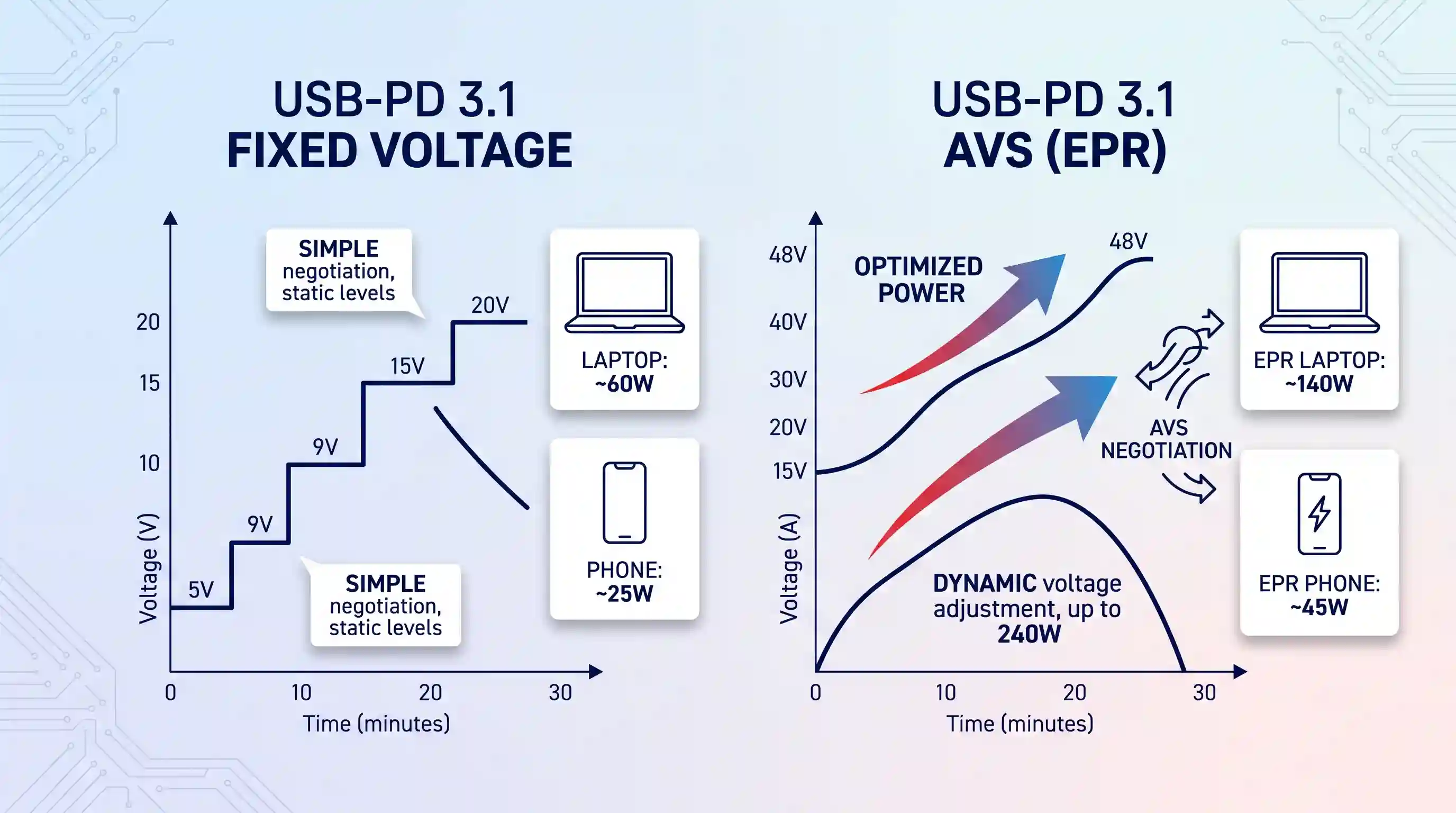
Modern power bricks adhere to the latest standards outlined in official USB-IF Power Delivery documentation, which specifies USB PD 3.1 Extended Power Range (EPR) delivering up to 240W across compatible USB-C cables. Concurrently, magnetic wireless charging accessories utilize the WPC Qi2 technical overview standard, which incorporates magnetic alignment rings to reduce coil misalignment heat and maintain sustained 15W wireless charging speeds.
Primary Limitation: Multi-port GaN chargers dynamically redistribute wattage when a new device is connected, momentarily interrupting power to existing ports as voltage contracts are renegotiated.
9. Robot Vacuum Cleaners: Automated Floor Care & SLAM Navigation
Autonomous floor cleaners have moved beyond random-bump sensors to advanced Light Detection and Ranging (LiDAR) turrets and structured-light 3D obstacle avoidance systems. Using Simultaneous Localization and Mapping (SLAM) algorithms, robot vacuums generate accurate centimeter-level floor plans, systematically navigating room by room rather than wandering aimlessly.
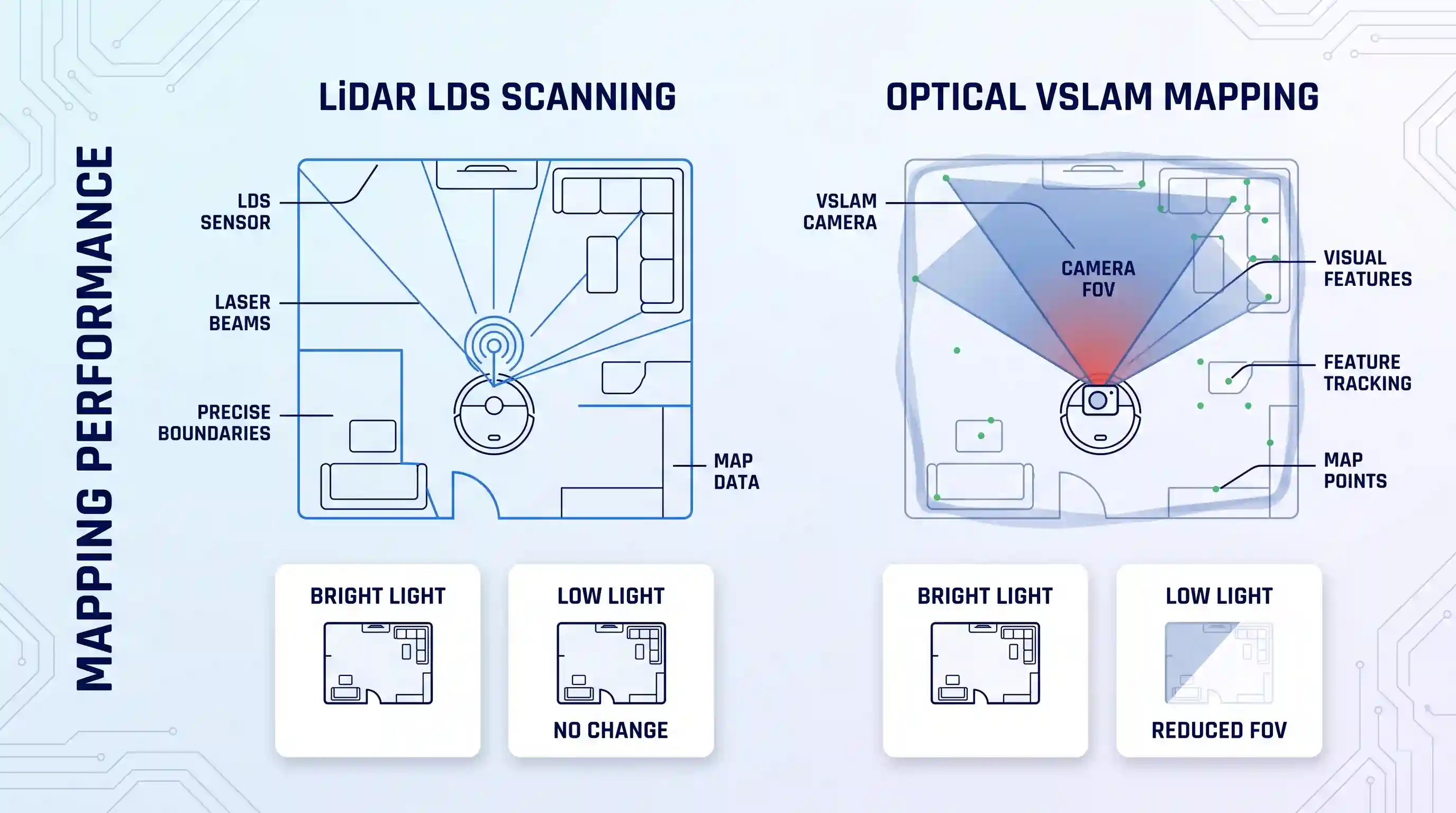
Advanced docking stations now feature automated dustbin evacuation, dirty water extraction, and heated mop pad drying. Read our comprehensive robot vacuum cleaner comparison to evaluate roller brush designs, suction air-watt metrics, and tangle-free hair extraction mechanisms.
Primary Limitation: Structured-light optical sensors can occasionally misidentify low-profile cables, loose shoelaces, or dark rug patterns as physical drop-offs or solid obstacles, causing the robot to stop unexpectedly.
10. Gaming Consoles: Fixed-Hardware Gaming & Media Centers
Gaming consoles offer plug-and-play gaming powered by custom semi-custom APU silicon, high-bandwidth GDDR6 memory, and direct-to-die NVMe storage architectures. By standardizing hardware specifications across millions of units, console platforms allow game developers to extract maximum graphical efficiency and near-instant level streaming via specialized I/O decompression blocks.
To take full advantage of modern console hardware outputting 4K resolution at 120 frames per second, your display must support HDMI 2.1 bandwidth and Variable Refresh Rate (VRR). Check our guide on gaming monitor refresh rates to choose a display that eliminates screen tearing without introducing input latency.
Primary Limitation: Closed software ecosystems restrict digital game purchases to first-party storefronts and require recurring paid subscriptions for online peer-to-peer multiplayer access.
11. Compact Consumer Drones: Aerial Photography & Spatial Capture
Consumer drones provide stable aerial camera platforms for content creators, roof inspectors, and travel photographers. Featuring 3-axis mechanical sensor gimbals and forward, backward, and downward stereoscopic obstacle sensors, modern sub-249-gram drones capture stabilized 4K HDR footage while fitting easily into a coat pocket.
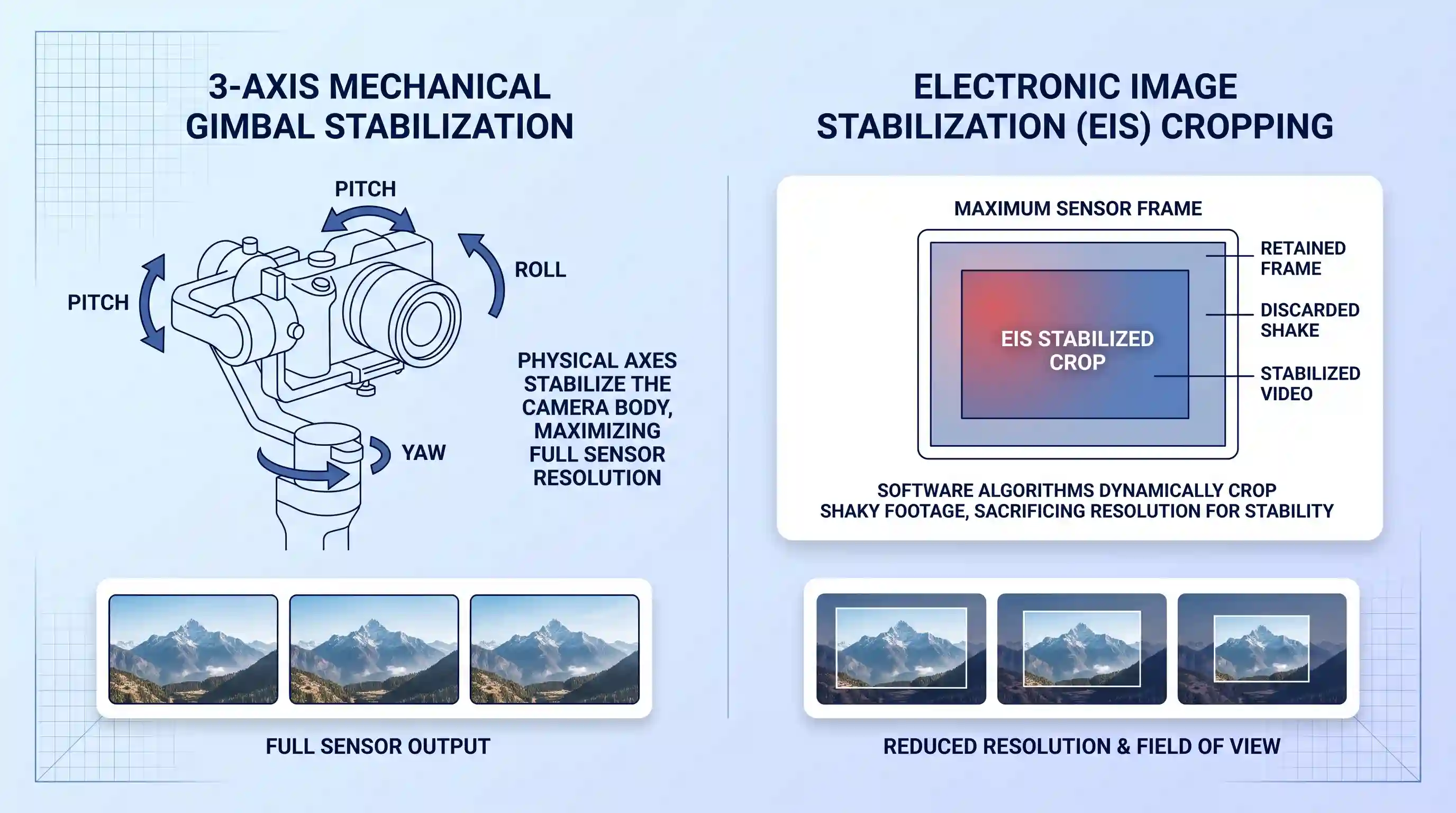
Integrated GPS and GLONASS receivers maintain steady position holds against moderate wind shear, automatically triggering Return-to-Home (RTH) failsafes if radio transmission links drop or battery thresholds reach critical return minimums.
Primary Limitation: Aviation authority regulations strictly mandate flight ceiling altitudes (typically 400 feet / 120 meters above ground level), line-of-sight operations, and mandatory no-fly geo-fencing around aerodromes and critical infrastructure.
Everyday Hardware Comparison & Maintenance Matrix
To optimize your hardware budget and minimize unexpected electronic waste, review the core standards, operational benefits, and expected maintenance cycles across all 11 gadget categories:
| Gadget Category | Key Technical Standard | Primary Everyday Benefit | Common Failure Point / Lifespan Limit |
|---|---|---|---|
| Smartphones | 5G / Wi-Fi 7 / Qi2 | Universal pocket compute and identity management | Battery capacity drops below 80% after ~500–800 cycles |
| Laptops | USB-PD 3.1 / PCIe 4.0 NVMe | Mobile high-throughput workstation productivity | Thermal paste drying and non-upgradable soldered RAM |
| Desktop PCs | ATX 3.0 / PCIe 5.0 | Modular compute with maximum thermal headroom | Dust accumulation and mechanical fan bearing wear |
| Tablets | Active Digitizer (USI / Apple Pencil) | Low-latency handwritten notes and digital art | OS sandboxing bottlenecks and glass display impact damage |
| Smart TVs | HDMI 2.1 / Dolby Vision / HDR10+ | Large-format 4K/120Hz home entertainment | Sluggish built-in OS performance and backlighting LED decay |
| Wireless Headphones | Bluetooth 5.4 / LE Audio (LC3) | Acoustic isolation and clear voice communications | Unserviceable micro-batteries degrading within 2–3 years |
| Smartwatches | Optical PPG / Dual-Band GNSS | Continuous biometric telemetry and notification triage | Ecosystem platform lock-in and daily charging routines |
| GaN Chargers | USB-PD 3.1 EPR (Up to 240W) | Compact high-wattage universal device charging | Port wear and momentary power resets during renegotiation |
| Robot Vacuums | LiDAR SLAM / Structured Light | Automated autonomous floor maintenance | Hair tangles in roller bearings and optical sensor dust blinding |
| Gaming Consoles | Custom RDNA / DirectStorage | High-framerate 4K gaming without driver troubleshooting | Internal heatsink dust clogging and analog thumbstick drift |
| Consumer Drones | 3-Axis Mechanical Gimbal / OcuSync | Stabilized aerial cinematography and field surveys | Airspace regulatory restrictions and propeller fatigue |
As you connect these devices within your home, standardizing on interoperable connectivity layers prevents vendor lock-in. As outlined in the ZDNET Matter protocol analysis, modern smart devices increasingly communicate across Matter 1.4 over Thread mesh networks, ensuring your smart home automation hubs communicate locally without requiring proprietary bridges.
Practical Decision Framework: How to Prioritize Your Tech Upgrades
Upgrading consumer technology on an arbitrary yearly calendar wastes financial resources and accelerates electronic waste. Instead, evaluate upgrades based on tangible operational bottlenecks:
- Thermal Throttling & Task Latency: If your laptop or desktop fan operates at 100% duty cycle during routine productivity, or your smartphone stutters when executing navigation and background audio simultaneously, silicon headroom is your primary bottleneck.
- Battery Cycle Depletion: When a portable device cannot sustain four hours of normal operational use, evaluate whether a factory battery replacement is available before buying an entirely new device.
- Security Firmware End-of-Life: Operating systems that no longer receive regular security patches expose financial apps and private personal data to unpatched exploits. Retiring unsupported devices is necessary to maintain digital security.
Key Takeaways
- Universal Charging Saves Space: Investing in a multi-port GaN charger supporting USB-PD 3.1 EPR allows a single 100W–140W power brick to power your laptop, smartphone, and headphones simultaneously.
- Battery Chemistry Dictates Lifespan: Most consumer wearables and true wireless earbuds have unserviceable lithium-ion cells that naturally degrade within two to three years of daily cycles.
- LiDAR Trumps Camera-Only Mapping: When selecting home automation cleaners, LiDAR-equipped robot vacuums map rooms significantly faster and operate reliably in pitch-black rooms compared to budget optical-only models.
- Platform Interoperability Matters: Prioritize smart accessories that support open standards like Matter, Thread, and Qi2 to prevent hardware obsolescence when switching between operating systems.
Frequently Asked Questions
How often should you replace your primary everyday gadgets?
Most modern computing hardware delivers high-level operational performance for three to six years. Smartphones and smartwatches generally require battery servicing or replacement around year three, while laptops, desktop PCs, and smart TVs comfortably provide five to seven years of service if kept clean of internal dust and maintained with current security updates.
Does fast charging permanently degrade your smartphone or laptop battery?
Fast charging generates elevated internal thermal levels, which can accelerate chemical degradation over time if thermal dissipation is poor. Modern devices use dual-cell battery designs, temperature sensors, and intelligent charge controllers that ramp down charging speeds once the battery reaches 80% capacity to protect long-term cell health.
What is the difference between Matter, Thread, and Wi-Fi in smart home devices?
Wi-Fi is a high-bandwidth local area network standard ideal for streaming video from security cameras. Thread is a low-power, low-bandwidth wireless mesh protocol designed specifically for smart home sensors and door locks. Matter is the universal application-level software standard that runs on top of both Wi-Fi and Thread, allowing hardware from Apple, Google, Amazon, and Samsung to communicate locally without proprietary cloud bridges.
Why do robot vacuums struggle with dark rugs and pet waste?
Most robot vacuums utilize downward-facing infrared cliff sensors to prevent falling down staircases. When the robot transitions onto a deep black or high-contrast rug, the dark surface absorbs the infrared light beam rather than reflecting it back, causing the sensor to falsely register a cliff edge and halt navigation. Pet waste requires dedicated AI structured-light cameras, which can struggle if ambient room lighting is too dim for optical recognition.

💬 Comments