Lensa combines job search with algorithmic matching and career-support tools that use information such as your target role, location, job preferences, profile details, and optional resume data. It can help you discover and organize opportunities, but it does not decide whether an employer interviews or hires you.
The useful question is not simply whether Lensa uses AI. It is which parts of the job-search process it automates or personalizes, what information those features rely on, and where responsibility shifts to an employer, recruiter, applicant tracking system, or other third party.
What Lensa Actually Is
Lensa describes itself publicly as an AI-powered career platform, while its job-seeker FAQ more specifically describes it as a job search engine. That distinction matters because the service primarily helps people discover, filter, and apply for openings rather than acting as an employer that makes hiring decisions.
At the most basic level, a job seeker can enter a job title and location and search for openings. Lensa’s FAQ says its matching algorithm recommends jobs using preset job-title and location preferences. It also says uploading a resume can increase the number of fitting jobs matched to a user.
Lensa’s current FAQ says the service is limited to the U.S. job market and U.S.-based openings. That is an important practical limit for readers outside the United States.
This is different from promising a perfect job. Matching software can narrow a pool of vacancies according to available signals, but the result still depends on the information supplied by the job seeker, the listings available to the platform, and the employer’s own requirements.
Lensa also states that it is not an agent or representative of the employers whose jobs appear through its service and that it does not control the status or result of an application. Once an application reaches an employer or another recruitment system, the hiring decision belongs elsewhere.
How Lensa Matches You With Jobs
Job matching starts with explicit preferences. These are pieces of information you provide about the work you want. Lensa’s current privacy policy says a job-seeking profile can contain a desired job location, desired salary, company preferences, education information, work experience, current position title, and an optional resume. The policy says Lensa uses profile and preference information to match users with jobs that might be relevant to them.
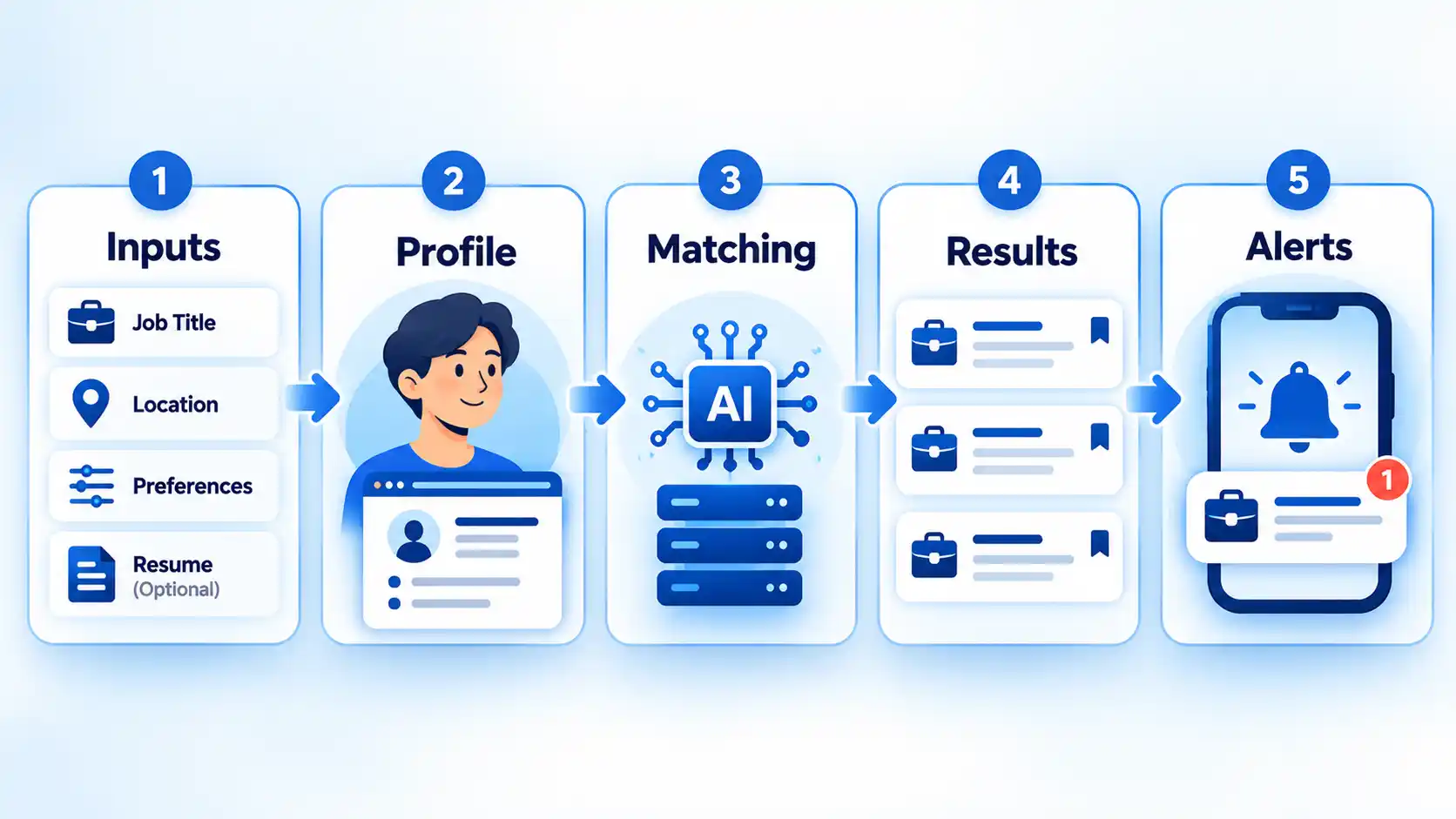
For example, someone looking for a data analyst position can specify the role and location. If that person also supplies work history, a resume, desired salary, or company preferences, the platform has more information that may be used in its matching process.
That does not reveal the complete internal model. Lensa’s public documentation supports the existence of an algorithmic matching system and describes the broader service as AI-powered, but it does not provide enough technical detail to identify a particular model architecture, embedding system, ranking formula, signal weighting, or retraining schedule. Claims about those mechanisms would be speculation.
There is also an important difference between input data and matching quality. Supplying more information may give the system additional signals, but it does not guarantee that an opening is suitable, current, accurately described, or desirable to you. A recommendation should therefore be treated as a vacancy to evaluate rather than as a conclusion that the role is right for you.
This is one reason broader job search strategies still matter. A matching system can reduce discovery work, but evaluating the employer, tailoring an application, checking requirements, and deciding whether a role advances your goals remain separate tasks.
More generally, understanding how AI job matching works can help you distinguish the information you provide from the ranking and recommendation decisions a matching system makes.
Workstyle, CareerPilot, and Application Guidance
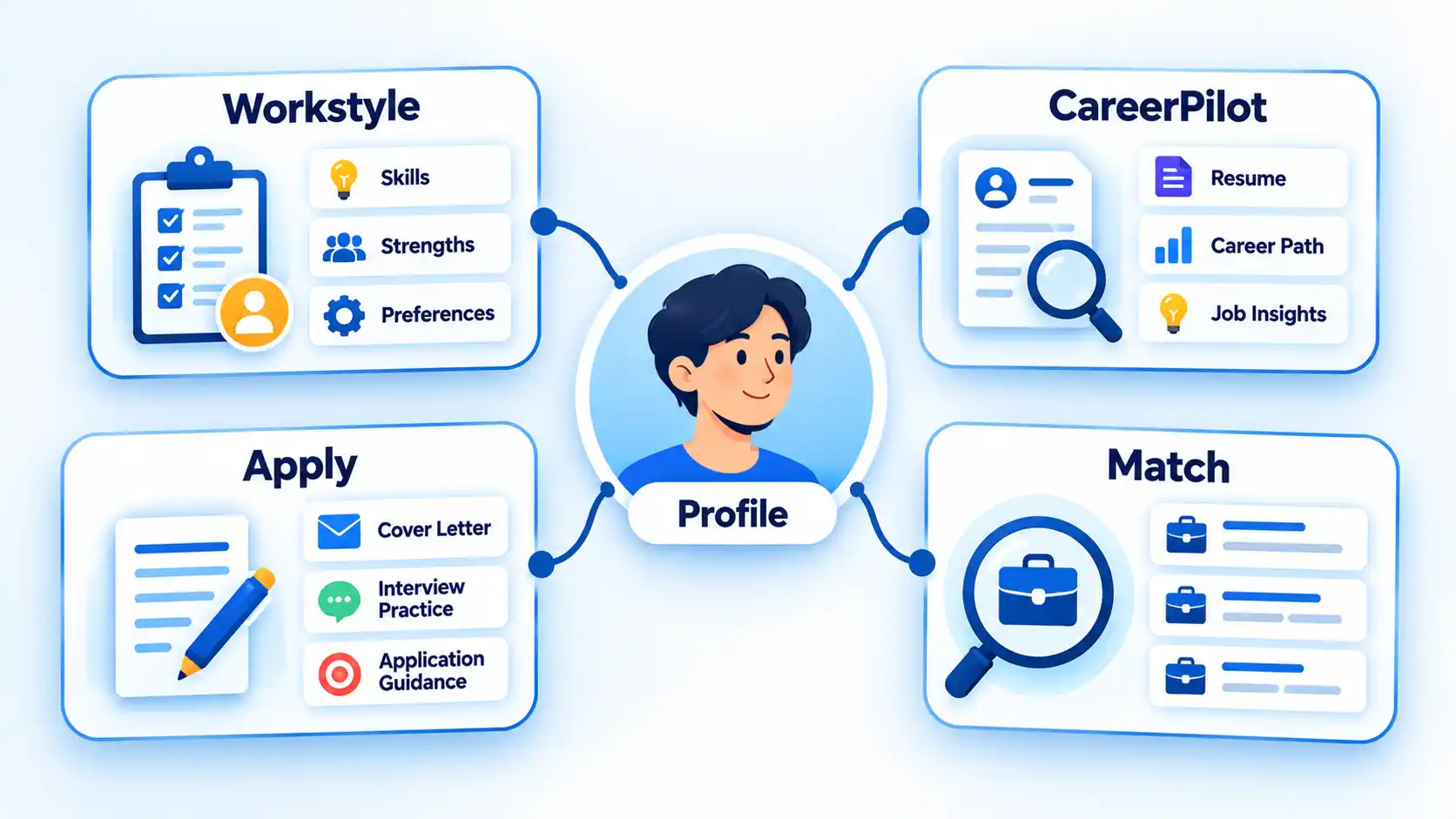
Lensa presents several job-search tools alongside vacancy discovery. These functions should not all be treated as one algorithm because they perform different jobs: Workstyle focuses on behavioral interaction and soft-skill reporting, CareerPilot provides resume and career-oriented analysis, and Application Guidance supports preparation around individual applications.
Workstyle game
Lensa’s current Workstyle page describes an approximately eight-minute game intended to produce a soft-skills report. Lensa’s privacy policy gives more detail about the data involved: it says the game evaluates reactions to prompts, including click count, click speed, and error rate, and uses those signals to place a user into an archetype.
The privacy policy is more precise about how that information affects job search. It says the raw results and conclusions are for the user and do not themselves affect the job search. If the user consents, Lensa says it can use the resulting archetype to filter search results toward jobs more strongly correlated with that archetype. The same policy says it does not use this information to provide tailored job recommendations.
This wording is narrower than the Workstyle page’s statement that the game can help Lensa recommend better jobs. The supported conclusion is that Workstyle produces a soft-skills assessment and that, with consent, the archetype can affect filtering. The public evidence does not establish that Workstyle determines whether an employer should hire someone.
CareerPilot
CareerPilot currently advertises three functions to signed-in users: resume analysis, best-matching companies, and career-path recommendations. These are Lensa’s descriptions of the service’s available functions; they are not independent evidence that its suggestions are more accurate than those from another career platform.
A useful way to separate the functions is by the question they try to answer. Job matching concerns which available openings appear relevant, while CareerPilot’s current interface is positioned around a user’s resume, potentially matching companies, and possible career paths.
Application Guidance
Lensa’s Application Guidance dashboard currently advertises personalized cover-letter creation, interview practice, and resume optimization. These features operate closer to the application stage than the core job-matching system.
That separation matters when discussing “Lensa AI.” A tool that creates or improves application material is doing a different job from a system that recommends listings. Likewise, interview practice does not mean Lensa conducts or evaluates the employer’s actual interview.
What Happens When You Apply to a Job
Finding a vacancy through Lensa does not mean the entire application process necessarily happens on Lensa. Its current Terms of Service describes both an internal apply function and external applications.
With the internal apply function, Lensa says a user enters information into a version of an employer or applicant tracking system application that Lensa has reproduced through an automated process and then authorizes Lensa to submit it. An applicant tracking system (ATS) is software used to receive and manage recruitment applications.
There is an operational limitation worth checking before relying on that automation. Lensa’s current Terms of Service says an automatically replicated application can sometimes omit non-mandatory questions from the original application. Lensa states that an application missing those answers might not be considered or might be considered less favorably.
Prepopulation can reduce repetitive typing, but this documented limitation makes review important. Where the interface allows it, check copied details and the available application fields before authorizing submission.
Lensa also says information supplied through its internal apply function can, with permission, become part of the user’s profile and be used to prepopulate future applications. Its terms say users can correct prepopulated information before submission.
Other vacancies use an external application. In those cases, clicking a listing can redirect the applicant to an employer, recruiter, applicant tracking system, or other third-party site. Lensa’s terms describe some situations in which a third-party registration screen can be prepopulated with information Lensa holds. If the user enrolls with the third party, that provider’s own terms and privacy notice govern its subsequent processing of the information.
The practical boundary is straightforward: Lensa can help locate a vacancy and can assist with parts of the application workflow, but it does not control whether the employer acknowledges the application, invites the candidate to an interview, or makes an offer.
Privacy and Data Trade-Offs
Personalized job matching requires information about the person being matched. The practical privacy question is therefore which information is collected, how the documents say it can be used or shared, and what choices the user has.
Lensa’s privacy policy, last updated July 20, 2026, says a job-seeking profile can contain identifiers, education and employment information, an optional resume, desired location, desired salary, and company preferences. It says those data can be used to create the profile and match users with potentially relevant jobs.
There is also broader language in Lensa’s current Terms of Service concerning uploaded resumes and user data. The terms state that uploading a resume constitutes consent to sharing, licensing, and selling the resume and user data to third parties including employers, recruiters, staffing companies, other job boards, and data partners for commercial purposes, and state that users can change these choices through the Privacy Center.
The privacy policy describes some sharing more specifically. It says that when a user supplies a resume and applies to a live posting on Lensa, the resume is shared with the owner of that job post. It also says additional sharing with other employers or job boards occurs if the user agrees. Because the Terms of Service and privacy policy describe overlapping practices at different levels of breadth, users considering a resume upload should review both documents and their current privacy settings rather than relying on a single summary.
| Information or input | Documented use | Important limitation or choice |
|---|---|---|
| Job preferences | Desired location, salary, company preferences, and related profile information can be used to match a user with jobs that might be relevant. | A match is a recommendation signal, not a guarantee that a job is suitable or that an employer will select the applicant. |
| Resume and employment information | Work experience, current title, education, and an optional resume can form part of a job-seeking profile and matching process. | Lensa’s privacy policy and Terms of Service describe multiple forms of resume or user-data sharing. Users should review both documents and current Privacy Center choices before uploading. |
| Workstyle interactions | Game interactions such as click count, speed, and error rate are used to assign an archetype and provide an assessment. | Lensa says the raw results do not affect the job search. With consent, the archetype can be used to filter results toward jobs more strongly correlated with that archetype. |
| Email address | Used as an account identifier and for service communications. | Lensa says it shares email addresses in hashed form with third parties including advertising providers and data brokers, and that such sharing may constitute a sale or share under applicable privacy laws. |
Hashing changes an identifier into another representation, but it does not mean the sharing has no privacy consequences. Lensa itself states that hashed-email sharing may constitute a “sale” or “share” under applicable privacy laws.
Lensa provides a Your Privacy Choices page where users can manage opt-outs and consents. The current page says its controls include opting out of selling or sharing personal information and that it honors Global Privacy Control signals in the circumstances described there.
Privacy choices can also change when an application moves to another job board, employer, recruiter, or applicant tracking system. That service may have separate terms and privacy practices, so check the destination and the information being submitted before completing an external application.
AI Job Matching Is Not the Same as AI Hiring Decisions
A recommendation system that helps a job seeker discover openings is conceptually different from an automated system an employer uses to screen, score, or select applicants. Mixing those stages together can make discussions of AI hiring unnecessarily confusing.
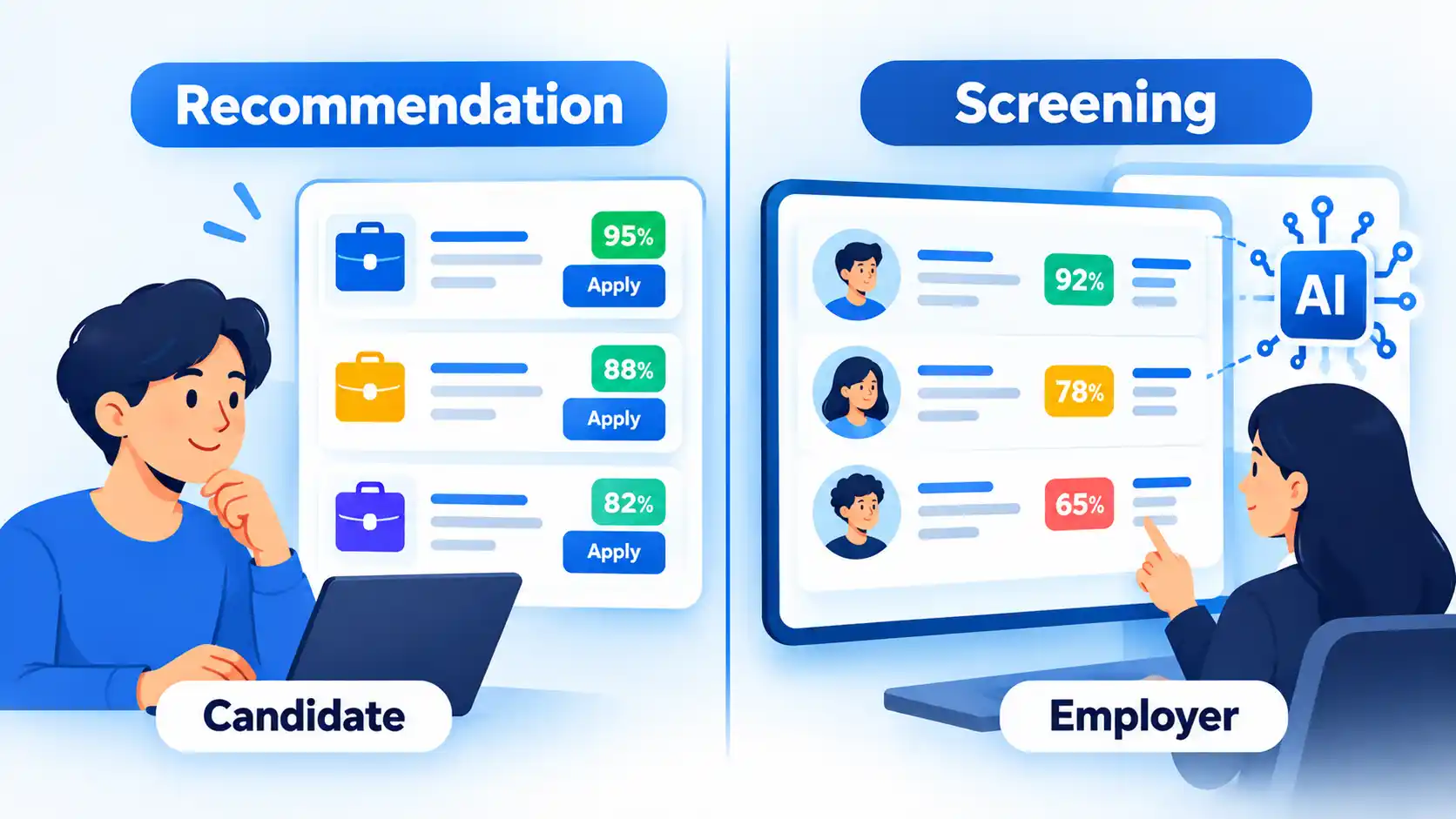
On the job-search side, an automated decision might concern which openings a candidate sees. On the employer side, automation might be used to evaluate whether an applicant meets hiring criteria. The second category can directly affect an employment decision.
The U.S. Equal Employment Opportunity Commission explains that federal employment-discrimination laws can apply when AI systems are used in recruiting, screening, or hiring. Its worker guidance gives examples including targeted job advertisements, resume screening, recorded-video evaluation, and recruiting chatbots.
Disability access is one specific concern. The U.S. Department of Justice explains that the Americans with Disabilities Act applies to employer selection and testing and discusses ways hiring technologies can unlawfully screen out qualified applicants with disabilities. Depending on the circumstances, reasonable accommodations may also be required during a technology-assisted hiring process.
If an applicant encounters employer-side automation, understanding AI hiring tools and applicant rights can help distinguish ordinary job recommendations from technologies that influence an employment decision.
Some jurisdictions add more specific rules. New York City’s Local Law 144 requirements for qualifying automated employment decision tools apply to employers and employment agencies using covered tools and include a recent bias audit, public availability of specified audit information, and required notices to candidates or employees.
That does not establish that Lensa’s consumer-facing job recommendation system is itself a New York City automated employment decision tool. Applicability depends on the tool, its use, the party using it, and the statutory and regulatory definitions. The important distinction here is between recommending opportunities to a job seeker and using automation to substantially assist an employer-side employment decision.
What Lensa Can and Cannot Do for a Job Seeker
Lensa can reduce some of the discovery work involved in searching vacancies. Its documented features include job matching based on preferences, job alerts, an optional Workstyle assessment, CareerPilot functions, and application-preparation tools.
It can also reduce repetitive work in some applications through prepopulation or its internal apply process. Those conveniences have limits, including the documented possibility that automated replication can omit non-mandatory application questions.
What the platform cannot do is guarantee that a recommended job is a good fit, control an employer’s final hiring outcome, or eliminate the need to review an application and the destination to which personal information is being submitted.
The practical way to treat AI-assisted job search is as a filtering and support layer rather than as an authority. Automation can narrow the field or reduce repetitive work, but you still need to evaluate the vacancy, read the employer’s requirements, verify application details, and decide whether the opportunity is worth pursuing.
That distinction is also useful when comparing AI job-search tools with traditional job boards: meaningful differences include how each service finds listings, personalizes results, handles applicant data, and supports the application process.
