Successful influencer marketing requires setting clear campaign goals, choosing creators based on engagement rate rather than follower counts, and maintaining strict compliance with transparency laws. Brands achieve the highest return on investment by partnering with niche creators who hold strong trust with specific audiences.
Quick Take: 6 Rules for Influencer Success
Influencer marketing works best when you treat creators as creative partners rather than ad space. Follow these six core principles to run profitable campaigns:
- Define specific targets: Decide if you want brand awareness, website clicks, or direct sales before you talk to creators.
- Value engagement over size: Creators with smaller, focused followings often drive higher response rates than big celebrities.
- Check creator metrics carefully: Look at average comments and likes to spot fake followers before signing any contract.
- Give creative freedom: Provide clear guidelines on product features, but let the creator write their own scripts.
- Follow legal disclosure laws: Require creators to place clear ad labels on every sponsored post.
- Focus on long-term deals: Repeated exposure from brand ambassadors builds more trust than single posts.
Tip 1: Define Your Goals and Map Your Target Audience
Many businesses fail at influencer marketing because they start outreach without a plan. You must know what success looks like before spending your budget. Setting clear objectives guides every decision, from platform choice to creator selection.
First, decide on your primary campaign goal. If you want brand awareness, measure impressions, total video views, and profile visits. If you want direct revenue, track coupon codes, affiliate link clicks, and total conversions. Aligning your tracking tools with your business goal ensures you can prove your campaign value.
Next, define the exact group of people you want to reach. Do not build a broad campaign for everyone. Outline the demographic details of your ideal customer. Consider their age group, geographic location, interests, and spending habits.
To build a solid influencer marketing strategy, match your audience profile with creator demographics. Ask prospective creators for their audience analytics screenshots. Check their follower age distribution and top geographic locations. Placing your product in front of an mismatched audience will waste your ad spend, even if the creator has millions of followers.
Integrate your influencer outreach into your broader advertising strategy to maximize your reach across multiple channels. Set up dedicated tracking parameters for every campaign. Use UTM parameters on custom links to see traffic in Google Analytics. Establish clear tracking protocols by reviewing standard digital marketing KPIs before your first campaign launches.
Tip 2: Prioritize Engagement Quality Over Follower Count
Follower count is often a misleading metric. A creator with one million followers may have passive viewers who rarely buy products. Conversely, a creator with ten thousand followers might have an active community that trusts every recommendation.
Industry data shows that smaller creators consistently generate higher engagement percentages. Understanding creator tiers helps you allocate your budget effectively across different account sizes.
| Creator Tier | Follower Range | Average Engagement Rate | Primary Campaign Strength |
|---|---|---|---|
| Nano-Influencer | 1,000 – 10,000 | 4.0% – 8.0% | Hyper-local focus and high community trust |
| Micro-Influencer | 10,000 – 100,000 | 2.5% – 5.0% | High conversion rates and niche expertise |
| Mid-Tier Influencer | 100,000 – 500,000 | 1.5% – 3.0% | Balanced combination of reach and engagement |
| Macro / Mega Influencer | 500,000+ | 0.8% – 1.8% | Mass market awareness and broad reach |
Micro-influencers often deliver the best return on investment for small and medium businesses. According to industry influencer marketing benchmarks, smaller accounts foster genuine conversations in their comment sections. Viewers see micro-influencers as peers rather than distant celebrities.
When reviewing potential partners, review published performance metrics. You can study the latest 2026 creator benchmark report to compare engagement standards across platforms like TikTok, Instagram, and YouTube. Combine smaller creators into networks to reach targeted niches while keeping cost-per-engagement low. You can coordinate these partnerships by following a structured social media marketing guide for multi-creator management.
Tip 3: Vet Creators and Detect Fake Engagement
Audience fraud remains a major issue in digital marketing. Unscrupulous accounts purchase automated bots, fake likes, and artificial comments to inflate their value. Partnering with fraudulent accounts wastes your marketing budget on non-existent consumers.
Protect your brand by calculating true engagement rates manually before signing contracts. Do not rely solely on creator-provided media kits.
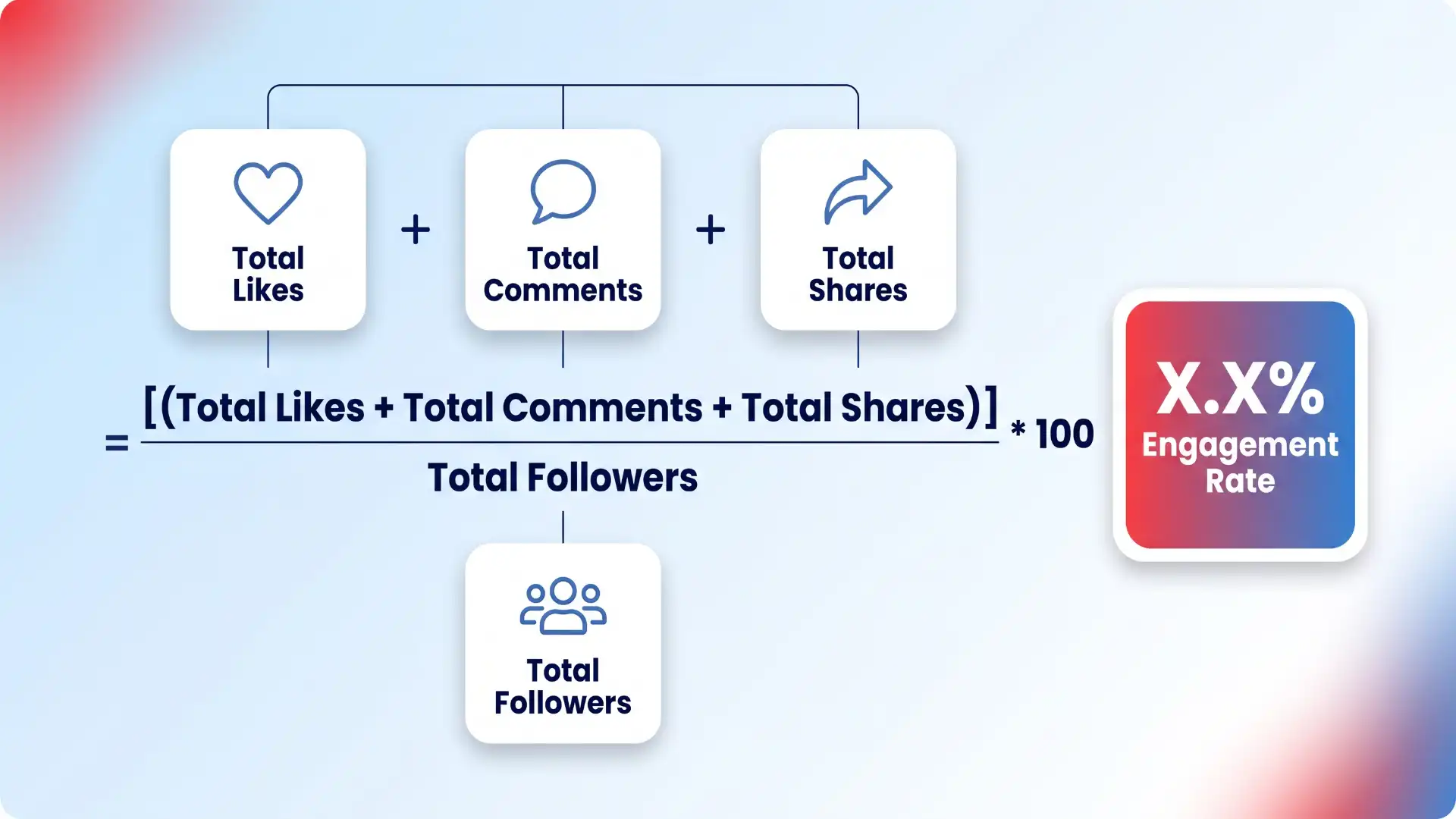
Use this standard formula to verify account engagement on recent posts:
Engagement Rate = [(Total Likes + Total Comments + Total Shares) / Total Followers] * 100
Calculate this rate across the creator’s last ten non-sponsored posts. Compare the result against platform averages. Be cautious if you spot any of these four red flags:
- Sudden follower spikes: Account growth should look gradual. Vertical jumps in follower graphs often indicate purchased bot lists.
- Repetitive generic comments: Look closely at the comment section. Single-emoji responses or short phrases like “Nice post!” or “Great pic!” usually come from automated bots.
- Irregular engagement ratios: An account with 100,000 followers but only 50 likes per post has artificial followers. Similarly, high like counts with zero comments indicate paid likes.
- Mismatched audience location: If a local business hires a creator whose followers are primarily overseas, the campaign will not generate local sales.
Tip 4: Create Clear Briefs While Allowing Creative Freedom
Managing creators requires a balance between brand safety and creative independence. Traditional advertising relies on rigid scripts. Influencer marketing relies on authentic personal tone. Micromanaging a creator ruins the natural voice that built their audience in the first place.
Provide every creator with a structured campaign brief. A brief sets clear boundaries while leaving space for personal creativity.
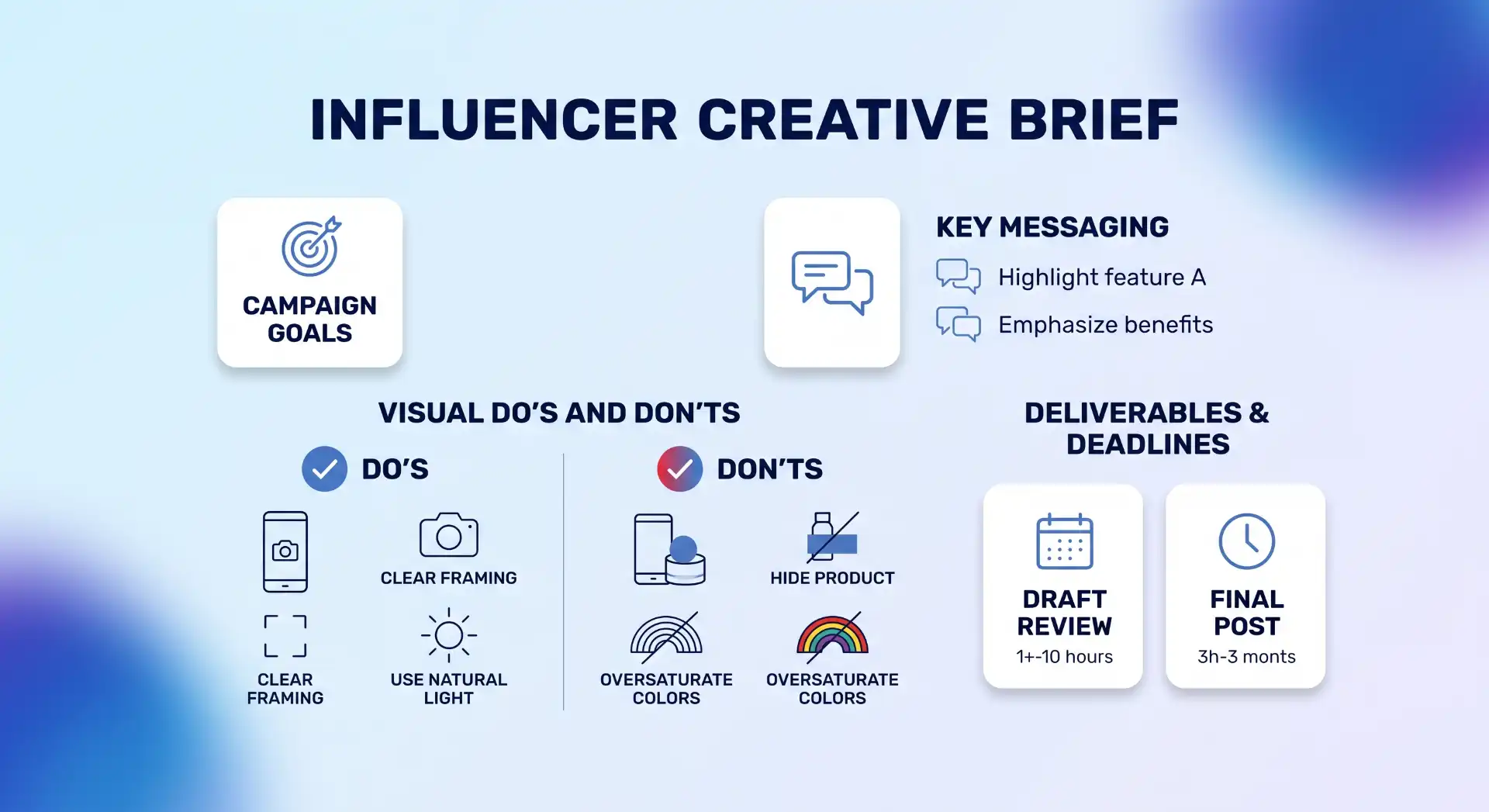
Include these essential items in your campaign brief:
- Product positioning: Explain what the product does and the specific problem it solves for the user.
- Key talking points: List two or three core features the creator must mention aloud or in captions.
- Visual requirements: Specify necessary framing details, such as showing the product package clearly on camera.
- Strict prohibitions: Detail what the creator must never say, including unverified health claims or comparisons to competitors.
- Call to action: Provide the exact promo code, custom URL, or tagged account name to include in the caption.
Review the creator’s draft content before it goes live. Check for factual accuracy and brand safety, but avoid altering their natural speaking style. Aligning your brief with your overall content marketing tips ensures brand consistency across paid and organic channels.
Tip 5: Ensure Strict Legal and FTC Compliance
Transparency is required by law. Regulatory authorities enforce strict rules on commercial social media endorsements. Fines for hidden advertising can harm both your business and the creator.
Follow all published Federal Trade Commission endorsement guidelines to maintain complete legal compliance. Both the brand and the influencer share legal responsibility for clear disclosures.
Require these mandatory compliance steps in your written agreements:
- Unmistakable placement: Disclosures must appear in the main text caption before the reader taps “More.” On video content, display superimposed text on screen and state the partnership orally.
- Clear language: Require unambiguous tags such as #Ad, #Sponsored, or #PaidPartnership. Do not hide disclosures inside long lists of general hashtags.
- Audio disclosures: For podcasts and long-form video, creators must state clearly that the episode or segment is sponsored by your brand.
- Contractual usage rights: Clearly define content licensing in your contract. Specify how long your business can run the creator’s video as a paid ad.
Protect your brand reputation by establishing clear content review procedures. Consult complete brand safety guidelines to avoid legal regulatory penalties and consumer backlash.
Tip 6: Build Long-Term Ambassador Relationships
One-off sponsored posts rarely generate lasting results. Consumers seldom buy a product the first time they see it on social media. True influence builds over repeated exposures across several months.
Transition from transactional single posts to ongoing brand ambassador retainers. When an audience sees a creator use your product repeatedly over time, their trust in your brand increases significantly.
Industry research shows that long-term partnerships improve conversion rates and lower acquisition costs. Reviewing recent influencer marketing trends analysis confirms that top brands favor monthly retainers over one-off sponsored posts.
Structure long-term creator agreements using these proven methods:
- Monthly content retainers: Pay a fixed fee for a guaranteed set of posts, Stories, or short-form videos every month.
- Affiliate commission tiers: Combine a base fee with performance commissions to reward creators who drive high sales volume. Learn more about performance structures in our guide to affiliate marketing for beginners.
- Product co-creation: Partner with top-performing creators to design limited-edition products or exclusive colorways.
- Exclusive category access: Include non-compete clauses in long-term contracts so ambassadors cannot promote direct rival brands.
Common Influencer Marketing Pitfalls to Avoid
Even experienced marketing teams make mistakes when expanding their creator programs. Avoid these common operational errors:
- Measuring vanity metrics: Relying on simple post likes rather than link clicks, promo code redemptions, and sale totals.
- Delaying payment terms: Creators operate small businesses. Late payments damage trust and prevent creators from renewing long-term deals.
- Ignoring usage rights: Reposting creator videos on your brand feed or in paid ads without securing explicit written rights in your contract.
- Ignoring audience overlap: Hiring five creators who share the exact same audience base leads to paying multiple times to reach the same individuals.
Key Takeaways
- Establish campaign metrics and target audience profiles before reaching out to prospective creators.
- Prioritize micro-influencers with active engagement over macro-accounts with passive followers.
- Calculate account engagement rates manually and check for red flags to avoid follower fraud.
- Provide structured campaign briefs that enforce brand rules while allowing natural creative voice.
- Mandate visible, unambiguous ad disclosures on all posts to stay compliant with federal laws.
- Convert successful single-post campaigns into long-term ambassador retainers for sustained revenue.
Frequently Asked Questions
How much does influencer marketing cost for small businesses?
Costs vary depending on creator size and platform. Nano-influencers often accept free products or small fees under $150 per post. Micro-influencers typically charge $250 to $1,000 per post depending on video production requirements. You can start testing creator campaigns with a total monthly budget of $1,000 to $2,000.
How do I track direct sales generated by an influencer?
Track direct conversions by giving each creator a unique promo code and a custom URL containing UTM parameters. Measure sales in your ecommerce dashboard by filtering for that creator’s discount code or web link. Affiliate tracking software can also automate sales attribution and creator commission payouts.
Should I send free products to creators instead of paying a cash fee?
Gifting free product works well for initial outreach to nano-influencers. However, established micro-influencers usually require cash payment for guaranteed deliverables and specific publishing dates. Unpaid product gifting does not guarantee the creator will post or follow your campaign brief.
What should I do if an influencer campaign fails to generate sales?
First, analyze your tracking data to pinpoint the breakdown. If link clicks were high but sales were low, the issue is likely your website checkout page or product pricing. If link clicks were low, the creator’s audience did not match your target customer or the call to action was weak. Use these insights to refine creator selection and briefs for future campaigns.

💬 Comments