Overspending means spending more money than you planned or can afford. It usually happens through small, repeated purchases, not one big mistake. You can stop it by tracking where your money goes and setting clear limits before you buy.
Quick Take
Overspending rarely starts with one big purchase. It builds up slowly, from small habits like takeout or a forgotten subscription. The fix is not about willpower alone. Three tools help most people: a simple budget, a short waiting period before big purchases, and a regular check on your spending. This guide covers all three, plus the warning signs that tell you it’s already happening.
Is This You? Signs You’re Overspending
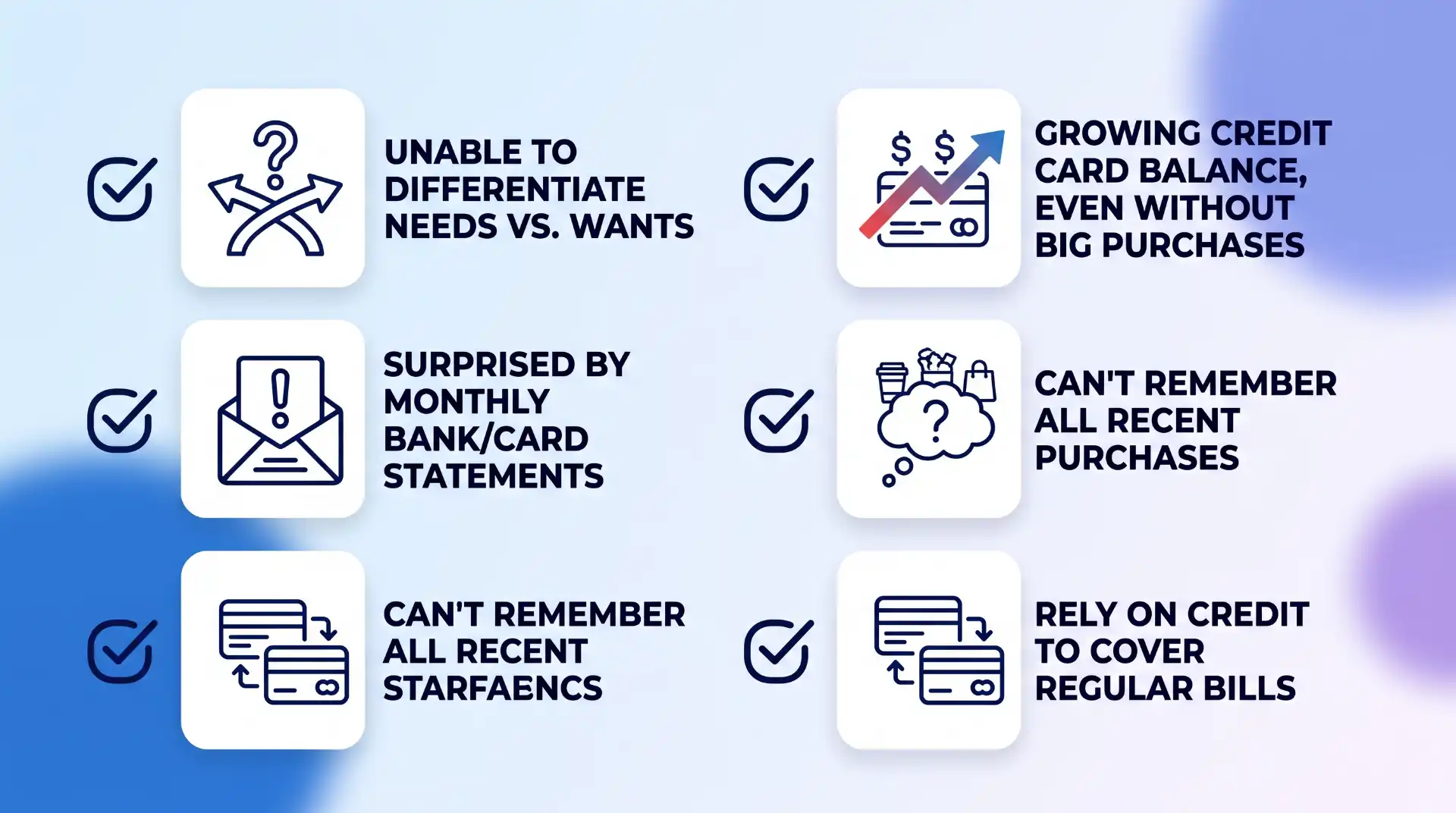
Before you fix overspending, check if it actually describes you. Common warning signs, according to Chase’s guide to spotting overspending, include:
- You can’t say right away which of your monthly expenses are needs and which are wants.
- Your credit card balance keeps growing, even in months with no big purchases.
- You’re often surprised by your own bank or card statement.
- You couldn’t list everything you bought this week from memory alone.
- You rely on credit to cover regular bills, not just emergencies.
If two or more of these sound familiar, the sections below will help you find where the money is actually going.
Why Overspending Sneaks Up on You
Overspending rarely starts as a decision. It starts as a small comfort: takeout after a long day, or a new streaming app to unwind. On its own, one purchase does not hurt your budget. The problem is that these choices repeat.
Over weeks and months, small purchases like these turn into fixed habits. A lunch out a few times a week, plus a handful of small subscriptions, can add up to hundreds of dollars a month without you noticing. None of these purchases feels big by itself. Added together, they crowd out money you need for bills, savings, or debt payments.
If your spending has already gotten out of control and bills are piling up, professional help is worth considering. Readers in Michigan dealing with mounting balances can look into Michigan debt relief options built for exactly this situation. But for most people, the real fix starts earlier, with understanding where the money actually goes.
Needs vs. Wants: Drawing the Line
Needs are the expenses you cannot skip: rent, utilities, groceries, and minimum debt payments. Wants are the things that make life more enjoyable but aren’t required, like dining out, streaming subscriptions, or clothes you don’t need yet. Money problems start when wants get treated like needs.
Try this simple exercise. For one or two weeks, write down everything you spend money on. Include every coffee, small subscription, and impulse buy that wasn’t planned. Most people are surprised by how much lands in the “want” category. Once you see it clearly, it’s much easier to cut back where it matters.
Build a Budget That Actually Works
A budget is not a punishment. It’s a plan that tells your money where to go, instead of you wondering where it went. Without one, it’s easy to justify small purchases that add up fast.
Start by listing your monthly income, then your fixed costs: rent, utilities, insurance, and minimum debt payments. A basic monthly budget like this takes about twenty minutes to set up. Whatever income is left after fixed costs can be split between saving, debt repayment, and wants.
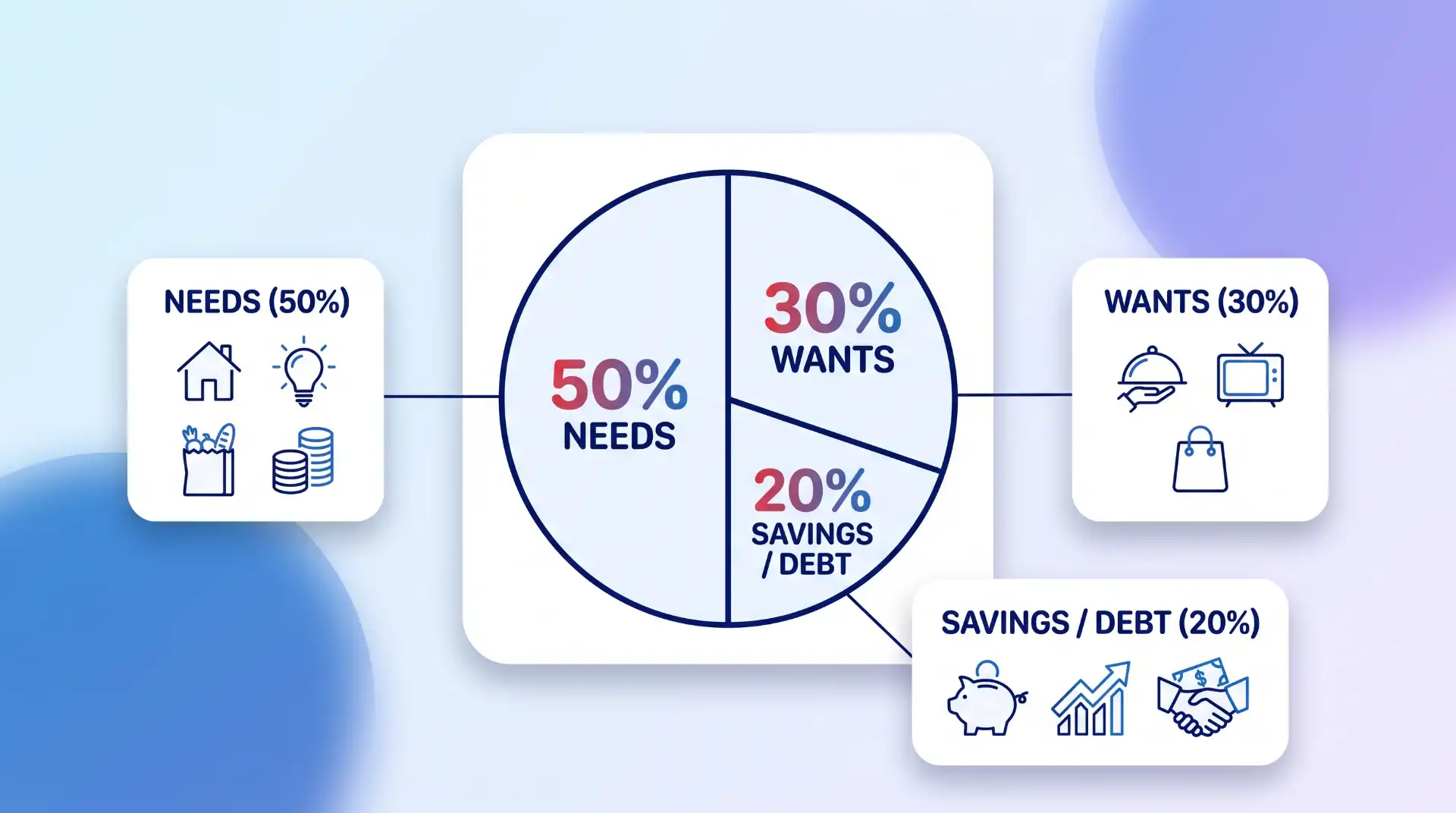
One common framework is the 50/30/20 rule: 50% of after-tax income goes to needs, 30% to wants, and 20% to savings or debt repayment, according to Experian’s breakdown of the rule. It’s a helpful starting point, but it doesn’t fit everyone. People with lower incomes or high housing costs often can’t hold needs to 50%, and freelancers with irregular pay may need a more flexible plan.
If you’re working toward a specific goal, like a house down payment or an emergency fund, setting the target first can make budgeting easier. A clear savings goal gives your 20% somewhere concrete to go, instead of just sitting in a general savings account.
Concrete Tactics to Cut Overspending
Once you know where your money goes, these three tactics make the biggest difference for most people.
Use the 24-Hour Rule
Before buying anything that isn’t planned, wait 24 hours. This is often called the 24-hour rule, and financial educators recommend it because it breaks the link between wanting something and buying it right away, per Ramsey Solutions.
The rule works because of a simple pattern researchers have studied for decades. In a well-known Stanford study, children who could delay eating a treat for a bigger reward later tended to do better across many areas of life, including money management, according to Psychology Today. Waiting doesn’t require special willpower. It just gives the urge to buy time to fade, and it usually does.
For bigger purchases, extend the wait to a week. If you still want the item after that, and it fits your budget, buy it without guilt.
Audit Your Subscriptions
Subscriptions are one of the easiest ways to overspend without noticing. Each charge is small, and it repeats automatically, so it’s easy to forget what you’re even paying for.
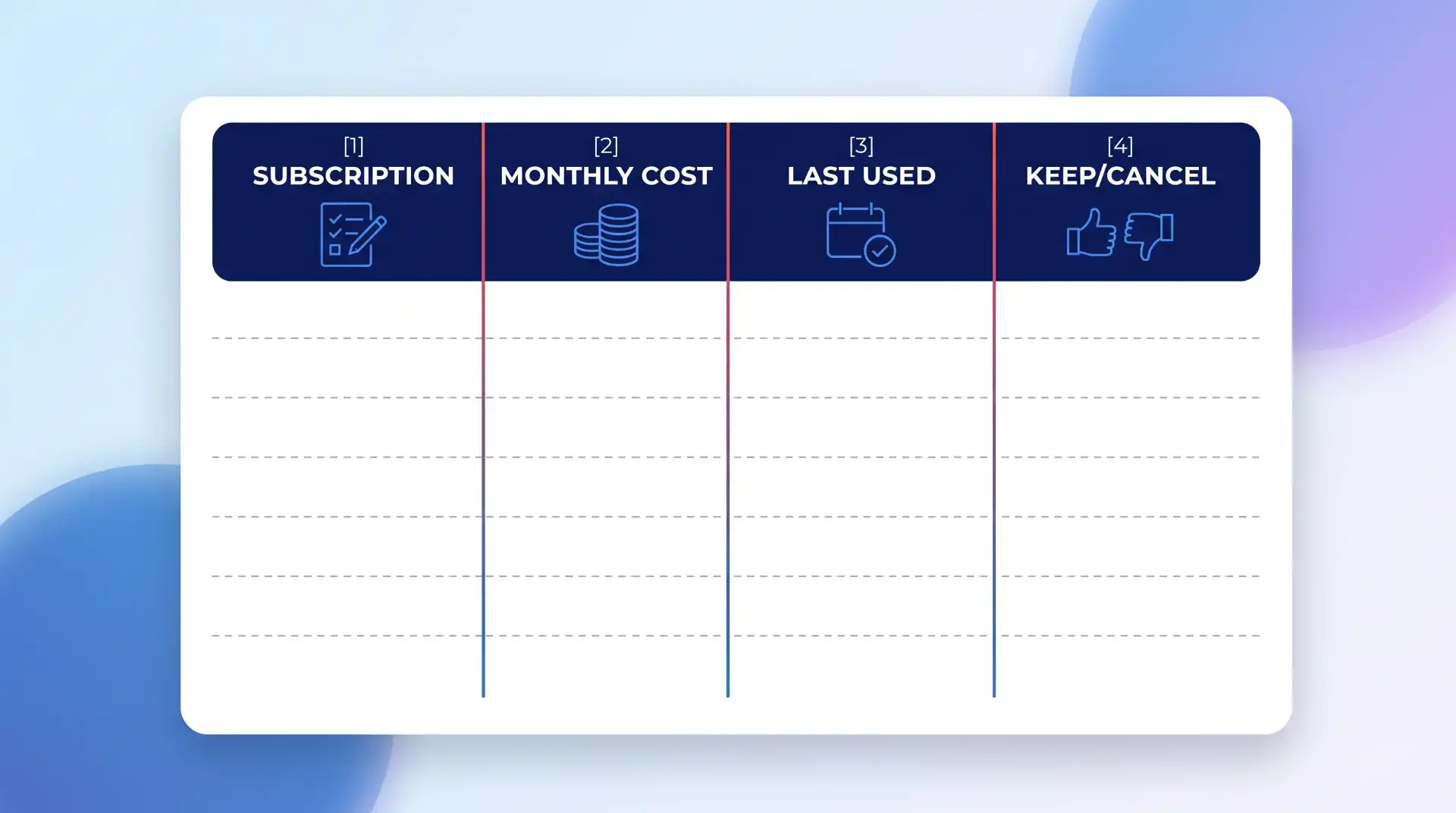
Once a month, list every subscription you pay for: streaming, fitness apps, meal kits, and software. Next to each one, write the last time you actually used it. Cancel or downgrade anything you haven’t used in the past 30 days. A simple subscription tracking checklist makes this faster the second time you do it, since you’ll already have the list built.
Many services also offer family or group plans. Splitting a plan with people you trust can cut the cost per person significantly.
Practice Mindful Spending
Mindful spending means pausing before a purchase to ask three questions: Do I need this? Does it fit my budget? Does it match what actually matters to me?
This doesn’t mean cutting out everything enjoyable. It means spending on purpose, instead of by accident. A guilt-free spending plan that budgets for fun on purpose usually holds up better over time than one that tries to cut out all enjoyment at once.
What Overspending Costs You Beyond the Receipt
Overspending doesn’t just drain your bank account. It can also hurt your credit. Credit utilization, which is how much of your available credit you’re using, makes up about 30% of your FICO credit score, according to Experian. Carrying a high balance from month to month, even if you make the minimum payment, can lower your score over time.
Beyond credit, overspending adds stress. Money worries are one of the most common sources of everyday anxiety, and that stress tends to build quietly, the same way the spending itself does. If you want a fuller picture of where you stand, reviewing your current debt levels is a useful next step before you build a repayment plan.
Where This Advice Has Limits
Budgeting and mindful spending help most people, but they don’t fix every situation. It’s worth being honest about when this advice isn’t enough.
If your income doesn’t cover your actual needs, no amount of budgeting will close that gap. In that case, the real problem is income, not spending habits, and the fix may involve finding additional income or avoiding new debt while paying down what you already owe.
Irregular income, like freelance or gig work, also makes rule-based budgets like the 50/30/20 split harder to apply directly. A basic emergency fund matters even more in this case, since it smooths out the gaps between paychecks.
Veterans facing debt from deployments, frequent moves, or the transition to civilian pay may find that general budgeting advice doesn’t address their specific situation. A focused veteran debt relief resource can offer more targeted help than a general spending guide.
And if spending feels compulsive, meaning you buy things you know you shouldn’t and can’t stop even when you want to, that’s a different problem than a lack of budgeting skills. A financial counselor or therapist who works with money issues can help more than a budget template can.
Building the Habit Long-Term
Avoiding overspending isn’t a one-time fix. It’s a set of habits you keep using: tracking spending, budgeting on purpose, and pausing before non-essential purchases.
These habits get easier with repetition. According to U.S. News, small, consistent changes tend to stick better than big, sudden overhauls. Pick one habit from this guide, use it for a month, then add the next one.
If you’re already struggling to keep up with bills while trying to build these habits, it’s okay to ask for help. A financial counselor can offer guidance that a single article can’t.
Key Takeaways
- Overspending usually builds up from small, repeated purchases, not one big mistake.
- Track your spending for one to two weeks to see where your money actually goes.
- A budget, like the 50/30/20 rule, gives every dollar a job before you spend it.
- The 24-hour rule and a monthly subscription audit are two of the most effective, concrete tactics.
- If income, irregular pay, or compulsive spending are the real issue, budgeting alone won’t fix it. Get support instead.
FAQ
Is it normal to overspend once in a while?
Yes. An occasional splurge is not the problem. The trap starts when overspending becomes a regular pattern that crowds out your needs, savings, or debt payments. One expensive dinner is not a crisis. A pattern of small purchases that repeats every week is worth a closer look.
Does overspending mean I lack self-control?
Not necessarily. Overspending is often a habit shaped by convenience, stress, or not tracking spending, not a personal failing. Most people who fix it do so with tools like a budget or a waiting period, not through willpower alone. Changing your environment, like removing saved card details from shopping apps, often works better than simply trying to want less.
Do budgeting apps actually help stop overspending?
They can, but only if you actually check them. An app that tracks spending automatically saves time, but it won’t change your habits unless you look at it regularly and act on what you see. A simple weekly check-in matters more than which app you use.

💬 Comments