The best money transfer apps balance low processing fees, transparent exchange rates, high transfer limits, and multi-rail delivery options ranging from instant bank deposits to international cash pickups. For quick domestic peer-to-peer payments, Cash App offers immediate settlement, while Wise and WorldRemit lead cross-border transfers by delivering mid-market exchange rates and flexible payout methods across more than 150 countries.
While traditional banking networks have expanded their digital features, sending funds across borders or splitting personal expenses still often requires a dedicated financial tech platform to avoid inflated wire fees and extended holding periods.
Quick Take: Top Money Transfer Apps at a Glance
Selecting the right application depends on whether your priority is domestic peer-to-peer convenience, overseas cash pickup, or multi-currency account management. The table below compares the primary strengths, payout speeds, and cost structures of the top options.
| App Name | Best For | Transfer Speed | Primary Fee Model |
|---|---|---|---|
| WorldRemit | International Cash Pickups & Mobile Wallets | Minutes to 1 business day | Low flat transfer fee plus exchange rate margin |
| Cash App | Instant US Domestic P2P Payments | Instant (debit) to 1–3 days (ACH) | Free standard transfers; 0.5%–2.5% fee for instant cash-outs |
| Wise | Transparent FX & Multi-Currency Balances | Instant to 2 business days | Percentage fee (0.33%–0.57%) with zero FX markup |
| Remitly | Overseas Personal Remittances | Minutes (Express) to 3–5 days (Economy) | Tiered transfer fee plus FX rate spread |
| Revolut | Travel Banking & Global Spend | Instant (peer-to-peer) to 2 days | Subscription tiers with fee-free monthly FX limits |
Our Selection Criteria: How We Evaluated Each App
To identify the top money transfer apps, we evaluated dozens of platforms across four core operational benchmarks:
- Total Effective Cost: We look beyond flat transfer fees to calculate the true cost, including exchange rate spreads (the gap between the mid-market rate and the rate offered to users) and payment funding surcharges.
- Transfer Speed and Delivery Options: We measure settlement timelines across different funding mechanisms (debit cards, credit cards, bank account transfers) and payout methods (direct deposit, cash pickup, mobile wallet top-up).
- Security and Compliance: Platforms must implement end-to-end encryption protocols, multi-factor authentication, regulatory licensing in their operating jurisdictions, and active fraud monitoring systems.
- User Experience and Accessibility: Apps must offer intuitive mobile interfaces for iOS and Android, responsive customer support, and clear tracking mechanisms for pending transfers.
Detailed Breakdown of the Best Money Transfer Apps
Below is an in-depth analysis of the leading money transfer apps, detailing their core features, ideal use cases, pricing structures, and practical drawbacks.
1. WorldRemit – Best for International Cash Pickup and Mobile Wallet Delivery
WorldRemit specializes in cross-border remittances, supporting transfers to over 130 countries. Unlike standard banking apps restricted to electronic deposits, WorldRemit provides versatile payout options including cash pickup at partner locations, airtime top-up, and direct transfers to mobile wallets in developing markets.

Who it’s best for: Senders who need to transfer money to family members abroad who may not hold a traditional bank account or who rely on local cash distribution networks.
Real limitations: Exchange rate markups vary significantly depending on the target destination, and credit card funding incurs high secondary cash-advance fees from card issuers. Additionally, digital remittances remain tax-exempt under recent US legislation, but funding transfers via physical cash at agent locations introduces additional costs.
Pricing & Availability: Transfer fees typically start at $1.99, though exact costs depend on the corridor and payout method. App is available on iOS and Android globally.
2. Cash App – Best for Instant US Domestic P2P Payments
Developed by Block, Inc., Cash App has established itself as a primary peer-to-peer payment platform in the United States. Users can instantly send and receive funds using a custom username (known as a $Cashtag$), a linked debit card, or their account balance.
Who it’s best for: Individuals looking for fast domestic bill splitting, casual peer payments, and basic banking features such as a free debit card (Cash Card) with instant merchant discounts.
Real limitations: Cash App is strictly designed for domestic transactions within the US and UK; it is not suitable for general international remittances. Credit card payments carry a flat 3% processing surcharge, and standard bank withdrawals require one to three business days unless you pay for an instant cash-out. Reviewing Cash App’s official fee schedule shows that instant withdrawal fees range from 0.5% to 2.5% (with a minimum charge of $0.25 and maximum of $75).
Pricing & Availability: Standard P2P transfers funded by balance or bank account are free. Available on iOS and Android for US and UK residents.
3. Wise – Best for Transparent Mid-Market FX Rates and Multi-Currency Balances
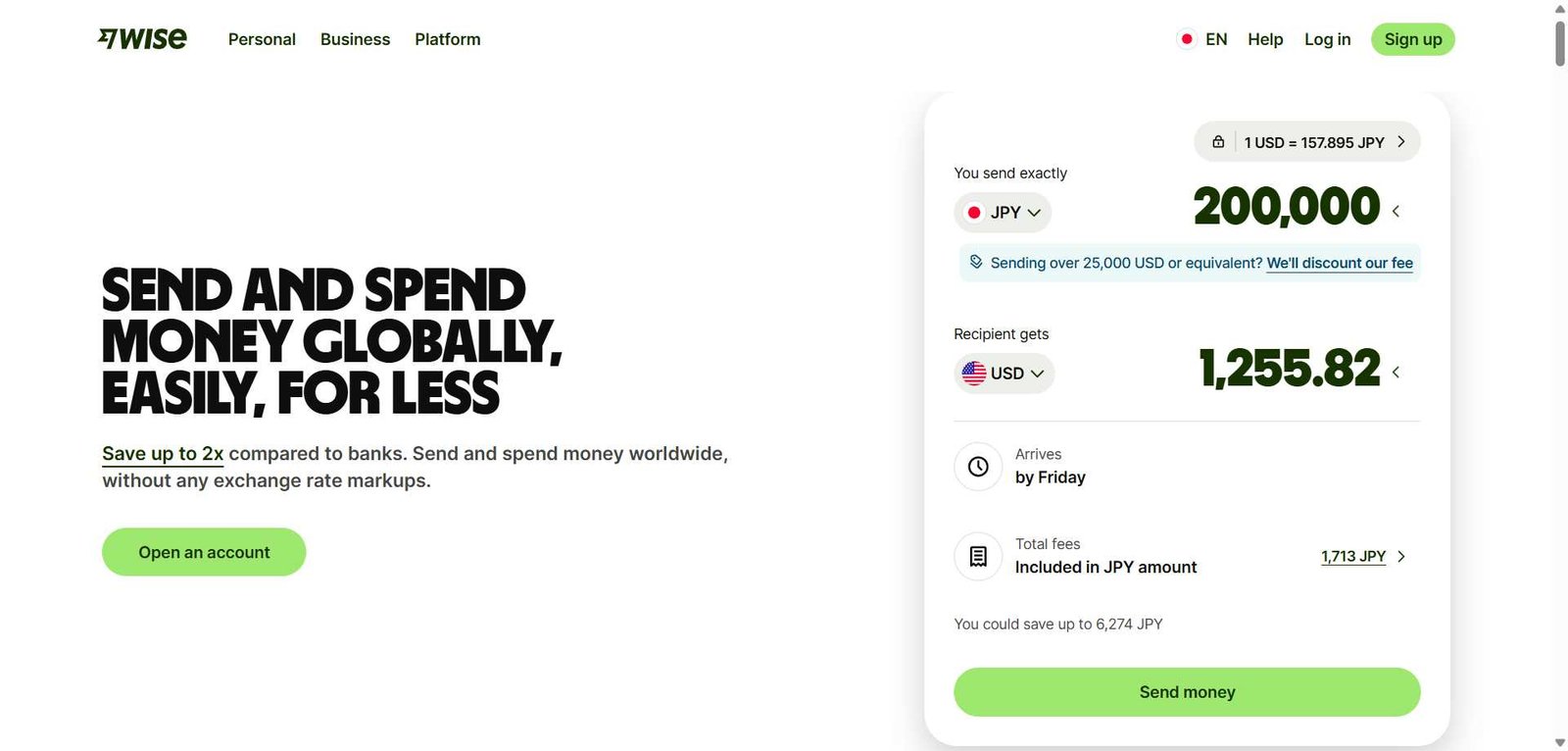
Wise (formerly TransferWise) revolutionized international transfers by adopting a peer-to-peer routing architecture that avoids SWIFT intermediary bank charges. Wise provides multi-currency account capabilities, allowing users to hold and convert over 40 currencies simultaneously while issuing local bank details in major economic regions.
Who it’s best for: Expatriates, freelancers, and international travelers who want to avoid hidden mid-market exchange rate markups on cross-border payments.
Real limitations: Wise does not offer physical cash pickup or mobile wallet payouts in remote corridors. All transfers must be processed electronically to or from bank accounts, debit cards, or credit cards. Operational data indicates that Wise executes over 60 percent of international transfers instantly, though certain weekend bank clearing delays can still extend timelines.
Pricing & Availability: Transparent percentage fee starting at 0.33% to 0.57% depending on the currency pair, with zero margin added to the real exchange rate. Available in over 160 countries.
4. Remitly – Best for Overseas Personal Remittances with Guaranteed Delivery Speed
Remitly is tailored specifically for personal remittances, optimizing delivery routes across Asia, Latin America, Africa, and Eastern Europe. It offers two clear service tiers: Express (fast delivery funded by debit card) and Economy (lower-cost delivery funded by bank transfer).
Who it’s best for: Immigrants sending routine financial support home who need fixed delivery guarantees and flexible recipient options (cash pickup, home delivery, or bank deposit).
Real limitations: Exchange rate markups increase after the introductory promotional period for first-time senders. Choosing Economy transfers helps minimize foreign exchange markups, but it comes with Economy delivery speeds ranging from three to five business days.
Pricing & Availability: Flat transfer fees range from $1.99 to $4.99 depending on amount and destination (often waived on transfers over $1,000$). Available in over 170 countries.
5. Revolut – Best for All-in-One Travel Banking and Cross-Border Transfers
Revolut functions as a complete digital financial ecosystem, combining international money transfers with budgeting tools, stock/crypto access, and multi-currency debit card spend. It offers seamless peer-to-peer transfers between Revolut account holders alongside standard international bank transfers. Users who want exposure to broader index markets rather than individual stocks or crypto tokens typically look outside these apps entirely, toward dedicated futures brokerages that support Emini futures trading.
Who it’s best for: Frequent travelers and international digital nomads who want a single app for spending abroad, managing multi-currency sub-accounts, and transferring funds without traditional bank conversion fees.
Real limitations: Free currency conversion is subject to monthly volume caps on free tier accounts, after which a fee applies. Weekend transfers also incur a small exchange surcharge (0.5% to 1.0%) due to closed foreign exchange markets. Furthermore, taking payments for commercial services on personal accounts can trigger account freezes under compliance policies, similar to using standard commercial payment processing platforms.
Pricing & Availability: Free standard plan; premium tiers range from $9.99 to $16.99 per month. Transfers between Revolut users are completely free. Operational across Europe, the US, UK, Australia, and select Asian markets.
Honorable Mention: Mosea – Best for Campus and Group Event Transfers
Mosea is a specialized niche app designed to simplify bill splitting, group payment collection, and event ticketing for college and university student communities across North America. Rather than replacing heavy-duty international payment networks, Mosea provides streamlined social payment mechanics for shared household bills and campus activities.
Who it’s best for: North American college students and group organizers managing shared expenses or social event fundraising.
Real limitations: Mosea focuses on campus group transfers and event crowdfunding, making it unsuited for cross-border family remittances or general commercial payments. For broader consumer use cases, larger platforms like Venmo charge a standard instant transfer fee of 1.75 percent capped at $25 for instant bank cash-outs.
Pricing & Availability: Free basic account for peer transfers; transaction fees apply for credit funding and ticket sales. Available in North America.
How to Choose the Right Money Transfer App
Navigating money transfer apps requires matching your specific transfer scenario against three main decision criteria:
- Domestic vs. International Routing: If all transactions occur within one country, prioritize domestic P2P platforms like Cash App or Venmo to benefit from zero transfer fees. If crossing borders, choose Wise or WorldRemit to bypass regional banking surcharges.
- Total Effective Cost vs. Delivery Speed: Determine whether speed or cost is your priority. Instant debit transfers and Express remittance tiers settle within minutes but carry higher percentage fees or wider exchange rate margins. Standard ACH and Economy bank transfers take two to five days but save substantial money on large sums.
- Recipient Access Needs: Verify how your recipient will collect the funds. Urban bank account holders can easily receive direct electronic deposits, whereas recipients in rural or underbanked regions may require cash pickup networks or mobile wallet integrations. Maintaining high levels of peer-to-peer transaction privacy and fraud protection is equally essential during transaction setup.
Key Takeaways
- Calculate the Full Exchange Rate Cost: Always compare the rate provided in the app against the live mid-market rate. A “zero fee” claim often hides a 2% to 4% currency exchange markup.
- Use the Right Tool for the Job: Use Cash App for domestic splitting, Wise for transparent cross-border electronic transfers, and WorldRemit or Remitly when physical cash pickup is required.
- Protect Your Transfers: Ensure recipient details are double-checked prior to sending, and adopt best practices for protecting yourself against transfer scams on mobile platforms.
Frequently Asked Questions
Why does the exchange rate in my money transfer app differ from the rate on Google or Xe.com?
Google and Xe.com display the mid-market exchange rate, which is the midpoint rate at which global banks trade currencies between themselves. Most consumer transfer services add a hidden percentage markup (spread) to this mid-market rate to generate revenue, resulting in a lower conversion rate for your recipient.
What is the safest funding method to use when sending money via mobile apps?
Funding transfers directly from a linked bank account or debit card provides the best combination of security, consumer protection, and low processing fees. Credit card funding should generally be avoided because card issuers classify money transfers as cash advances, incurring immediate high interest charges and cash advance fees.
What should I do if I enter an incorrect phone number or tag when transferring funds?
Because peer-to-peer mobile payments settle almost instantly, transfers sent to an incorrect tag or phone number cannot usually be reversed by the app provider. You should immediately send a payment request to the recipient explaining the error, or contact app support if the transaction remains in a pending state. To avoid this failure mode, send a small test payment of $1 prior to transferring larger sums.

💬 Comments