Law firm SEO is the process of optimizing an attorney’s website to rank higher in unpaid search engine results so potential clients can find legal help when they need it. It combines technical website performance, localized business listings, targeted practice area content, and online authority building to generate qualified legal leads.
Quick Take
Search engine optimization helps law firms attract people who are actively searching for legal assistance in their city. Unlike paid ads that stop working when budget runs out, organic SEO builds long-term digital visibility. According to Ruler Analytics benchmarks, organic search converts at 7.3% in the legal sector, making it one of the most reliable online client channels available. Success requires clear practice area pages, fast page speeds, local Google profiles, and ethical client communication.
Why Law Firm SEO Matters for Growth
Most prospective clients turn to online search engines when facing a sudden legal dispute, injury, or family matter. If your firm does not appear on the first page of search results, those prospective clients will call a competitor instead. Implementing the digital marketing components the most successful law firms implement ensures your brand stays visible during crucial moments of client intent.
A well-optimized site creates a predictable channel for new cases. It builds trust before the first phone call takes place. It also lowers your firm’s long-term reliance on expensive pay-per-click advertising. Over time, organic search authority accumulates, protecting your practice against rising ad costs while maintaining a consistent web presence across local markets.
Core Elements of Law Firm SEO
1. Practice-Area Keyword Research and Search Intent
Effective keyword research focuses on identifying how real people search for legal services online. Prospective clients rarely type complex legal jargon into search bars. Instead, they search for immediate solutions, geographical terms, or specific questions about their rights.
Targeting broad words like “lawyer” is often inefficient because competition is fierce and intent is vague. Instead, focus on specific search patterns:
- Location-Based Terms: Queries like “personal injury lawyer in Austin” signal immediate commercial intent.
- Question-Based Queries: Phrases like “what to do after a car accident” capture readers early in their research.
- Niche Specifics: Terms like “uncontested divorce attorney” attract clients seeking exact service matches.
Industry research from Semrush legal marketing data shows that long-tail queries make up the vast majority of legal searches. Using tools like Google Keyword Planner or Ahrefs helps identify search volumes and keyword difficulty. Uncovering these specific terms allows you to structure your website around real client inquiries.
2. On-Page Optimization and Content Structure
On-page optimization involves organizing each web page so both search engines and human readers easily understand its purpose. Every distinct practice area requires its own detailed page rather than a single broad summary.
Optimizing key HTML elements helps search crawlers index your legal content accurately:
- Title Tags: Include the primary practice area and city name within 50 to 60 characters.
- Meta Descriptions: Write a concise summary under 155 characters that encourages searchers to click. Reviewing an on-page optimization checklist can help streamline this task.
- Heading Hierarchy: Use one H1 tag per page, followed by H2 and H3 tags to organize legal sections logically.
- URL Structure: Keep page URLs short, clean, and keyword-focused, such as
/car-accident-lawyer/.
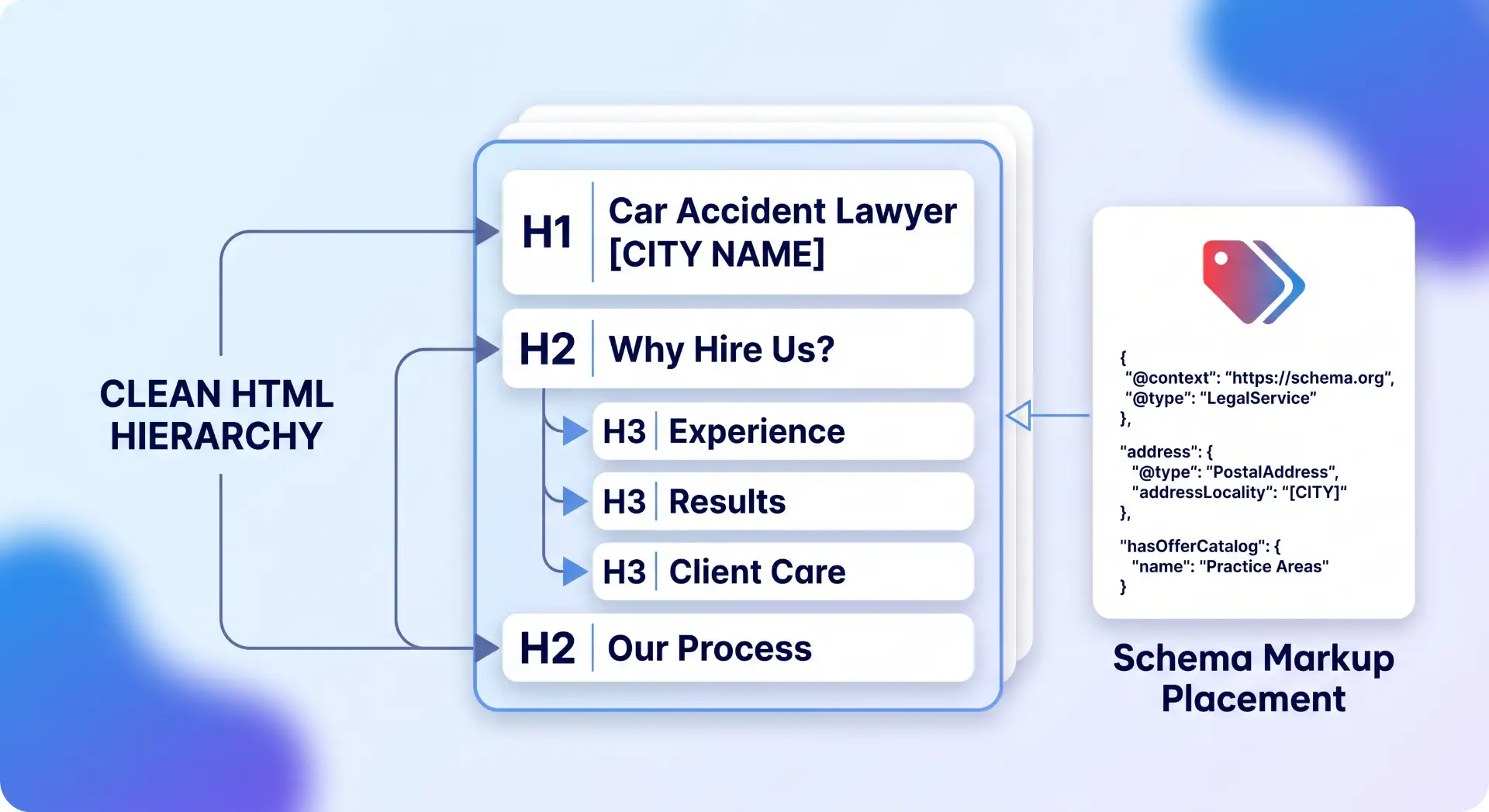
Adding structured data is also critical for modern legal websites. Applying LegalService schema markup gives search engines clean, structured data regarding your legal specialty, office location, and business hours. You can verify your code accuracy using Schema.org validator testing tools before going live.
3. Technical SEO, Page Speed, and Core Web Vitals
Technical SEO ensures search engine bots can crawl and index your website without encountering broken code or slow load times. If a legal website takes too long to load on a mobile phone, visitors will leave immediately to call another firm.
Google evaluates site performance through Core Web Vitals. Following official Google’s Core Web Vitals guidelines requires meeting three main performance benchmarks:
- Largest Contentful Paint (LCP): Main content must render within 2.5 seconds. For detailed image and layout recommendations, review Largest Contentful Paint documentation.
- Interaction to Next Paint (INP): Interactive elements must respond in under 200 milliseconds.
- Cumulative Layout Shift (CLS): Visual elements must remain stable, keeping layout shift scores below 0.1.
You can achieve these speeds by compressing large image files, enabling server caching, and using modern WebP graphics formats. Security is equally vital for legal practices. Installing an HTTPS security certificate is mandatory, as it safeguards client confidentiality while serving as a recognized search ranking signal. Learn how protecting visitor data with SSL certificates safeguards your domain credibility.
Furthermore, ensure your site performs seamlessly on smartphones. Responsive design automatically resizes layout elements to fit any screen size, directly improving site loading speed for mobile users.
4. Local SEO and Google Business Profile Optimization
Local SEO focuses on capturing clients in your immediate geographic area. When users search for urgent legal help, search engines present a localized map pack displaying three top law firms near their location.
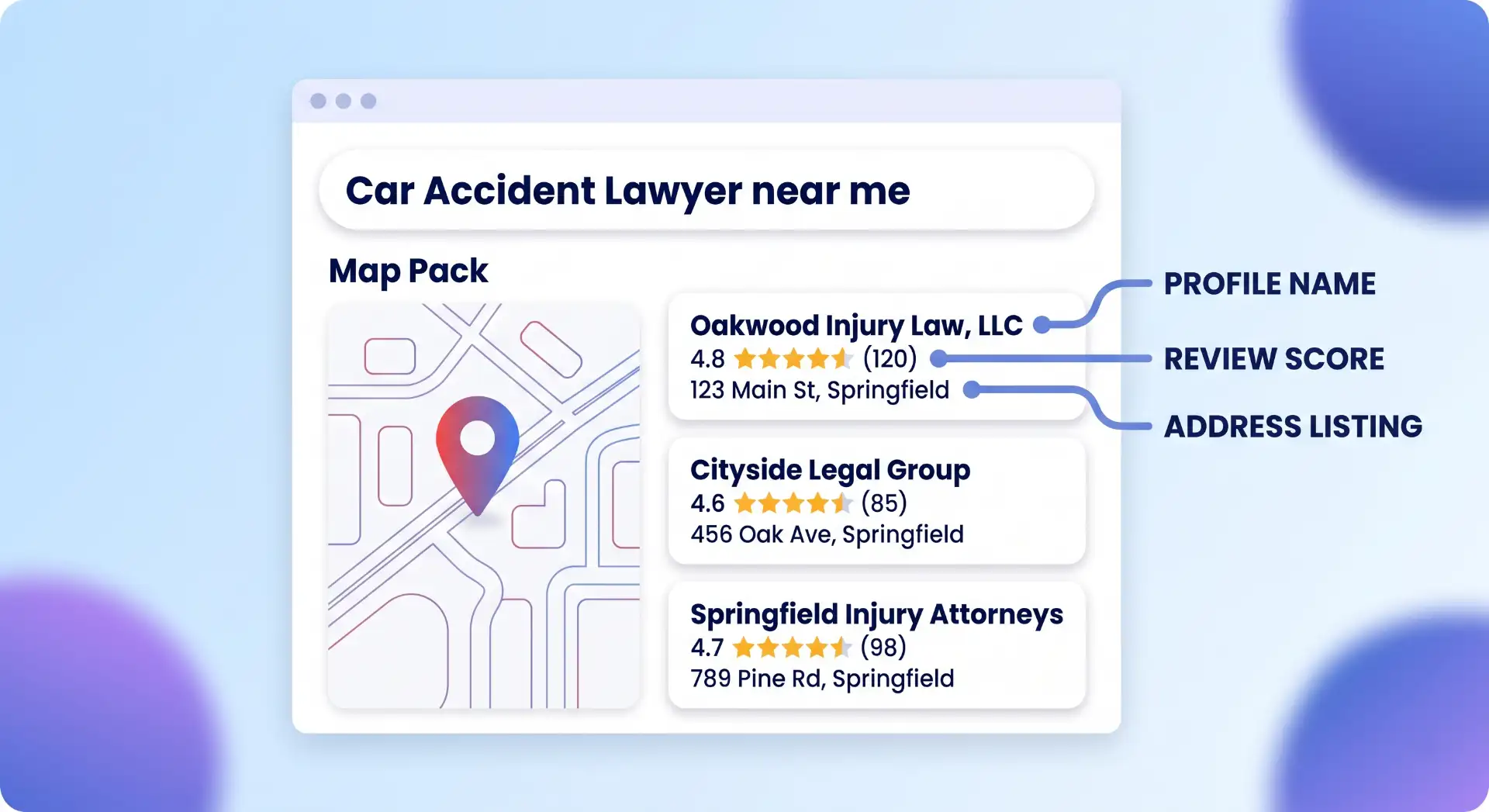
Claiming and fully completing your Google Business Profile (GBP) is the first step toward local visibility. Fill out every field completely, including your primary business category, physical address, business hours, and phone number. If you run a specialized firm, such as a personal injury law firm, select categories that match your exact legal focus.
Maintain precise Name, Address, and Phone number (NAP) consistency across every online directory. Any discrepancy in your business details across sites like Yelp or Avvo can confuse search engines and damage local rankings. Publishing location-specific content also helps establish geographical authority in your target market.
5. Authority Building and Ethical Backlinks
Search engines treat backlinks—links pointing from external websites to your site—as votes of confidence. Acquiring links from authoritative news outlets, legal associations, and local community organizations signals that your legal expertise is legitimate.
Safe and effective methods for earning legal backlinks include:
- Legal Directories: Listing your practice on reputable platforms like Avvo, Justia, and Martindale-Hubbell.
- Sponsorships: Supporting local charities, youth sports teams, or community events in exchange for sponsor links.
- Legal Commentary: Offering legal insights to news reporters covering stories in your practice area.
- Guest Articles: Publishing educational legal guides on reputable blogs, while applying safe backlink acquisition strategies. You can also explore guest posting options to expand reach safely.
Never purchase low-quality bulk links. Search engine algorithms detect manipulative link schemes quickly, which can result in manual penalties that remove your website from search results entirely.
6. Online Reviews and Client Reputation Management
Online reviews directly influence both search engine rankings and potential client conversions. Positive client feedback demonstrates real-world authority and trustworthiness to prospective clients.
Establish a routine process for asking satisfied clients to leave reviews on Google and legal review sites upon case completion. Respond professionally to all reviews, including negative feedback. When addressing complaints, maintain professional boundaries without disclosing confidential case details. Prioritizing client communication contributes to enhancing user experience across your digital channels.
How Law Firm SEO Works in Practice: Step-by-Step Workflow
Implementing a successful legal SEO campaign requires a systematic workflow. Follow this sequential execution plan:
-
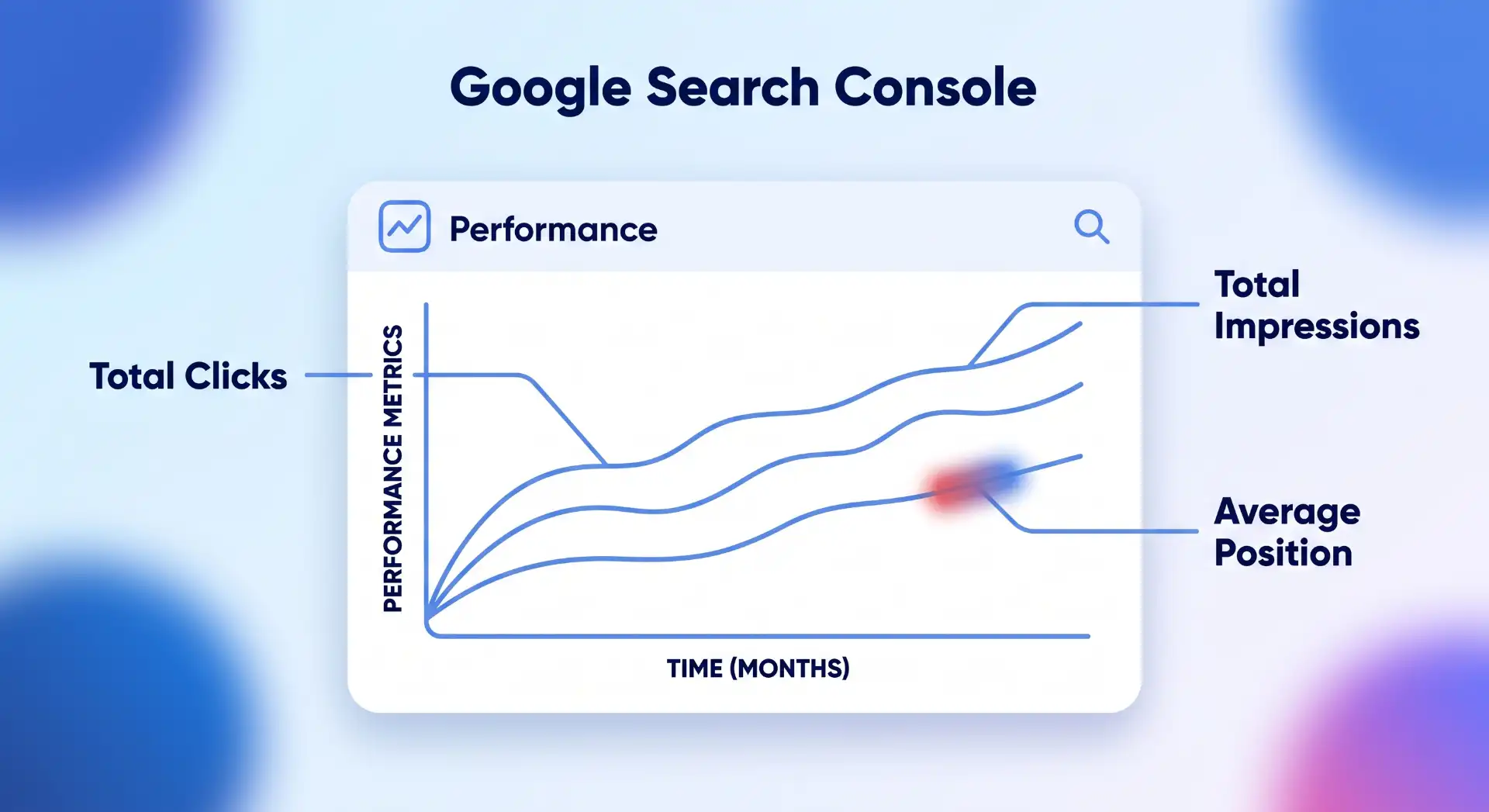
- Perform a Technical Audit: Scan your website for broken links, slow loading pages, missing meta tags, and indexing issues using Google Search Console.
- Map Practice Area Keywords: Assign one primary search keyword and 3-4 secondary phrases to each specific practice area page.
- Publish Comprehensive Content: Draft detailed pages explaining legal procedures, common client questions, and local statutes in plain language.
- Optimize Local Business Profiles: Fully verify your Google Business Profile, align directory NAP data, and establish a client review request system.
- Analyze Performance Data: Track organic traffic patterns and conversion forms in Google Analytics to identify growth opportunities while continuing to refine your approach for building law firm SEO strategies.
Regulatory Compliance and Legal Ethics in Marketing
Unlike standard commercial businesses, law firms must adhere to strict professional conduct rules when publishing online content. In the United States, state bar associations regulate attorney communications strictly.
Adhering to ABA Model Rule 7.1 standards prohibits lawyers from making false or misleading statements about their services. When creating digital content, ensure compliance by following these principles:
- Avoid Outcome Guarantees: Never promise specific monetary settlements or legal victories in your copy.
- Use Clear Disclaimers: State clearly that website content provides general legal information, not formal attorney-client counsel.
- Verify Specialist Claims: Refrain from claiming to be a certified “specialist” or “expert” unless formally recognized by your state bar board.
Legal ethics compliance protects your license while building transparent relationships with prospective clients. Marketing agencies assisting legal clients must also maintain these standards when helping firms beat the competition by scaling their online presence in regional markets.
Key Takeaways
- Law firm SEO attracts high-intent clients actively seeking legal representation in your geographic area.
- Individual practice area pages targeting localized long-tail keywords rank far better than generic legal pages.
- Meeting Core Web Vitals and securing your domain with HTTPS ensures fast, reliable user experiences on mobile devices.
- Google Business Profile optimization and accurate directory listings drive local map pack visibility.
- Earning high-quality backlinks ethically builds long-term domain authority without violating search engine guidelines.
- All marketing content must comply with bar association advertising rules and avoid false outcome claims.
Frequently Asked Questions
How long does it take for a new law firm website to rank on Google?
Seeing noticeable ranking improvements from a new SEO strategy typically takes three to six months. Highly competitive fields like personal injury law in major metropolitan areas may require six to twelve months of consistent content creation and link building before reaching page one.
Can a law firm handle its own SEO without hiring an agency?
Yes. A law firm can manage its own local SEO by optimizing its Google Business Profile, creating clear practice area pages, and gathering authentic client reviews. However, handling complex technical audits or extensive link acquisition campaigns often requires dedicated technical assistance.
What is the difference between local SEO and organic SEO for lawyers?
Local SEO focuses on appearing in the Google Map Pack and local search listings for location-specific queries like “attorney near me.” Organic SEO focuses on ranking regular web pages in standard search engine results for general information and practice queries across broader geographic regions.
Why are online client reviews so important for legal search engine optimization?
Online client reviews provide strong trust signals to search engines and potential clients. High review ratings improve map pack placement, boost user click-through rates, and convert site visitors into consultation requests.

💬 Comments