The best courier management software in 2026 combines route optimization, live GPS tracking, and electronic proof of delivery in one dashboard — Onfleet, Route4Me, Detrack, Track-POD, and Shipday currently lead that list for different business sizes and budgets. Which one is “best” depends heavily on whether you’re running a five-driver local courier operation or a fifty-driver regional fleet.
How We Chose These Five
Courier software lives or dies on a few non-negotiables: can dispatchers actually plan and adjust routes without a headache, can drivers capture proof of delivery without fumbling a clipboard, and can customers see where their package actually is. We looked at platforms that show up consistently across independent comparison sites, vendor documentation, and review aggregators for 2026, then narrowed to five that cover distinctly different operational needs — from budget-conscious small courier teams to platforms built for high-volume dispatch.
One thing worth saying upfront: pricing across this category is a mess. Several vendors quietly changed plan structures or wouldn’t publish fixed numbers at all, and third-party trackers frequently disagree with each other on the same platform. Where we couldn’t confirm a number with confidence, we said so instead of guessing.
Quick Take: Top Picks at a Glance
If you need the short version: Onfleet is the strongest fit for established operations that need dispatch depth and don’t mind a higher price floor. Detrack is the budget entry point for small teams that mainly need solid proof of delivery. Shipday is the one to try first if you’re not sure you need paid software yet — its free tier is genuinely usable, not a crippled trial.
1. Onfleet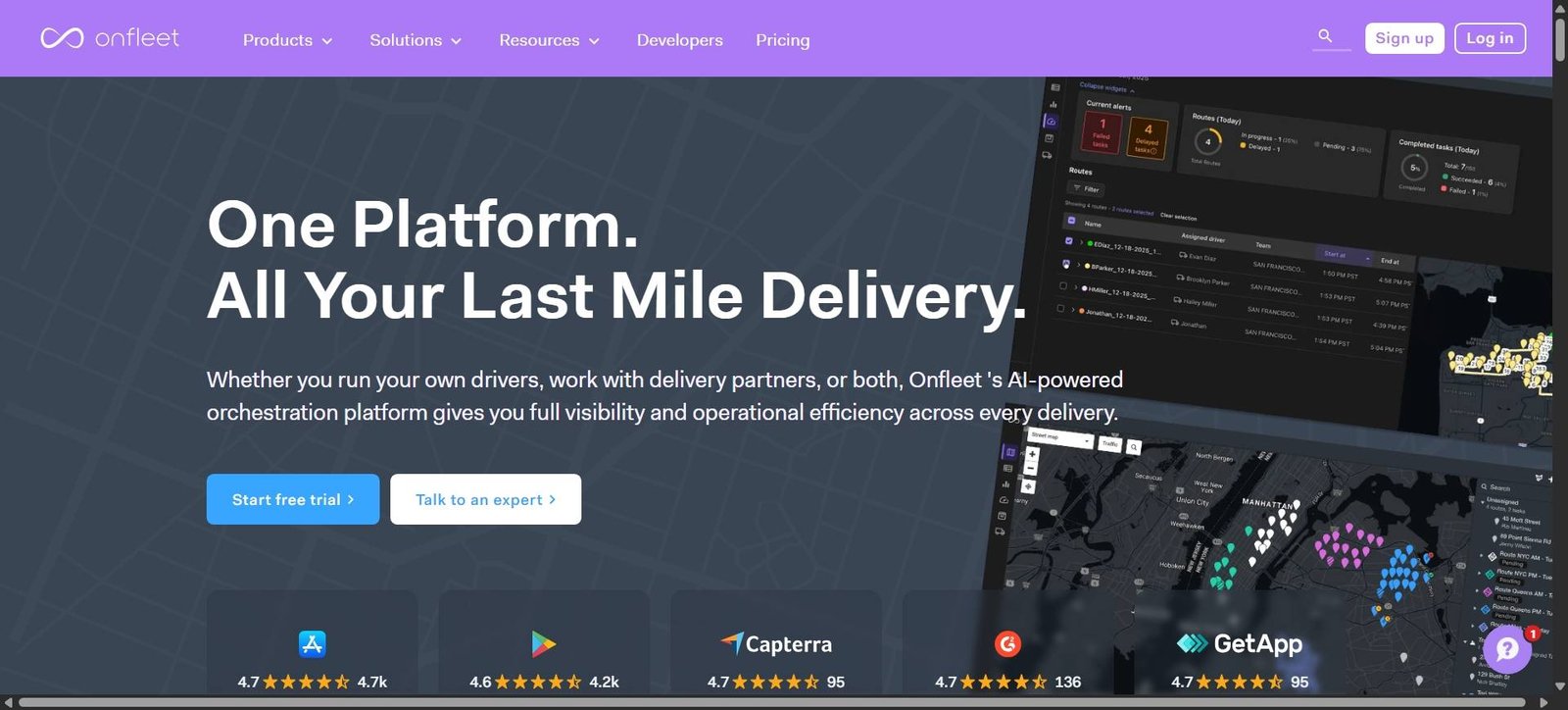
Onfleet is a last-mile delivery platform built around route optimization, auto-dispatch, and real-time driver tracking, with a driver app for iOS and Android and a RESTful API for connecting to order and inventory systems. Onfleet’s own pricing page describes route optimization that factors in traffic, delivery windows, and vehicle capacity, along with live re-optimization when conditions change. One retail customer quoted on that page reports increasing delivery capacity by 50% after adopting the routing engine — a vendor-supplied result, worth treating as a best-case scenario rather than a guarantee for your own operation.
Who it’s best for: courier and last-mile operations that have outgrown spreadsheet dispatching and need auto-dispatch, barcode-based proof of delivery, and reporting depth. The trade-off is cost: Onfleet’s plans are quoted per month and scale with delivery volume rather than driver count, and third-party pricing trackers report meaningfully different starting figures — some in the $500s, others closer to $600 — so get a direct quote before budgeting rather than trusting any single review site’s number. The most common complaint in user reviews is that Onfleet’s core strength is execution and visibility, not deep multi-node logistics optimization, so very complex networks sometimes outgrow it and move to enterprise-grade alternatives.
2. Route4Me
Route4Me is a cloud-based route planning tool where you enter or upload stop addresses and get an optimized route back, with real-time tracking of drivers once they’re on the road and a “command center” view of the whole operation. It’s built for businesses of any size doing recurring or on-demand route planning — daily delivery runs, service visits, or sales territories.
Who it’s best for: teams whose main pain point is route planning itself rather than end-to-end dispatch and proof-of-delivery workflows. Route4Me’s marketplace add-ons mean you can extend it fairly far, but that also means some features that competitors bundle by default are separate purchases here. On pricing: Route4Me’s official site requires contacting sales for a quote rather than listing fixed rates, and independent trackers report wildly different figures for the same tiers — treat any specific number you see online as a rough estimate, not a quote, and confirm directly before committing budget.
3. Detrack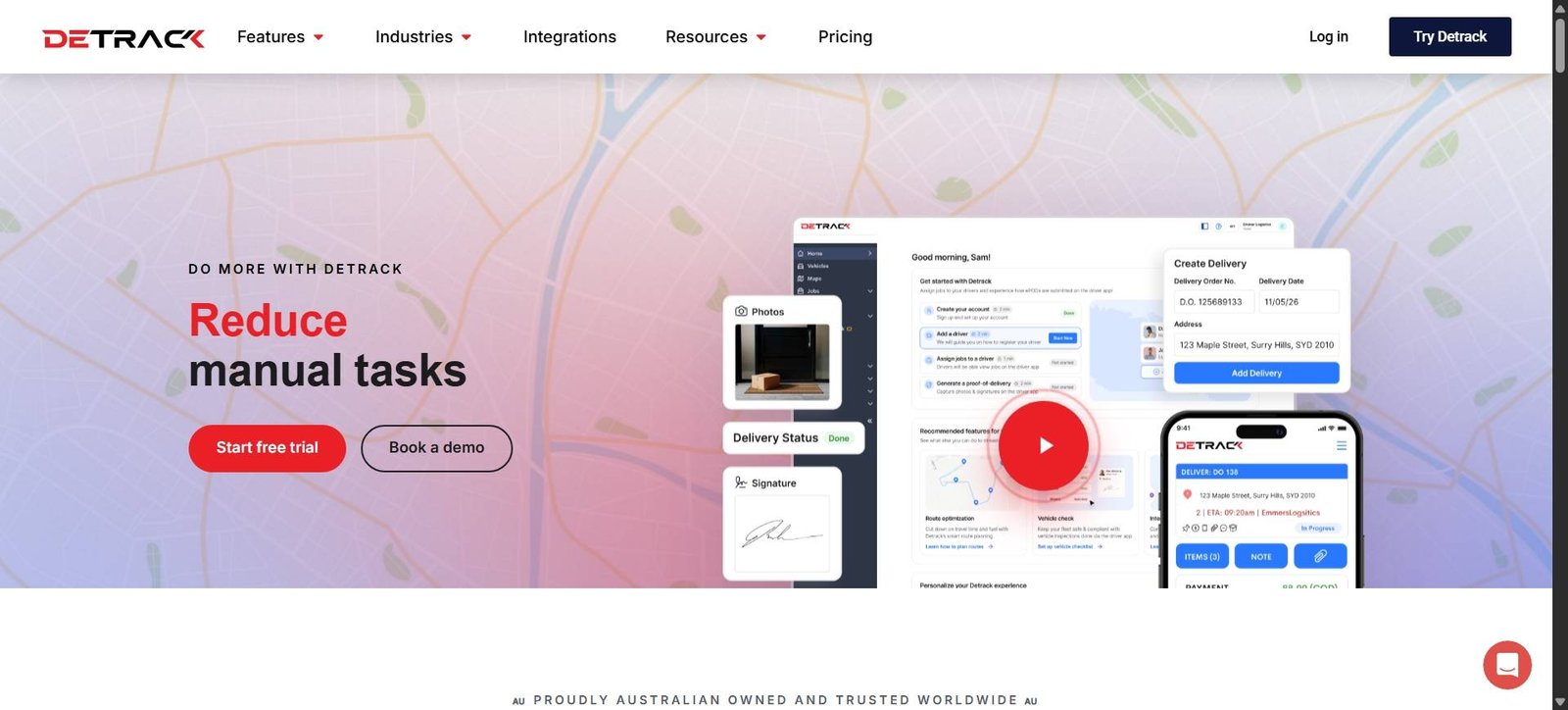
Detrack is delivery management software focused on electronic proof of delivery — photo, signature, and timestamp capture through the driver app — alongside live GPS tracking, route optimization, and automated customer notifications by SMS, WhatsApp, or email. It’s a mobile-first product, and that shows in how the driver-side app is built: large buttons, minimal steps, offline capture that syncs once connectivity returns.
Who it’s best for: small to mid-size courier teams where proof of delivery and dispute resolution matter more than sophisticated multi-stop route optimization. Detrack’s Pro plan starts at roughly $29 per driver per month, with an Advanced plan around $39 per driver per month, both billed per active driver rather than a flat team rate, and a 14-day free trial is available. This makes it one of the more affordable entries in this list, though reviewers note the admin-side interface can feel less polished than the driver app — the date filter, for instance, only shows one day at a time rather than a range, which slows down anyone reviewing a week of deliveries at once.
4. Track-POD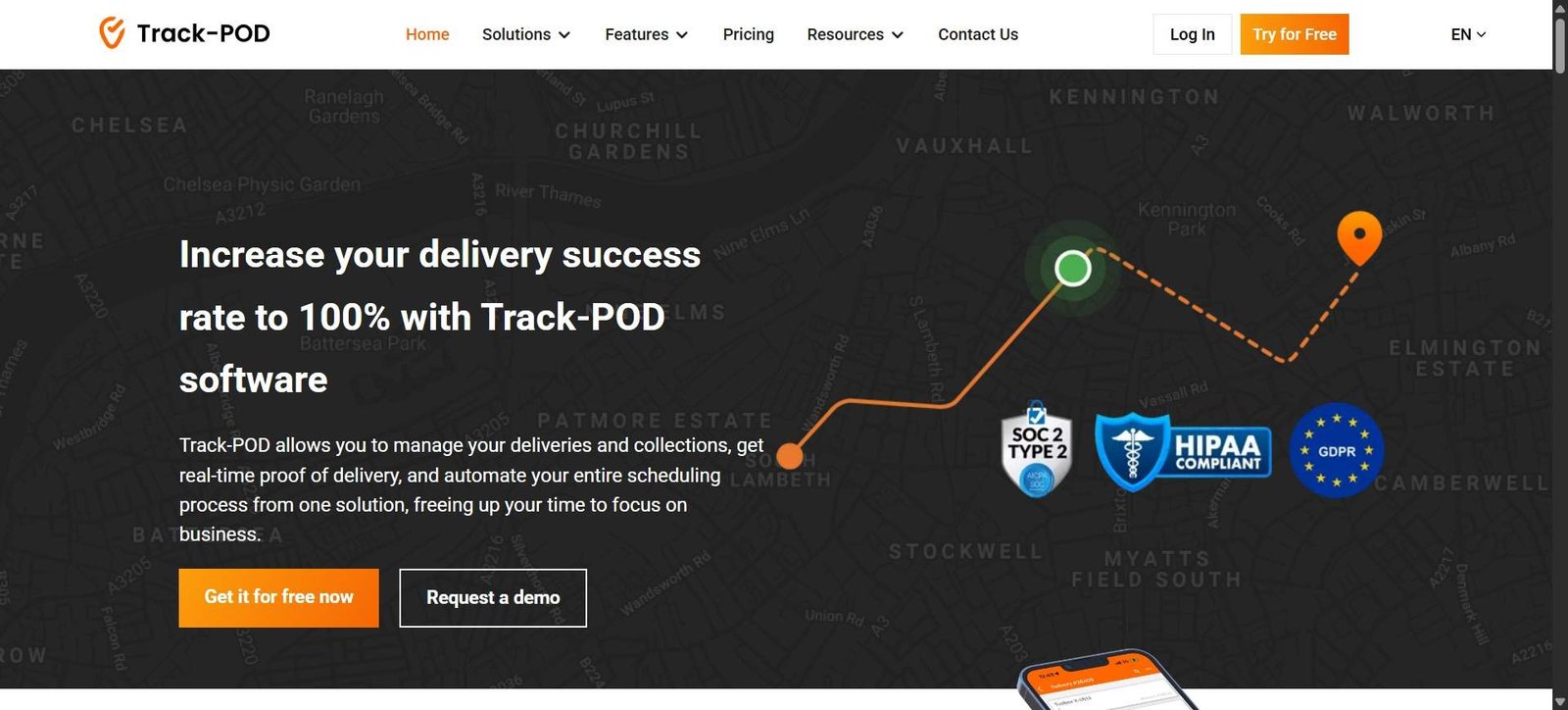
Track-POD combines route optimization for planning thousands of stops at once with a customizable electronic proof-of-delivery template, a built-in barcode/QR scanner for load verification, and a customer portal for shippers. It’s positioned as a single dashboard for the full delivery workflow — importing orders, dispatching, printing labels, and confirming delivery — rather than several disconnected tools.
Who it’s best for: operations that lean heavily on documentation — partial deliveries, cash-on-delivery collection, temperature or compliance logging, and B2B logistics where a clean paper trail matters as much as speed. Pricing quotes for Track-POD vary noticeably across review sites — some list an entry point in the $20s per license, others describe a three-driver minimum with per-driver rates in the $40s to $80s depending on tier — so this is one to confirm directly with the vendor rather than budget from any single source. User reviews consistently flag that route optimization here is more basic than dedicated routing tools, and that SMS notifications typically cost extra on every plan.
5. Shipday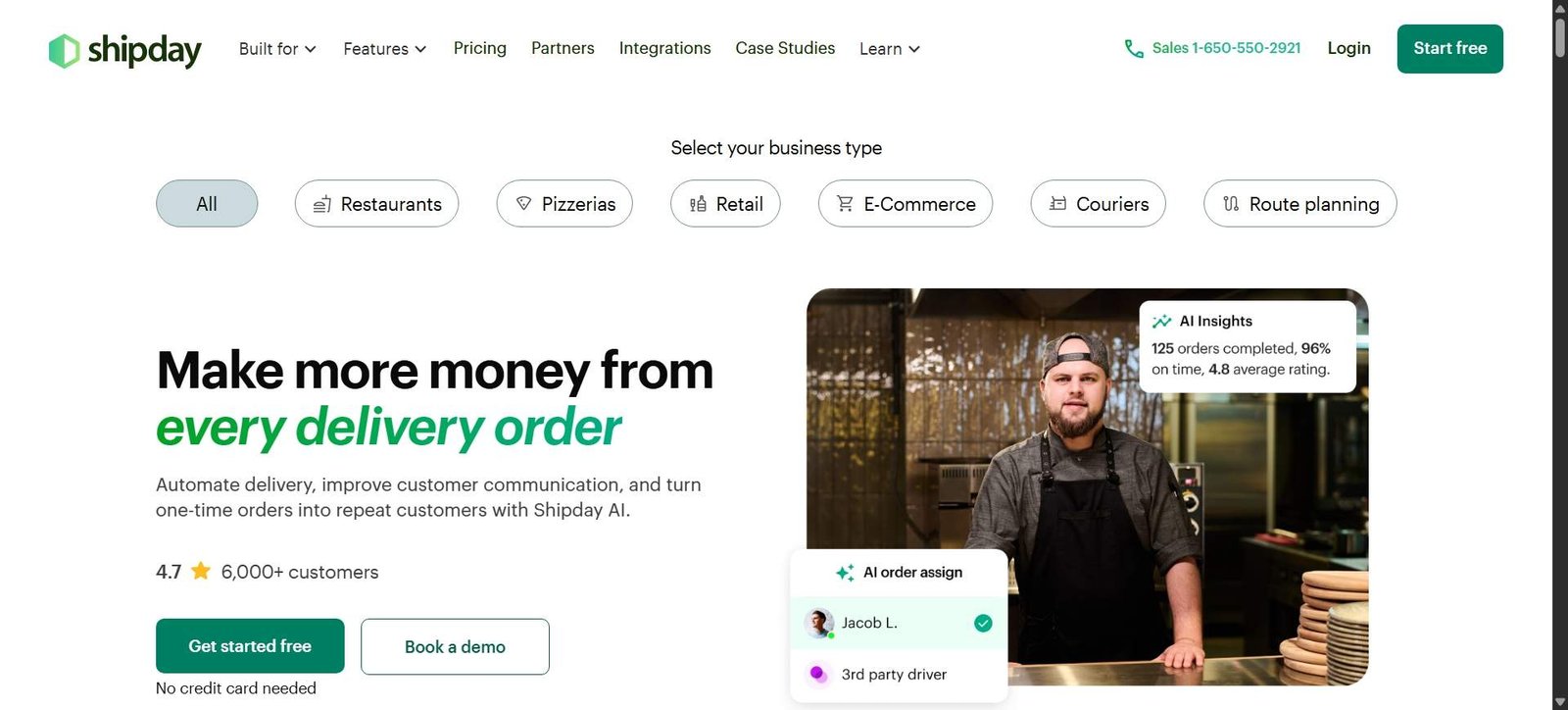
Shipday’s pricing page lists a free tier covering 300 orders per month with core delivery management features — auto-dispatch basics, live tracking, and proof of delivery — before overage charges or paid tiers kick in. Paid plans add route optimization, SMS/WhatsApp notifications, branded tracking pages, and access to third-party delivery networks in select countries.
Who it’s best for: small delivery operations, restaurants, and businesses testing whether they need dedicated courier software at all before committing budget. The free tier is a real product, not a stripped demo, which is unusual in this category. The trade-off shows up as you scale: route optimization isn’t included on the free plan, there’s no dynamic re-routing based on live traffic or road closures, and the built-in routing generally assumes a single pickup location — so businesses running multiple depots or complex multi-stop logistics will likely outgrow it.
How to Choose the Right Courier Software
Before you compare feature lists, get clear on three things: how many drivers you’re dispatching today (and in twelve months), whether your delivery volume is steady or spiky, and whether proof of delivery or route optimization is the bigger operational headache right now. A five-driver courier service arguing about missed pickups needs different software than a fifty-driver regional operation trying to shave fuel costs across hundreds of daily stops.
If you’re not sure yet, start with something like Shipday’s free tier or a trial period rather than committing to an annual contract — it’s much cheaper to outgrow a free tool than to unwind a bad enterprise purchase six months in. If proof-of-delivery disputes are costing you time and money, weigh that over routing sophistication; if fuel and driver-hours are the bigger cost, weigh the reverse. And whatever you’re comparing, treat any pricing figure you read online — including in this article — as a starting point for a direct quote, not a final number, given how inconsistently vendors publish rates in this space.
Software selection mistakes tend to come from the same place: teams pick based on the longest feature list rather than which two or three features actually solve their current bottleneck, and that’s worth working through methodically before you sign anything, using a checklist like the one in our guide to evaluating new business software.
Key Takeaways
- Onfleet suits established operations that need dispatch depth and can absorb a higher monthly cost.
- Route4Me is strongest for route planning specifically, with a marketplace of add-ons for teams that want to extend it.
- Detrack is the budget-friendly proof-of-delivery specialist for small to mid-size courier teams.
- Track-POD fits documentation-heavy operations — partial deliveries, COD, compliance logging.
- Shipday’s free tier makes it the lowest-risk starting point if you’re still validating whether you need dedicated courier software.
- Confirm pricing directly with each vendor — third-party trackers disagree on nearly every platform in this category.
FAQ
Do I need dedicated courier software, or can I manage deliveries with spreadsheets and phone calls?
Spreadsheets and group texts tend to work fine until delivery volume or driver count grows past what one dispatcher can track by memory — the specific breaking point varies, but multiple missed pickups per week or repeated “where’s my order” calls are common signals it’s time to move to dedicated software, since manual tracking has no audit trail when something goes wrong. Tools like our fleet time-tracking overview cover some of the operational signs worth watching for before that transition.
Can courier management software integrate with my existing e-commerce or POS system?
Most platforms in this category, including several covered here, offer integrations with common e-commerce and point-of-sale systems, though the depth varies — some connect through pre-built integrations, others through APIs that need developer time to wire up. If integration is a priority, confirm which specific platforms each vendor supports before committing, since this changes frequently; our roundup of e-commerce operations tools is a useful starting point for what to check alongside courier software.
How much does courier management software typically cost for a small team?
It ranges from free (Shipday’s tier for up to 300 orders a month) to several hundred dollars a month for enterprise-oriented platforms like Onfleet, with most mid-market options — Detrack, Track-POD — landing somewhere in between on a per-driver basis. Because vendors publish pricing inconsistently and third-party trackers often disagree, the only reliable way to budget is to request a current quote rather than rely on any single published figure, including the ranges mentioned in this article.
What’s the real difference between route optimization software and full courier management software?
Route optimization tools focus specifically on calculating efficient stop sequences — Route4Me is closer to this end of the spectrum — while full courier management platforms add dispatch, proof of delivery, customer notifications, and reporting around that core routing function. If your only pain point is inefficient routes and you already have dispatch and tracking handled elsewhere, a narrower routing tool may be cheaper and simpler than a full platform.

💬 Comments