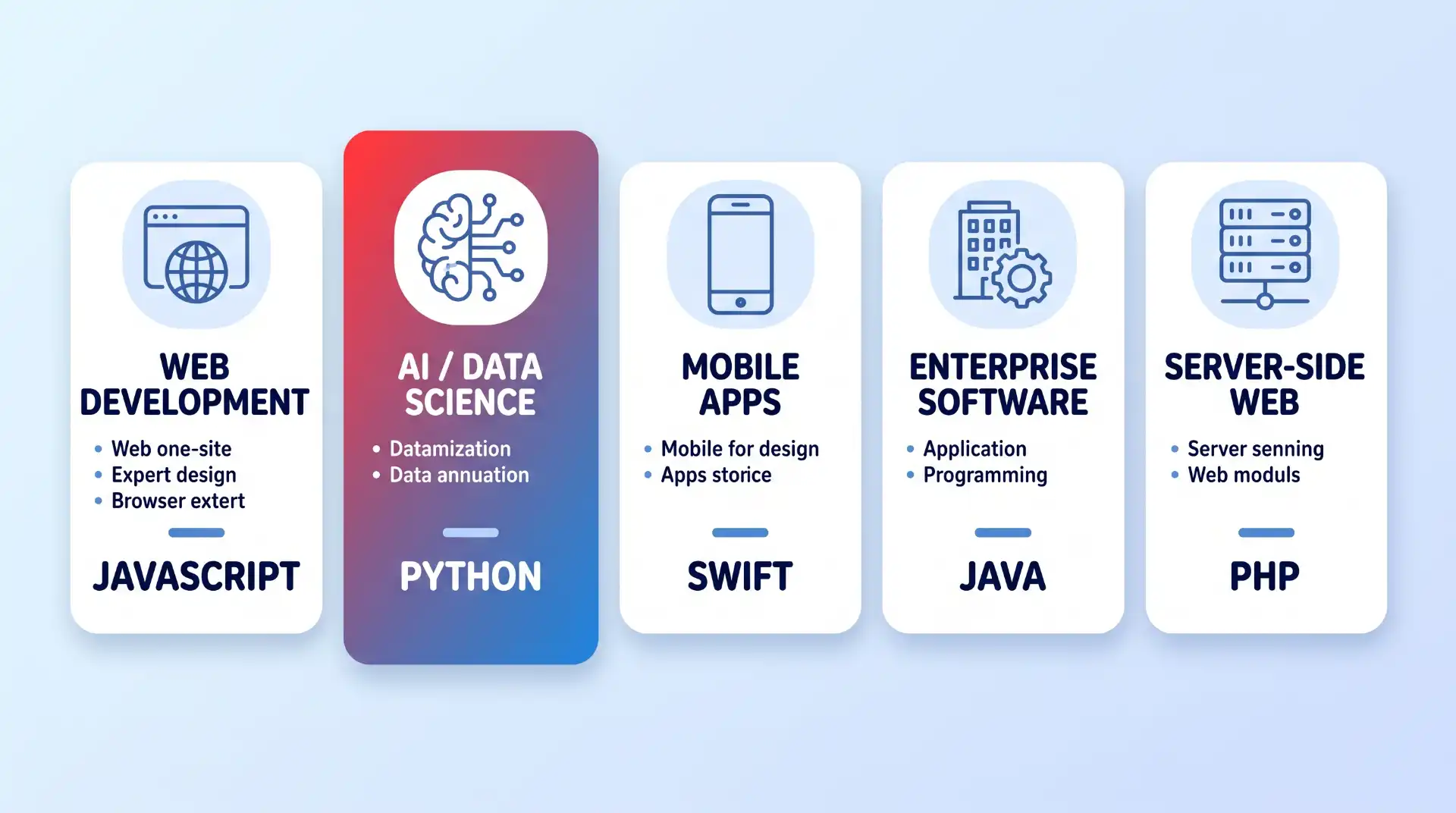
The 5 best programming languages to learn are Python, JavaScript, Java, Swift, and PHP. These languages offer high job demand, strong community support, and clear learning paths for beginner programmers.
Choosing your first programming language can feel overwhelming. Hundreds of options exist today. However, most software development relies on a small group of proven languages. Learning one of these popular tools helps you build real projects faster and opens up clear career opportunities.
Selection Criteria: How We Chose These 5 Languages
We selected these five programming languages based on four practical factors for beginners:
- We selected these five programming languages based on four practical factors for beginners:
- Beginner Friendliness: How easy it is to learn the syntax and write working code without complex setup steps.
- Job Demand: The number of open career opportunities and active business applications for developers.
- Ecosystem Maturity: The availability of beginner tutorials, free documentation, and community help forums.
- Versatility: Whether the language allows you to build different types of software as your skills grow.
According to the Stack Overflow Developer Survey 2024, established languages with large software ecosystems continue to dominate professional development workflows.
Quick Take: The Top Beginner Picks
If you want a fast recommendation based on your primary career goal, use this quick reference table:
| Programming Language | Best Suited For | Learning Curve | Primary Strengths |
|---|---|---|---|
| Python | Artificial Intelligence, Data Science, General Coding | Very Easy | Readable syntax, vast library support |
| JavaScript | Web Development, Interactive Apps | Easy to Moderate | Runs in every browser, full-stack capability |
| Java | Enterprise Software, Android Apps | Moderate | Strict structure, massive career stability |
| Swift | iOS and Mac App Development | Moderate | Fast performance, modern syntax for Apple devices |
| PHP | Server-Side Web Development, Content Platforms | Easy to Moderate | Powers major content management systems, simple web hosting |
The 5 Best Programming Languages to Learn
1. Python – Best for Beginners, Data Science, and AI
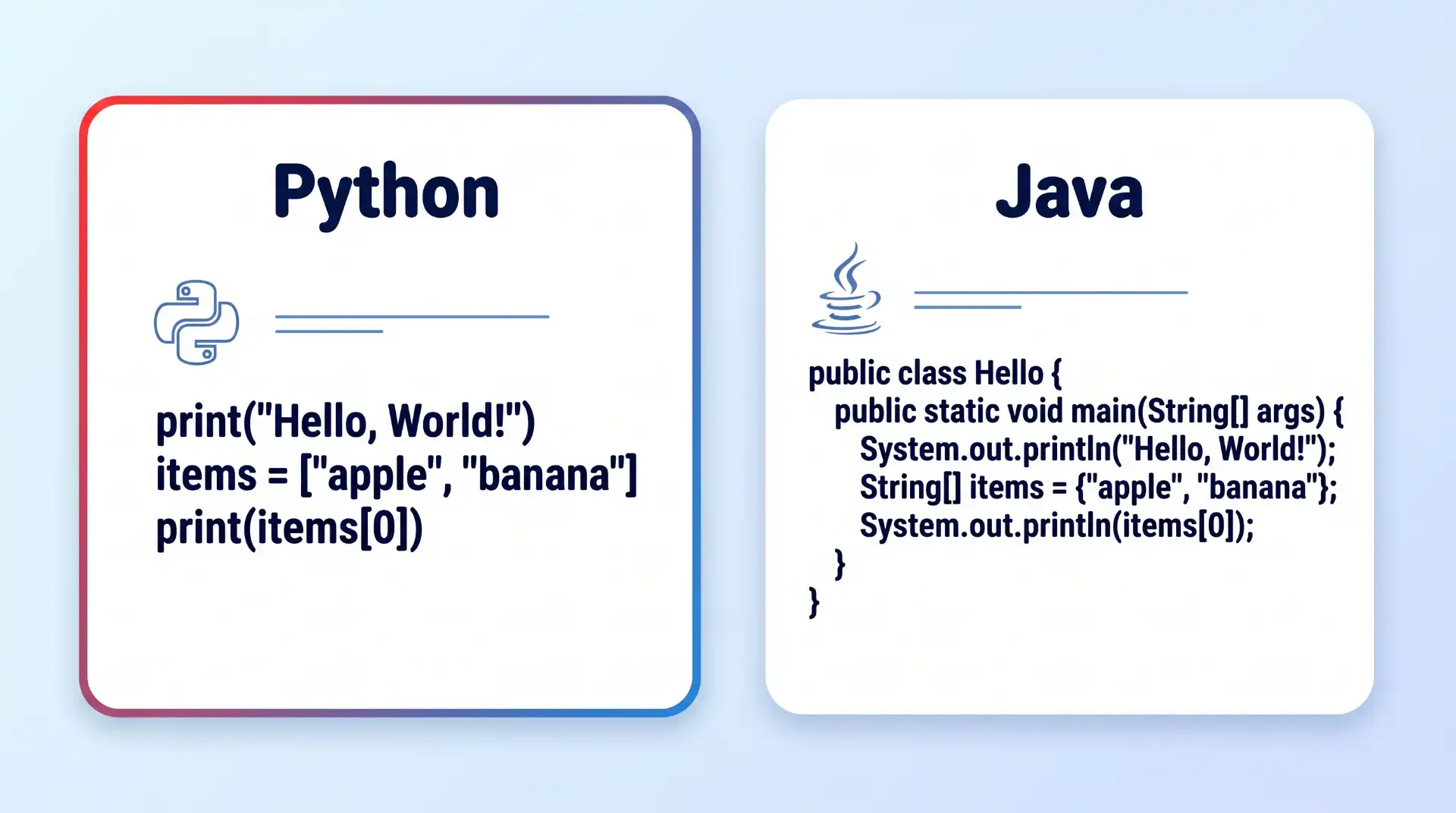
Python is widely considered the easiest programming language for beginners. Its syntax looks similar to plain English. This design allows you to focus on learning coding logic instead of memorizing difficult punctuation rules.
Python is an open-source technology supported by thousands of free tools and modules. It is the dominant language in data engineering, automation scripts, and machine learning. As noted in a technical overview of beginner languages by Technovera, Python serves as a primary foundation for modern artificial intelligence systems.
If you want to understand artificial intelligence concepts, Python is the best place to start. You can write your first script in minutes using free online editors or simple local installation tools.
What Python Does Well:
- Extremely readable and easy to write for first-time coders.
- Huge collection of pre-made libraries for data analysis and automation.
- Strong demand across scientific research, finance, and software companies.
Where Python Has Limits:
- Runs slower than compiled languages like C++ or Java.
- Not commonly used for native mobile app development.
How to Get Started: Download Python from its official website and install a beginner editor like Thonny or Visual Studio Code. Write a basic script to automate a routine task on your computer.
2. JavaScript – Best for Web Development and Interactive Apps
JavaScript is the core scripting language of the modern web. Every major web browser runs JavaScript natively without requiring extra plugins or external installations.
JavaScript controls web page behavior and interactive user actions. Whenever you fill out a form, click an animated button, or view real-time data updates on a site, JavaScript handles that work. High-traffic platforms rely heavily on custom scripts. This includes complex transactional systems, media sites, and entertainment services like liontips.com.
In recent years, JavaScript expanded beyond web browsers. Tools like Node.js allow developers to write server-side backend code with JavaScript as well. Many modern teams use it to create fast progressive web applications that work across mobile and desktop devices.
Data published on the Stack Overflow Blog highlights JavaScript as the most widely used language among professional developers worldwide.
What JavaScript Does Well:
- Runs directly inside any web browser with zero installation needed to test code.
- Supports full-stack web development for both frontend interfaces and backend servers.
- Massive job market across agency, startup, and corporate environments.
Where JavaScript Has Limits:
- Flexible rules can lead to hard-to-find bugs for careless developers.
- Web frameworks change frequently, requiring ongoing skill updates.
How to Get Started: Open any browser developer tool console. Type basic JavaScript instructions to interact with web page elements right away.
3. Java – Best for Enterprise Software and Android Systems
Java is a structured, object-oriented language with decades of proven performance in commercial environments. It operates on a Write Once, Run Anywhere principle. Software compiled in Java runs on any machine equipped with the Java Virtual Machine.
Large corporations, banks, and enterprise teams rely on Java for stable back-end infrastructure. It is also a core technology for building native Android applications. According to an industry report from Itransition, Java remains a staple for high-volume enterprise systems due to its predictability and strict type security.
Companies building deep engineering teams often look for a reliable software talent pool with Java developers. Learning Java teaches you strict object-oriented programming concepts that make learning subsequent languages easier.
What Java Does Well:
- Strict structure encourages clean software design patterns.
- Exceptional cross-platform portability across server environments.
- High stability for large enterprise projects and high-volume databases.
Where Java Has Limits:
- Requires more lines of code to accomplish simple tasks compared to Python.
- Slower initial learning process for absolute beginners.
How to Get Started: Install the Java Development Kit and IntelliJ IDEA Community Edition to build your first command-line program.
4. Swift – Best for iOS and Apple Ecosystem Development
Swift is Apple’s modern, open-source language built specifically for developing software on iOS, macOS, watchOS, and tvOS devices. Introduced to replace Objective-C, Swift features a clean syntax designed for developer safety and high runtime speed.
Apple engineered Swift to eliminate common coding errors like null pointer references. It offers clear error handling and memory management features. A GeeksforGeeks language overview notes that Swift combines the speed of compiled systems with the easy readability of scripting languages.
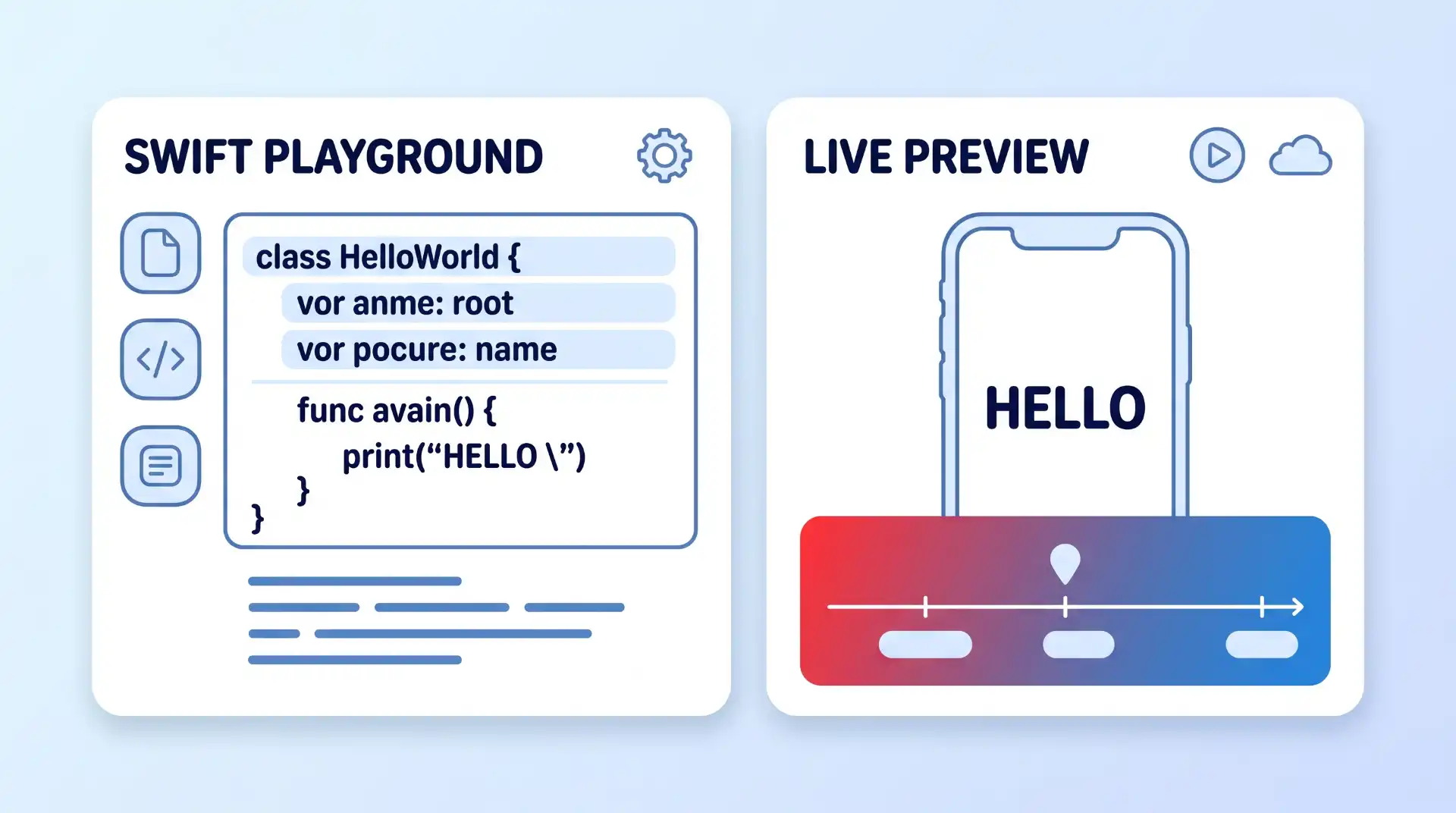
If your primary goal is creating mobile applications for iPhones or iPads, Swift is the best technology to master. You can test code interactively using Apple’s Swift Playgrounds software.
What Swift Does Well:
- Fast execution speed optimized for Apple hardware.
- Modern syntax features that reduce repetitive boilerplate code.
- Direct access to native Apple APIs and user interface frameworks.
Where Swift Has Limits:
- Primarily useful within the Apple ecosystem rather than cross-platform software.
- Requires a Mac computer for full iOS app development and testing.
How to Get Started: Download Xcode from the Mac App Store and start exploring interactive Swift Playgrounds lessons.
5. PHP – Best for Server-Side Web Development and CMS Platforms
PHP is a server-side scripting language created specifically for building dynamic web pages. It interacts directly with server databases to handle form submissions, user logins, and database queries.
PHP powers a huge portion of the modern web because it serves as the underlying code for major content platforms, including WordPress. When managing web infrastructure, choosing the right backend framework and knowing how to choose a database management system works hand-in-hand with PHP development.
While newer languages receive more social media attention, PHP remains a practical workhorse. It offers quick deployment options on almost every low-cost web hosting provider.
What PHP Does Well:
- Simple setup on standard web servers without complex build tools.
- Direct database integration for dynamic content management.
- Powerfully supports the vast WordPress plugin and theme ecosystem.
Where PHP Has Limits:
- Inconsistent function naming standards in older codebases.
- Not designed for general desktop or desktop application development.
How to Get Started: Install a local server environment like XAMPP or Local, and write basic PHP scripts to query a local MySQL database.
How to Choose Your First Programming Language
Follow this three-step decision framework to choose the language that matches your personal goals:
Identify Your Target Output:
- Choose JavaScript if you want to build interactive websites or web applications.
- Choose Python if you want to work with artificial intelligence, data analysis, or basic scripts.
- Choose Swift if you want to build mobile apps for iPhone and iPad.
- Choose Java if you want to work in corporate enterprise software or Android development.
- Choose PHP if you want to build custom web themes, plugins, or content platforms.
Assess Your Equipment:
- If you only have a Windows or Linux PC, avoid starting with Swift.
- Choose Python or JavaScript instead.
Commit to One Language for 90 Days:
- Switching languages every week slows down your progress.
- Core programming concepts like loops, variables, and functions carry over from one language to another once you master them.
For more guidance on structured career progression, review our coding roadmap for beginners guide to plan your learning milestones effectively.
Key Takeaways
- Python provides the fastest starting point for absolute beginners interested in AI or automation.
- JavaScript remains essential for anyone pursuing web development careers.
- Java and Swift offer specialized paths for enterprise architecture and Apple mobile ecosystems.
- Focusing on fundamentals in one language is more valuable than learning basic syntax across multiple tools at once.
Frequently Asked Questions
Should I learn more than one programming language at the same time?
No. Absolute beginners should focus on mastering one language first. Learning core concepts like logic flow, data structures, and debugging principles in a single language makes picking up a second language much easier later.
Do I need advanced math skills to learn programming?
No. Most day-to-day software development requires basic logic and elementary arithmetic rather than advanced calculus or algebra. Specific fields like game engines or cryptography require heavy math, but general web and app development do not.
How long does it take to become job-ready in a programming language?
With consistent practice of 10 to 15 hours per week, most dedicated beginners can build functional independent projects within six to nine months. Achieving professional job-readiness typically takes 12 to 18 months of practical project building.

💬 Comments