Supply chain technology is the integrated infrastructure of hardware sensors, communication networks, and software applications that coordinates the movement of materials, inventory, and finished products from original suppliers to end consumers. Modern implementations combine enterprise execution platforms like ERP, WMS, and TMS with predictive artificial intelligence and IoT telemetry to automate procurement, inventory control, and freight dispatch.
Quick Take
- Data Integration Replaces Silos: Event-driven cloud APIs eliminate manual batch spreadsheets by synchronizing inventory movements across warehouses, carriers, and procurement desks in real time.
- Machine Learning Sharpens Demand Planning: Neural networks and time-series models analyze customer buying velocity, regional weather patterns, and macroeconomic signals to cut inventory carrying costs and reduce stockouts.
- Edge Hardware Captures Ground Truth: Optical barcode scanners, passive UHF RFID tags, and vehicle telematics record physical handling events automatically at the loading dock.
- Data Hygiene Dictates Automation Success: Advanced algorithmic tools fail when organizations feed unstandardized SKU catalogs or duplicate supplier records into their core planning engines.
The Three-Tier Architecture of Modern Supply Chain Technology
Every commercial supply chain operates across physical and digital spaces simultaneously. When a pallet moves across an ocean or through a regional distribution center, multiple computational systems must capture, validate, and share that state change. Modern logistics architectures organize these capabilities into three distinct layers: physical ingestion, core execution, and analytical intelligence.
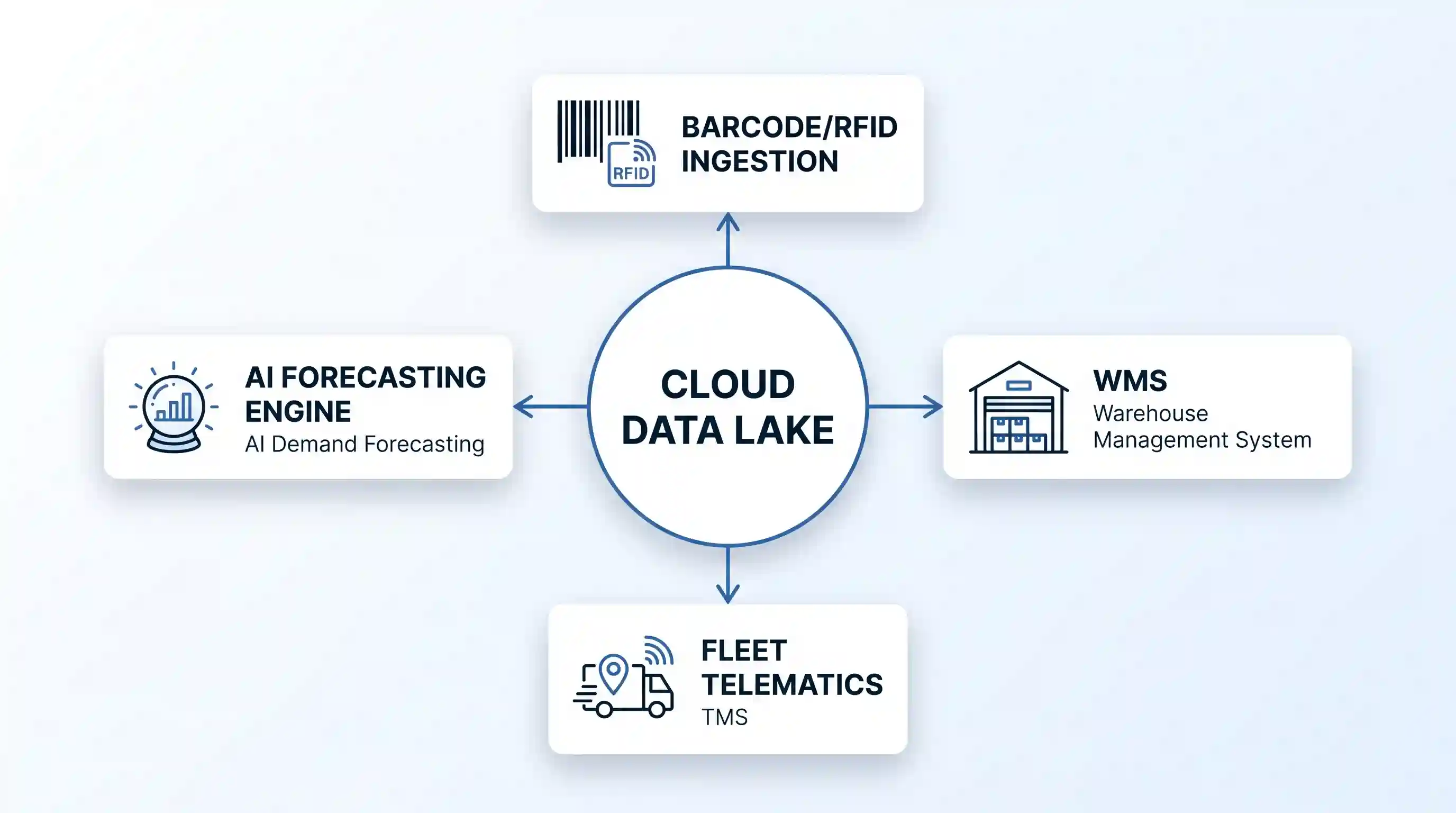
Tier 1: Physical Data Ingestion
The foundation of any digital supply network is edge data capture. Physical items cannot communicate with software on their own; they require optical, magnetic, or radio-frequency intermediaries. At the most basic level, standard linear barcodes and two-dimensional QR codes provide machine-readable identifiers that warehouse associates scan using handheld mobile computers. While cost-effective, optical scanning requires direct line-of-sight and individual human handling.
To accelerate throughput, facilities deploy radio-frequency identification (RFID) tags. Passive ultra-high frequency (UHF) tags draw power from the electromagnetic field emitted by reader antennas mounted at dock doors, allowing entire pallets containing hundreds of cartons to be registered instantaneously without manual unpacking. For high-value assets and intermodal shipping containers, active battery-powered Bluetooth Low Energy (BLE) beacons and GPS telematics transponders transmit continuous location, ambient temperature, and shock metrics across cellular networks.
Tier 2: Core Execution Platforms
Once edge devices capture raw data, enterprise software platforms process the operational workflows. Three core platforms manage modern logistics execution:
- Enterprise Resource Planning (ERP): Serves as the authoritative financial ledger and procurement record. The ERP manages vendor contracts, issues purchase orders, processes accounts payable, and balances aggregate inventory valuations.
- Warehouse Management Systems (WMS): Controls the physical interior of a distribution center. A WMS directs directed-putaway routines, dynamic bin allocation, pick-path optimization, wave picking schedules, and shipping dock staging.
- Transportation Management Systems (TMS): Manages outbound and inbound freight movements. A TMS aggregates shipment orders, optimizes multi-stop truckloads, calculates rate tariffs across contracted motor carriers, and generates freight compliance documentation.
Tier 3: The Intelligence and Analytics Layer
The top tier aggregates transaction logs from ERPs, inventory timestamps from WMS databases, and GPS feeds from TMS platforms into unified cloud data lakes. Rather than operating in isolated departmental silos, authoritative research from the Harvard Business Review demonstrates that digital supply networks transform traditional linear supply pipelines into interconnected systems with continuous end-to-end visibility.
Within this layer, cross-functional supply chain control towers process streaming events, alert logistics coordinators to border clearance delays, and trigger automated stock replenishment orders before critical thresholds are breached. To protect these distributed architectures against unauthorized access and third-party software vulnerabilities, logistics engineers follow federal cybersecurity supply chain risk standards that mandate encrypted API endpoints, strict role-based access controls, and regular penetration testing of edge hardware.
Core Technologies Driving Contemporary Logistics
The convergence of affordable cloud compute, ubiquitous mobile connectivity, and sophisticated machine learning algorithms has turned supply chain infrastructure into a proactive operational engine. Four primary technologies drive these operational improvements.
Artificial Intelligence and Predictive Demand Sensing
Traditional inventory replenishment relied on static historical averages, such as calculating a trailing 90-day moving average and adding safety stock buffers. This backward-looking method frequently fails during volatile demand swings, leading to costly warehouse overstocks or severe stockouts.
Modern machine learning models use predictive demand sensing. These algorithms process non-linear variables, including local point-of-sale cash register feeds, promotional calendars, regional weather disruptions, fuel prices, and macroeconomic indexes. According to research published by McKinsey & Company, deploying AI-driven systems delivers concrete financial returns by cutting forecasting errors between 30% and 50%, reducing lost sales from stockouts by up to 65%, and lowering inventory carrying costs by 10% to 40%.
Beyond customer-facing goods, algorithmic models solve complex data discrepancies across industrial maintenance, repair, and operations (MRO) networks. When different facilities catalog identical spare ball bearings or electrical switches under disparate vendor part numbers, capital sits idle across duplicate bins. Implementing automated catalog standardization is central to supply chain optimization, allowing procurement teams to identify duplicate parts across disparate facilities, negotiate volume discounts, and prevent unnecessary spot purchases.
Internet of Things (IoT) and Fleet Telematics
Logistics operations historically suffered from transit blind spots. Once a dry van or ocean container left the loading dock, dispatchers relied on periodic phone check-calls from drivers to track transit progress. If a driver encountered a major highway closure or mechanical breakdown, downstream distribution hubs only discovered the delay when the scheduled delivery window passed.
IoT telematics hardware eliminates transit blind spots. Vehicle engine control units (ECUs) broadcast vehicle speed, fuel consumption, driver duty hours, and real-time GPS coordinates to cloud TMS instances. Geofencing algorithms monitor shipment boundaries automatically; when a tractor-trailer crosses a virtual perimeter 25 miles outside a distribution hub, the receiving facility automatically alerts yard hostlers, assigns an open unloading dock door, and stages forklift operators. In temperature-sensitive shipping, specialized sensors log internal container temperatures every 60 seconds. To see how strict regulatory frameworks govern continuous temperature monitoring in pharmaceutical and perishable supply chains, review our guide to cold chain IoT telemetry standards.
Cloud Infrastructure, Webhooks, and Event-Driven APIs
For decades, commercial partners exchanged transactional data using Electronic Data Interchange (EDI) standards via nightly batch processing. If an e-commerce retailer received 1,000 orders on a Tuesday afternoon, those records were bundled into an EDI 850 purchase order file and transmitted to the third-party logistics (3PL) warehouse late that evening. This latency slowed fulfillment velocity.
Cloud-native logistics platforms use event-driven Application Programming Interfaces (APIs) and webhooks. The instant a shopper completes an online checkout, an HTTPS JSON payload transfers the order to the warehouse management software within milliseconds. The WMS validates inventory availability, generates pick tickets for staff, and makes API calls to specialized courier management software to purchase postage labels, calculate zone-skipping freight rates, and generate carrier tracking numbers. This direct software integration compresses order-to-dispatch windows from several days to under two hours.
Autonomous Execution and Multiagent Systems
The industry is transitioning from passive data collection toward autonomous execution. In their analysis of 2026 technology priorities, analyst research from Gartner outlines key supply chain technology trends, emphasizing that agentic AI, physical automation, and multiagent simulation systems will dominate high-performing logistics networks.
Instead of requiring human operators to manually approve every routine task, multiagent systems delegate operational authority to software agents. If an overseas vessel faces port congestion, an autonomous logistics agent analyzes spot ocean rates, evaluates domestic trucking capacity, and automatically books alternative intermodal rail routings. Inside modern warehouses, these digital agents work alongside physical machinery. For a technical review of how robotic systems navigate facility floors using LiDAR sensors and simultaneous localization and mapping (SLAM), read our breakdown of autonomous mobile robots in warehouse operations.
Practical Operational Trade-offs and Implementation Risks
While marketing materials often describe digital transformation as straightforward, experienced logistics engineers recognize that introducing new hardware and software carries measurable operational risks. Successful deployments require balancing technological ambition with operational realities.
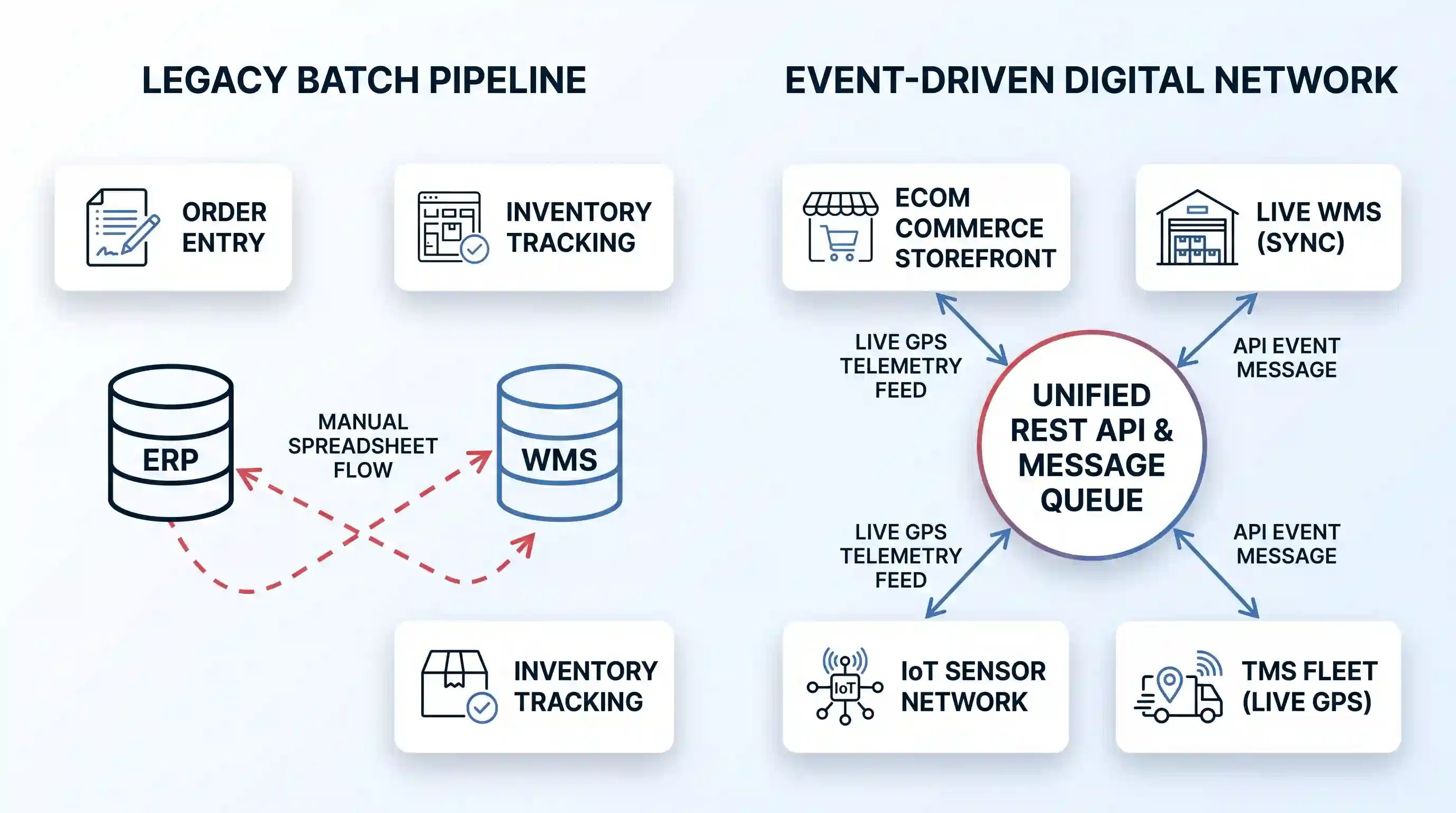
Data Debt and Catalog Fragmentation
The primary reason artificial intelligence deployments fail in supply chain management is dirty legacy data. Machine learning algorithms identify statistical correlations across historical inputs. If an organization has operated for years with inconsistent product weights, inaccurate carton dimensions, missing harmonized tariff codes, and duplicate vendor profiles, an automated replenishment engine will simply automate bad decisions at scale.
Before buying predictive software licenses, organizations must complete rigorous data cleansing. Establishing standardized naming conventions and validating master SKU records requires months of focused effort, but it forms the foundation for reliable automated decision-making.
Physical Edge Hardware Vulnerabilities
Software exists in controlled digital environments, but logistics hardware must endure punishing physical conditions. Barcode scanner lenses get scratched by abrasive dust, mobile picking terminals get dropped onto concrete floors, and forklift tines collide with sensor enclosures.
Environmental interference also limits wireless tracking technologies. Radio waves operating at 915 MHz UHF frequencies reflect off metal warehouse racking and get absorbed by liquids. Trying to read a pallet of canned beverages or liquid chemicals using standard passive RFID tags often yields scan failure rates above 40% unless technicians install specialized high-density standoff tags. In freight transportation, battery degradation causes active GPS trackers to fail prematurely in sub-zero winter temperatures, creating data blackouts during transit.
Monolithic ERP Suites vs. Modular Best-of-Breed Applications
Technology executives face a perpetual architectural dilemma: should they buy a unified software suite from a single mega-vendor (such as SAP or Oracle), or assemble a customized ecosystem of specialized, best-of-breed software components?
A single-vendor suite provides out-of-the-box database integration, uniform user interfaces, and simplified vendor billing. However, these monolithic platforms often feature mediocre warehouse management and transportation dispatch modules that lag behind dedicated platforms. Conversely, selecting specialized best-of-breed software gives operators market-leading functionality in every department, but places a heavy integration burden on internal IT teams who must maintain custom API connectors and data synchronization pipelines across disparate software releases. Organizations preparing to replace legacy software should review our technical playbook on enterprise SCM data migration strategy.
Comparison Matrix: Traditional Logistics vs. Digital Supply Networks
The following matrix compares standard operational workflows between legacy logistics operations and modern digital supply networks across key operational dimensions.
| Operational Dimension | Traditional Logistics Approach | Modern Digital Supply Network | Measurable Business Impact |
|---|---|---|---|
| Demand Forecasting | Spreadsheet calculations using historical 90-day moving averages. | Multi-variable AI demand sensing evaluating weather, point-of-sale, and macro trends. | 30% to 50% drop in forecast variance; prevents over-ordering. |
| Inventory Visibility | Periodic physical cycle counts conducted monthly or quarterly. | Continuous inventory tracking using barcode scans, fixed RFID portals, and real-time WMS records. | Maintains inventory accuracy above 99.5%; eliminates lost stock. |
| Freight Tracking | Manual telephone check-calls to motor carriers and manual carrier portal logins. | Automated IoT telematics, continuous GPS tracking, and dynamic arrival window calculations. | Reduces detention fees by up to 35% through proactive dock scheduling. |
| Order Fulfillment | Paper pick lists batched manually and distributed to warehouse staff. | Digital WMS wave picking with optimized travel paths directed by handheld mobile terminals. | Increases picking speeds by 40% to 60% per labor hour. |
| Disruption Management | Reactive problem-solving after shipments miss delivery windows. | Predictive alerts triggered by automated geofences, weather feeds, and digital twins. | Enables dynamic rerouting before shipments enter transit bottlenecks. |
Practical Implementation Blueprint for Growing Operations
Modernizing a logistics operation does not require a multimillion-dollar budget or a complete multi-year software overhaul. Small and mid-sized businesses can systematically upgrade their operational technology by following four structured phases.
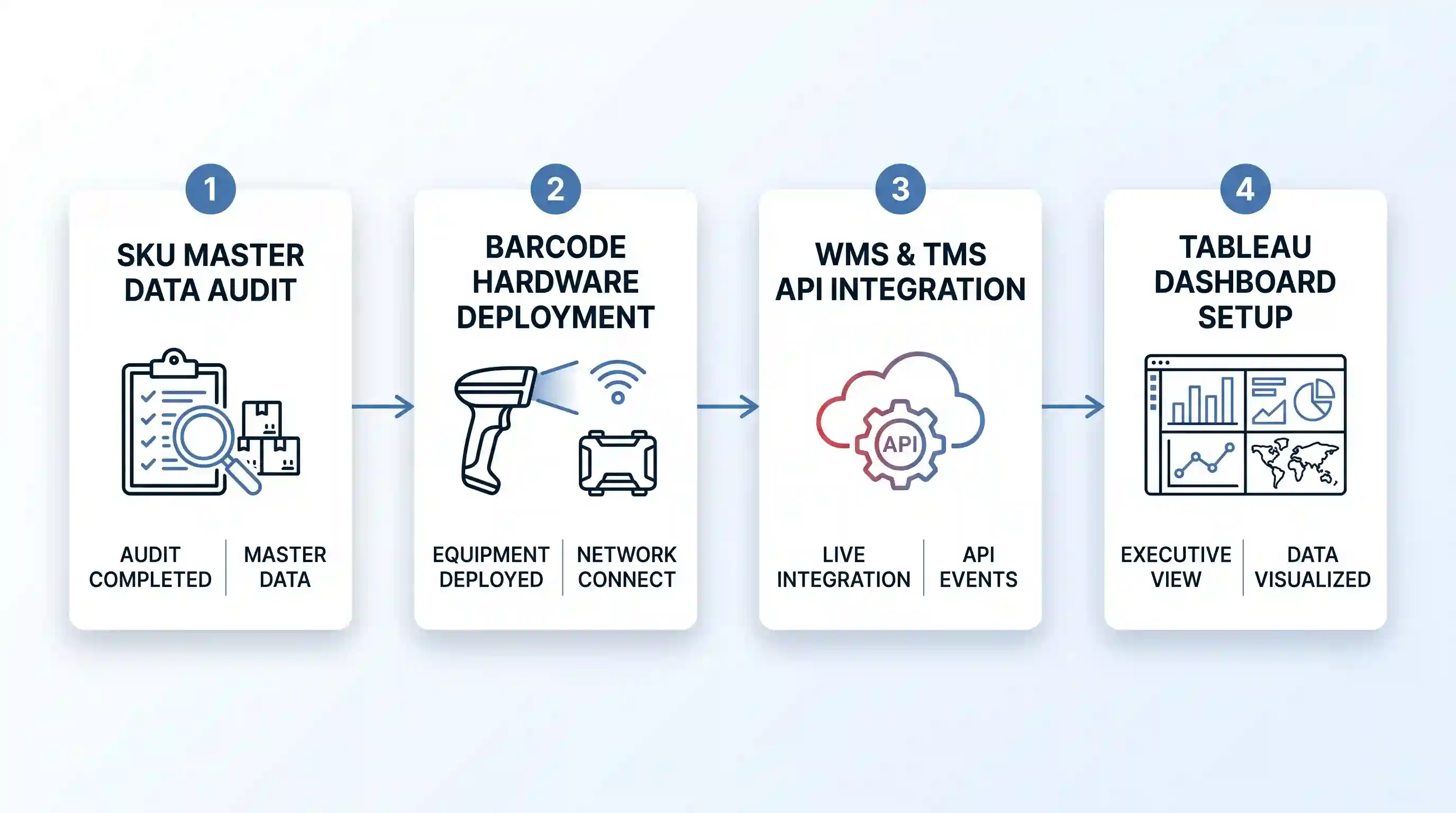
- Standardize Master SKU and Vendor Records: Audit your primary inventory database. Remove duplicate item records, enforce strict rules for entering product weights and package dimensions, and map all supplier part numbers to a single internal master catalog. Never layer automation over dirty data.
- Establish Edge Ground Truth with Barcode Scanning: Eliminate paper pick sheets and manual clipboard logs. Equip warehouse teams with rugged mobile computers and install industrial barcode label printers at receiving benches. Require workers to scan a barcode at every handling step: receiving, putaway, bin transfers, picking, and pack verification.
- Connect Software via Cloud APIs: Integrate your e-commerce storefront, accounting software, and warehouse execution tools using real-time API webhooks. Replace manual CSV exports with automated data pipelines that transfer orders instantly and pull back tracking numbers automatically.
- Build Unified Operational Dashboards: Feed your operational data into centralized business intelligence tools to visualize bottlenecks, picking velocity, dock turnaround times, and carrier performance. For a comprehensive walkthrough on connecting data pipelines and creating executive analytics, read our tutorial on how to use Tableau.
Frequently Asked Questions
What is the primary difference between a WMS and a TMS?
A Warehouse Management System (WMS) governs inventory operations inside the physical four walls of a facility, directing putaway, stock picking, and bin storage locations. A Transportation Management System (TMS) governs freight movements outside the facility, managing carrier selection, freight rates, multi-stop route optimization, and transit tracking.
Why do passive RFID tags fail in certain warehouse environments?
Passive UHF RFID systems rely on radio waves that travel poorly through liquid and bounce erratically off metal. If tags are placed directly against aluminum foil packaging, steel containers, or high-density liquid barrels, the signal degrades, preventing reader antennas from energizing the tags. Specialized standoff tags with built-in air gaps or foam backing are required to overcome this physical interference.
How do REST APIs improve on legacy Electronic Data Interchange (EDI)?
Legacy EDI relies on rigid, standardized message formats (such as EDI 850 for purchase orders or EDI 214 for shipment status) transmitted in periodic batch cycles. Modern RESTful APIs use lightweight JSON payloads to transmit data instantly across secure web protocols. This shift eliminates transmission latency, provides immediate error validation, and simplifies connections between modern cloud software systems.
What is a supply chain digital twin, and how is it used?
A supply chain digital twin is a dynamic virtual simulation model of an enterprise logistics network. By ingesting live data from ERP, WMS, and IoT telematics feeds, the digital twin mirrors real-world inventory levels, production rates, and transportation lead times. Planners use the model to run stress-test simulations, such as forecasting the operational impact of a major canal closure or modeling how moving a regional distribution center affects customer shipping times.
What causes most digital supply chain transformation initiatives to fail?
Most transformations fail due to poor data hygiene, insufficient frontline user training, and selecting overly complex software suites that do not match daily operations. When workers find new software interfaces slow or frustrating, they revert to manual workarounds and offline spreadsheets, which quickly breaks data accuracy across the enterprise.

💬 Comments